


Workplace Pressure and Psychological Distress
posted 8th May 2026
Click to enlarge
Stress, Anxiety, and the Workplace: When Pressure Becomes Psychological
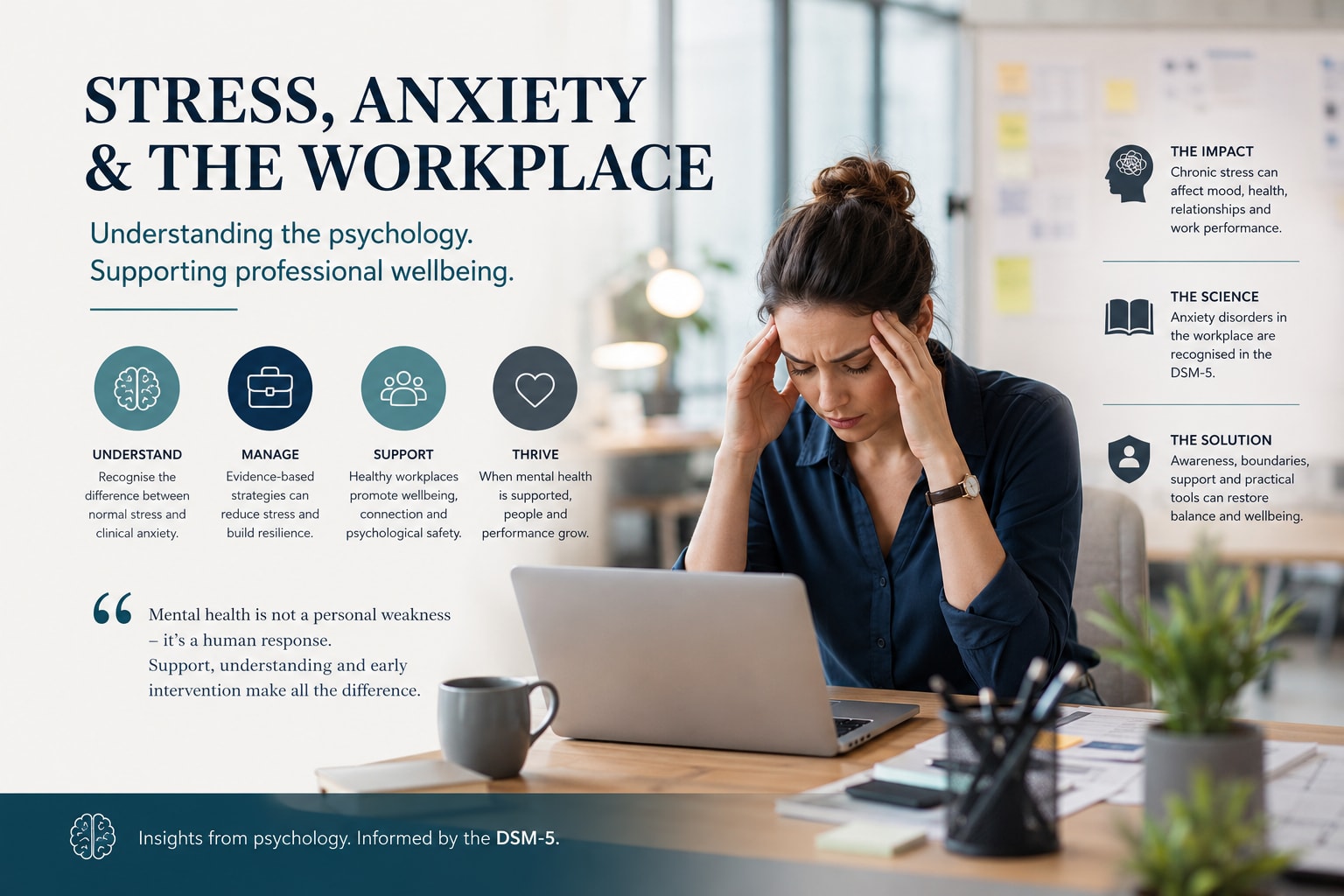
Modern workplaces are increasingly fast-paced, demanding, and psychologically complex environments. While some degree of stress is a normal part of professional life, chronic workplace pressure can gradually begin affecting emotional wellbeing, physical health, concentration, sleep, relationships, and overall functioning. In many cases, individuals do not initially recognise that what they are experiencing extends beyond “just stress” and may reflect clinically significant anxiety or burnout.
Psychology recognises an important distinction between normal stress responses and mental health difficulties that begin interfering with daily functioning. Feeling nervous before a presentation, pressured during a deadline, or emotionally stretched during busy periods is not automatically pathological. Stress, in moderation, is a natural human response designed to help individuals respond to challenge and threat. However, when workplace stress becomes prolonged, unpredictable, or overwhelming, the nervous system may remain in a sustained state of activation that begins affecting psychological and physical health.
One of the difficulties in professional environments is that chronic stress often becomes normalised. High-functioning individuals may continue meeting deadlines, attending meetings, and maintaining responsibilities while internally experiencing significant anxiety, exhaustion, irritability, or emotional detachment. Many people minimise symptoms because they believe they should simply “push through” or because workplace cultures unintentionally reward overwork and constant availability.
From a psychological perspective, anxiety exists on a spectrum. Within the Diagnostic and Statistical Manual of Mental Disorders, Fifth Edition (DSM-5), anxiety disorders are characterised not simply by worry itself, but by excessive fear, persistent apprehension, physiological arousal, and impairment in functioning. Workplace stress may contribute to or exacerbate several recognised conditions, including Generalised Anxiety Disorder (GAD), Panic Disorder, Adjustment Disorders, insomnia-related difficulties, and depressive symptoms.
Generalised Anxiety Disorder, for example, involves persistent and excessive worry that is difficult to control and often extends across multiple areas of life, including work performance, health, finances, relationships, or future uncertainty. In workplace settings, this may present as constant overthinking, fear of making mistakes, excessive reassurance-seeking, perfectionism, difficulty switching off, or persistent feelings of dread before workdays.
Importantly, workplace anxiety does not always appear dramatic externally. Some individuals experiencing severe anxiety remain highly productive and outwardly successful. In fact, perfectionism and overachievement can sometimes mask significant psychological distress. A person may appear organised and driven while internally experiencing chronic hypervigilance, self-criticism, racing thoughts, or exhaustion.
The body also plays a central role in workplace stress responses. Prolonged activation of stress systems can contribute to headaches, muscle tension, digestive problems, sleep disruption, fatigue, elevated blood pressure, and lowered immune functioning. Psychology and medicine increasingly recognise that mental and physical health are deeply interconnected. Chronic anxiety is not “just in the mind”; it can have measurable physiological effects over time.
Another important workplace phenomenon is burnout. Although burnout itself is not classified as a DSM-5 diagnosis, it is increasingly recognised as a significant occupational and psychological issue. Burnout is often characterised by emotional exhaustion, cynicism or detachment, reduced motivation, cognitive fatigue, and diminished professional efficacy. Many individuals experiencing burnout describe feeling emotionally numb, disconnected from work they once cared about, or unable to recover even after rest.
Remote working and digital connectivity have also blurred boundaries between professional and personal life. Emails, messaging platforms, and constant accessibility can create a psychological sense of never fully “switching off.” Over time, this sustained cognitive load may contribute to heightened stress responses and emotional fatigue.
Workplace cultures can either protect against or intensify anxiety. Environments characterised by unrealistic expectations, poor management, lack of autonomy, workplace conflict, job insecurity, bullying, or unclear communication are all associated with increased psychological strain. Conversely, psychologically healthy workplaces tend to involve clear expectations, supportive leadership, realistic workloads, flexibility, and cultures where mental wellbeing is not stigmatised.
One of the most common misconceptions about workplace anxiety is the belief that seeking support reflects weakness or lack of resilience. In reality, many highly capable professionals experience periods of psychological strain, particularly in high-pressure industries. Early psychological intervention is often associated with better outcomes and may prevent difficulties escalating into more severe anxiety, depression, panic symptoms, or long-term burnout.
Therapy can help individuals better understand stress responses, identify cognitive and behavioural patterns maintaining anxiety, improve emotional regulation, establish healthier boundaries, and develop more sustainable coping strategies. Cognitive behavioural approaches, stress-management techniques, and psychologically informed workplace adjustments may all play a role depending on the individual’s needs.
Importantly, not all workplace stress requires a psychiatric diagnosis. Psychology does not pathologise normal emotional responses to difficult environments. However, when stress becomes chronic, begins affecting sleep, concentration, mood, physical health, relationships, or quality of life, it may indicate that professional support could be beneficial.
Modern work culture often encourages people to ignore early warning signs until they reach exhaustion. Yet psychologically, emotional wellbeing functions much like physical health: addressing strain early is usually more effective than waiting until functioning significantly deteriorates.
Ultimately, stress and anxiety in the workplace are not simply issues of productivity — they are issues of human wellbeing. Organisations increasingly recognise that psychologically healthy employees are not only more resilient and engaged, but also healthier overall. Mental health is not separate from professional performance; it is one of the foundations supporting it.