


Why Everyone Is Suddenly Talking About 'Brain Rot'
posted 25th June 2026
Why Everyone Is Suddenly Talking About 'Brain Rot' – What Psychology Actually Says
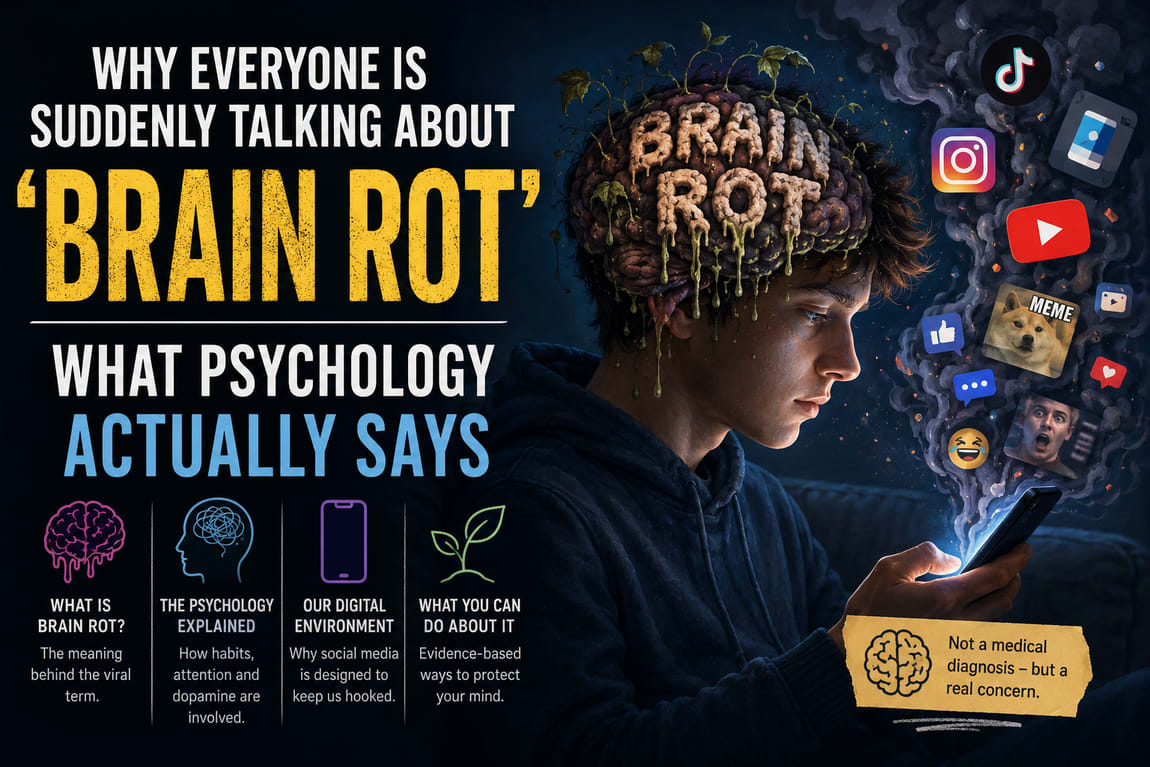
The phrase 'brain rot' has rapidly become one of the most talked-about psychological buzzwords online. It has become shorthand for the feeling that endless scrolling through social media, short-form videos and algorithm-driven content has left us unable to concentrate, remember information or enjoy slower activities such as reading a book or having a meaningful conversation. While brain rot is not a recognised psychological diagnosis, the concerns behind it are increasingly being examined by psychologists and neuroscientists.
At The London Psychologist Clinic, we are frequently asked whether excessive exposure to digital media can genuinely affect attention, motivation and emotional wellbeing. The answer is more nuanced than social media headlines suggest. The evidence does not show that smartphones permanently damage the brain, but it does suggest that our attention systems are remarkably adaptable. When we repeatedly train ourselves to seek rapid novelty and immediate rewards, our brains become increasingly accustomed to constant stimulation.
Psychologists have long understood that attention is a limited cognitive resource. Modern social media platforms are deliberately designed around principles of variable ratio reinforcement, a concept first described by behavioural psychologist B.F. Skinner. This schedule of reinforcement, in which rewards arrive unpredictably, is one of the most powerful methods of maintaining behaviour. Every swipe, notification or refresh carries the possibility of something interesting, encouraging us to continue scrolling far longer than intended.
Research by Dr Gloria Mark at the University of California has demonstrated that the average period people remain focused on a single screen activity has declined substantially over the past two decades. Her work suggests that modern digital environments encourage rapid task switching, making sustained concentration increasingly difficult. Importantly, this does not necessarily indicate permanent cognitive decline. Instead, it reflects the brain adapting to the environment in which it spends the most time.
From a clinical perspective, it is important not to confuse everyday concentration difficulties with genuine psychological disorders. According to the Diagnostic and Statistical Manual of Mental Disorders (DSM-5-TR), attention problems alone do not constitute a diagnosis. Conditions such as Attention-Deficit/Hyperactivity Disorder (ADHD) require persistent symptoms beginning in childhood, impairment across multiple settings and careful clinical assessment. Many adults worry they have ADHD because they struggle to concentrate after hours of social media use, when in reality they may simply be experiencing cognitive overload, chronic stress, poor sleep or digital fatigue.
Likewise, feeling unable to stop checking your phone does not automatically indicate an addiction. The DSM-5-TR does not currently recognise smartphone addiction or social media addiction as formal mental disorders. However, the manual does acknowledge Internet Gaming Disorder as a condition requiring further research, reflecting growing recognition that certain online behaviours may become compulsive for some individuals. Clinical psychologists therefore assess the broader psychological function of technology use rather than relying solely on the amount of time someone spends online.
Data increasingly suggest that excessive digital engagement can influence mental wellbeing. The American Psychological Association has highlighted associations between problematic social media use and increased anxiety, reduced sleep quality and lower psychological wellbeing, particularly among adolescents and young adults. Similarly, reports from Ofcom show that adults in the UK now spend many hours each day connected to digital devices, while younger age groups spend even longer engaging with online content. Although these studies demonstrate correlation rather than causation, they reinforce concerns that constant digital stimulation may interfere with emotional regulation, attention and restorative downtime.
One psychological explanation involves the brain's reward system. Every unexpected notification or entertaining video can produce a small release of dopamine within the mesolimbic reward pathway. Contrary to popular belief, dopamine is not simply the brain's 'pleasure chemical.' It is more accurately understood as a neurotransmitter involved in motivation, learning and anticipation of reward. Frequent exposure to rapidly changing rewards may therefore encourage us to seek increasingly novel stimulation, making slower activities initially feel less engaging.
There is also growing interest in the concept of cognitive fatigue. Our brains constantly filter enormous amounts of sensory information. Endless scrolling requires repeated decision-making, emotional processing and attentional shifts, all of which consume cognitive resources. Many people report feeling mentally exhausted despite spending an evening apparently doing very little. This paradox reflects the hidden cognitive demands of continuous digital engagement.
The encouraging news is that the brain remains highly adaptable throughout adulthood. Neuroplasticity allows attentional habits to change in response to new experiences. Studies suggest that deliberately practising sustained attention through activities such as reading, learning new skills, engaging in face-to-face conversation or spending time in nature can strengthen concentration over time. Small behavioural changes often produce more lasting benefits than dramatic 'digital detoxes' that are difficult to maintain.
If you find yourself repeatedly reaching for your phone, struggling to finish tasks or feeling mentally overwhelmed, it may be worth asking what purpose your technology use is serving. For some people it functions as a way of avoiding anxiety, loneliness or uncomfortable emotions. For others it simply fills every spare moment, leaving little opportunity for reflection or recovery. Understanding these underlying psychological processes is often far more valuable than simply counting screen time.
Brain rot may be an internet phrase rather than a medical diagnosis, but it reflects genuine concerns about how modern technology interacts with attention, reward and emotional wellbeing. The key message from psychology is not that our brains are being destroyed by smartphones, but that they are adapting to the environments we repeatedly expose them to. Fortunately, those adaptations can also move in a healthier direction when we consciously reshape our daily habits.
If concerns about concentration, anxiety, compulsive technology use or possible ADHD are beginning to affect your work, relationships or quality of life, a comprehensive psychological assessment can help distinguish between everyday attentional difficulties and clinically significant conditions. Evidence-based psychological therapy can also help identify the patterns maintaining these behaviours and develop practical strategies for lasting change.
References
- American Psychiatric Association (2022). Diagnostic and Statistical Manual of Mental Disorders (5th ed., text revision). DSM-5-TR.
- American Psychological Association. (2023–2025). Research on social media use, wellbeing and adolescent mental health.
- Mark, G. (2023). Attention Span: A Groundbreaking Way to Restore Balance, Happiness and Productivity.
- Ofcom (2025). Online Nation Report.