


Why Emotional Numbness Is Increasing
posted 7th April 2026
Why Emotional Numbness Is Increasing — and What It Really Means
Emotional numbness is an experience many people struggle to articulate. It is not always distress in the traditional sense—there may be no overwhelming anxiety or sadness—but rather a sense of disconnection. Individuals often describe feeling “flat,” detached, or unable to access emotions in the way they once could. Activities that previously felt meaningful may now feel muted or empty.
In clinical practice, emotional numbness is increasingly reported, particularly in individuals experiencing chronic stress, burnout, or prolonged anxiety. While it can be unsettling, it is important to understand that emotional numbness is not a sign of failure or dysfunction—it is often a psychological response to sustained overload.
From a psychological perspective, emotional numbness can be understood as a form of protective adaptation. When the nervous system is exposed to prolonged stress or emotional intensity, it may begin to dampen emotional responses as a way of coping. This is particularly common in individuals who have experienced ongoing pressure, trauma, or repeated emotional strain. Rather than feeling overwhelmed, the system shifts toward emotional shutdown.
Neurobiologically, this state is associated with changes in how the brain processes emotion. Research suggests reduced activity in areas involved in emotional experience, alongside increased regulation from prefrontal regions that suppress emotional responses. This can create a sense of distance from both negative and positive emotions. While this may reduce distress in the short term, it can also limit the ability to feel pleasure, connection, and motivation.
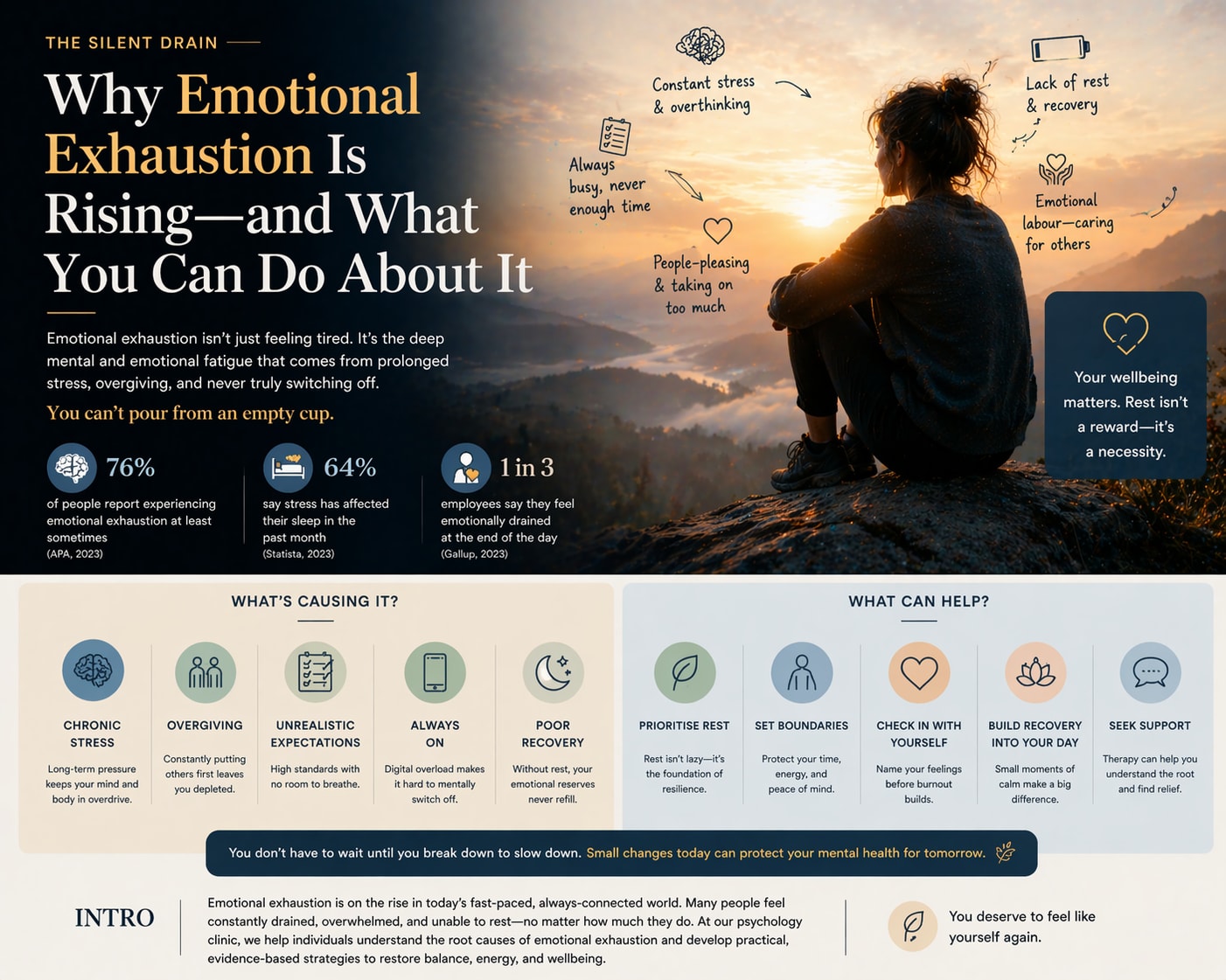
Modern life may be contributing to the rise in this experience. Constant stimulation, high expectations, and limited recovery time can lead to chronic activation of the stress response. Over time, the system may move from hyperactivation (anxiety) into hypoactivation (numbness), particularly when stress feels inescapable. This shift is sometimes observed in burnout, where individuals move from feeling overwhelmed to feeling disengaged.
Importantly, emotional numbness is not always immediately recognised as a psychological difficulty. Because it lacks the intensity of anxiety or depression, individuals may delay seeking support. However, over time it can impact relationships, decision-making, and overall quality of life, often leading to a sense of disconnection from oneself and others.
A balanced clinical perspective is essential. Emotional numbness is not inherently pathological—it can be an adaptive response. However, when it becomes persistent, it may signal the need for psychological intervention. Evidence-based approaches such as cognitive behavioural therapy, trauma-informed therapy, and mindfulness-based interventions can help individuals gradually reconnect with their emotional experience in a safe and manageable way.
Recovery does not typically involve forcing emotions to return, but rather creating the conditions in which emotional responsiveness can re-emerge. This may include reducing chronic stress, increasing awareness of internal states, and rebuilding a sense of safety within the nervous system.
Ultimately, emotional numbness reflects a system that has been under strain for too long. With the right support, it is possible to move from disconnection back toward engagement—restoring not only the ability to feel, but the capacity to experience meaning, connection, and wellbeing.
Click to enlarge