


Why Does Rejection Hurt So Much?
posted 5th June 2026
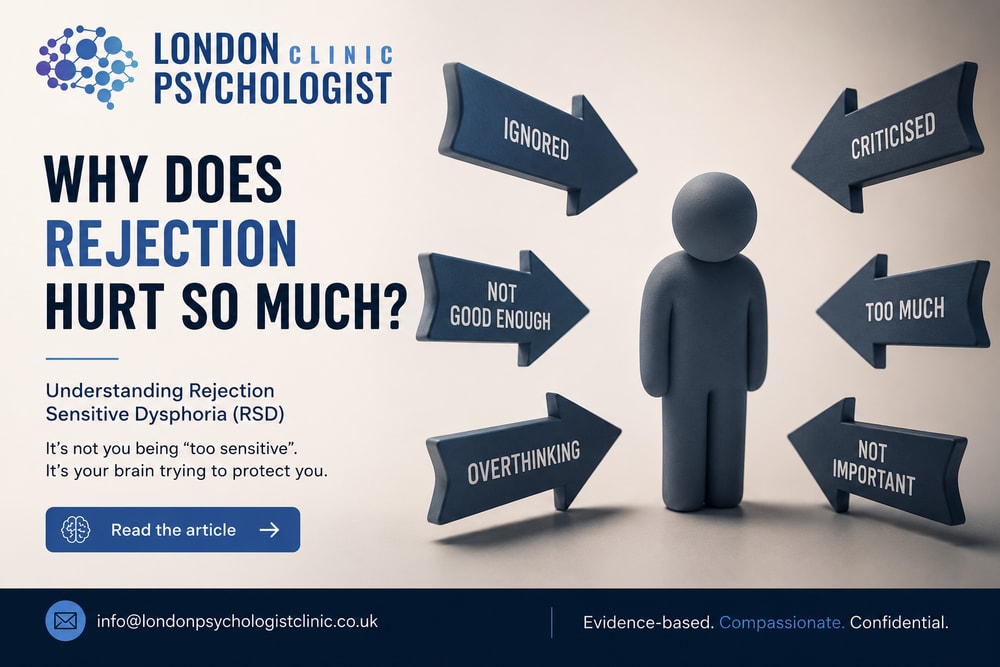
Why Does Rejection Hurt So Much? Understanding Rejection Sensitive Dysphoria (RSD)
Most people dislike criticism.
Few of us enjoy being rejected, ignored or judged negatively by others. However, for some individuals, even minor criticism can trigger an intense emotional reaction that feels overwhelming and difficult to manage.
A delayed text message, a brief comment from a colleague or perceived disapproval from a friend can lead to feelings of shame, anxiety, sadness or even panic.
This experience is often referred to as Rejection Sensitive Dysphoria (RSD).
Although RSD is not currently recognised as a formal diagnosis within the DSM-5-TR, it is a concept increasingly discussed within psychology, particularly in relation to Attention-Deficit/Hyperactivity Disorder (ADHD), emotional regulation difficulties and anxiety.
At The London Psychologist Clinic, many clients describe a lifelong pattern of feeling exceptionally sensitive to criticism and rejection. Understanding the psychological processes behind these experiences can be an important first step towards developing greater emotional resilience.
What Is Rejection Sensitive Dysphoria?
Rejection Sensitive Dysphoria refers to an intense emotional response to real or perceived rejection, criticism or disapproval.
The word "dysphoria" refers to a profound state of emotional discomfort or distress.
Individuals experiencing RSD often describe feeling as though criticism affects them more deeply than other people. Even when they recognise intellectually that a situation may not be significant, the emotional response can feel immediate and overwhelming.
These reactions are not a sign of weakness. They often reflect underlying patterns of emotional processing that have developed over many years.
What Does Rejection Sensitive Dysphoria Feel Like?
People experiencing RSD commonly report:
- Feeling devastated by criticism
- Excessively worrying about what others think
- Fear of disappointing people
- Strong emotional reactions to perceived rejection
- Avoiding situations where criticism might occur
- Difficulty letting go of negative feedback
- Persistent self-doubt
Many individuals spend considerable time replaying conversations, searching for signs that they may have upset someone or been judged negatively.
The Link with ADHD
Although RSD is not included as a separate disorder in the DSM-5-TR, it is frequently discussed in relation to Attention-Deficit/Hyperactivity Disorder.
Research suggests that some individuals with ADHD experience significant difficulties with emotional regulation, leading to heightened sensitivity to criticism and rejection.
The DSM-5-TR describes ADHD as involving patterns of inattention and/or hyperactivity-impulsivity that interfere with functioning. While emotional sensitivity is not part of the formal diagnostic criteria, many clinicians recognise that emotional regulation difficulties can be a significant feature of the condition.
Why Does Rejection Feel So Threatening?
Human beings are fundamentally social creatures.
Throughout evolutionary history, belonging to a group increased the likelihood of survival. As a result, the brain developed powerful systems designed to monitor social acceptance and rejection.
For some individuals, these systems appear to operate at a heightened level of sensitivity.
Past experiences such as bullying, criticism, perfectionistic environments or difficult relationships can further increase vigilance towards potential rejection.
The brain begins to scan constantly for signs of social threat.
Unfortunately, this often leads people to interpret neutral situations as evidence of disapproval.
When Perception Becomes Reality
One of the challenges associated with RSD is that perceived rejection can feel just as painful as actual rejection.
For example:
- A colleague may simply be busy, yet their brief response is interpreted as anger.
- A friend may take several hours to reply, leading to fears that the friendship is ending.
- A manager's constructive feedback may feel like personal criticism.
The emotional reaction occurs before the individual has had an opportunity to evaluate the situation objectively.
The Impact on Mental Health
Over time, fear of rejection can have significant psychological consequences.
Many individuals begin avoiding situations where they might be judged or criticised.
This can contribute to:
- Social anxiety
- Low self-esteem
- Perfectionism
- Relationship difficulties
- Chronic stress
- Depressive symptoms
Some individuals become people-pleasers, constantly seeking approval in an attempt to avoid rejection. Others withdraw from relationships altogether.
Neither strategy ultimately resolves the underlying fear.
How Therapy Can Help
Therapy can help individuals understand the origins of rejection sensitivity and develop healthier ways of responding to emotional triggers.
Evidence-based approaches such as Cognitive Behavioural Therapy (CBT), Compassion Focused Therapy (CFT) and Acceptance and Commitment Therapy (ACT) can help individuals:
- Challenge unhelpful assumptions
- Develop emotional regulation skills
- Build self-compassion
- Increase resilience to criticism
- Reduce avoidance behaviours
- Strengthen self-esteem
Many clients discover that the intensity of their emotional reactions begins to decrease once they understand the patterns driving them.
Final Thoughts
Nobody enjoys rejection.
However, when the fear of criticism or disapproval begins to dominate your thoughts, relationships and decision-making, it can have a profound impact on wellbeing.
Understanding rejection sensitivity is not about becoming indifferent to other people. It is about learning that your worth is not determined by the opinions, reactions or approval of others.
With the right support, it is possible to develop greater confidence, emotional resilience and freedom from the fear of rejection.