


Unhappy Shiny People
posted 18th May 2026
Click image to enlarge
Why Do Some People Feel Extremely Happy One Moment and Deeply Sad the Next?
Most people experience changes in mood throughout life. Stress, excitement, disappointment, success, and relationships naturally affect how we feel. However, for some individuals, emotional shifts can feel far more intense, unpredictable, and difficult to control. They may go from feeling highly energised, confident, productive, or euphoric to suddenly feeling deeply low, hopeless, exhausted, or emotionally overwhelmed.
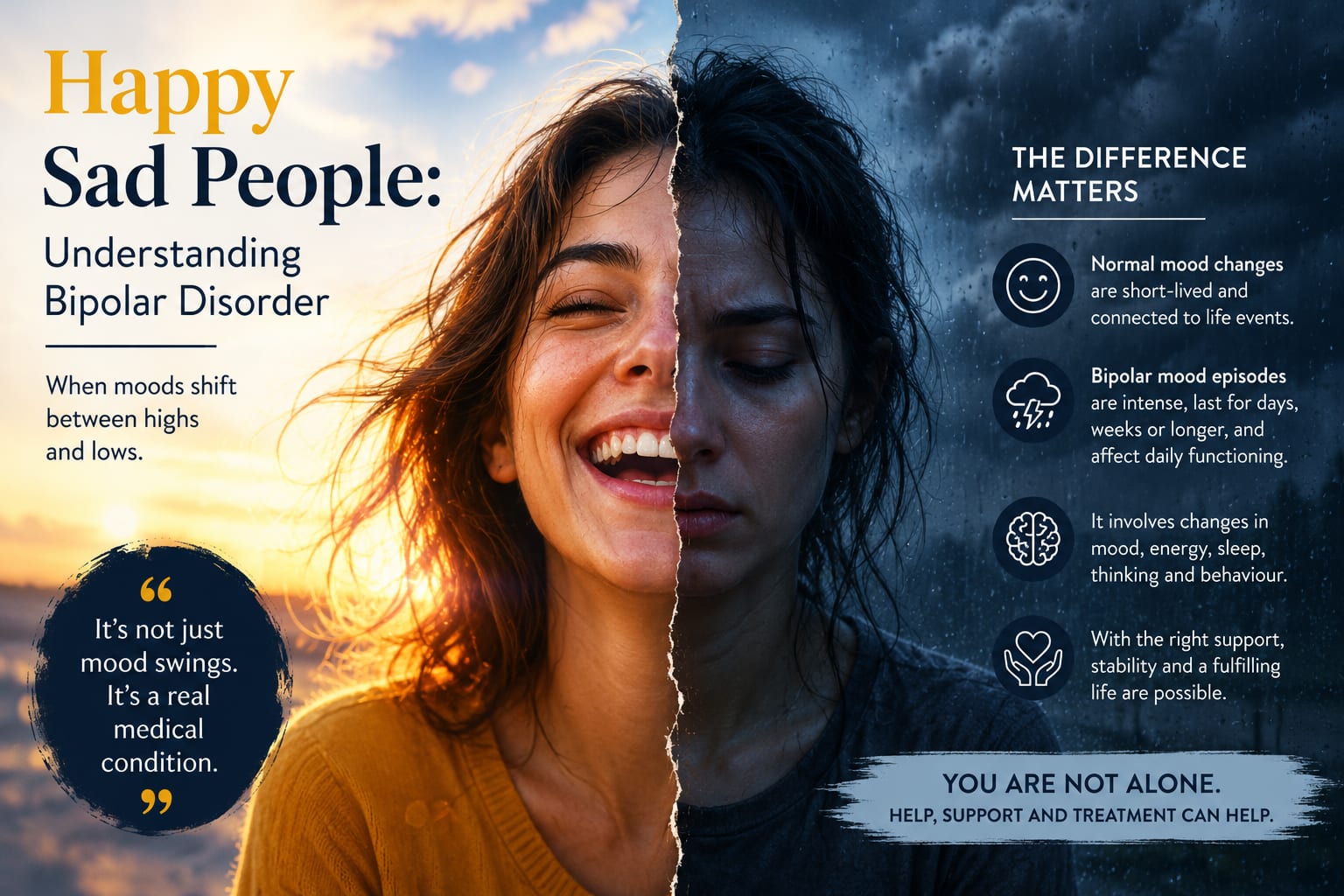
Many people casually describe this as “being bipolar,” but true Bipolar Disorder is a specific and serious mental health condition that involves distinct episodes of mood elevation and depression. Importantly, normal mood changes and bipolar disorder are not the same thing.
What Is Bipolar Disorder?
Bipolar Disorder is classified in the DSM-5 as a mood disorder characterised by episodes of mania, hypomania, and depression. Unlike ordinary emotional ups and downs, bipolar mood episodes are typically more severe, longer-lasting, and significantly disruptive to functioning.
There are different forms of bipolar disorder, including:
Bipolar I Disorder
Bipolar II Disorder
Cyclothymic Disorder
Each involves shifts between elevated and depressed mood states, but the intensity and duration vary.
The Difference Between Normal Mood Changes and Bipolar Disorder
Everyone experiences emotional fluctuations. Feeling happy after good news or sad after disappointment is part of being human. Mood naturally changes in response to life events.
However, bipolar disorder involves mood states that are:
More intense
Longer lasting
Less connected to external events
Difficult to control
Disruptive to relationships, work, sleep, and judgement
For example, someone experiencing mania or hypomania may:
Sleep very little without feeling tired
Talk unusually fast
Feel excessively confident or invincible
Take impulsive risks
Spend excessive amounts of money
Become unusually productive or restless
Experience racing thoughts
These elevated states are often followed by depressive episodes involving:
Exhaustion
Hopelessness
Emotional numbness
Loss of motivation
Difficulty concentrating
Withdrawal from others
This pattern is very different from simply being emotionally sensitive or having occasional mood swings.
What Is Mania?
Mania is a state of abnormally elevated mood, energy, and activity levels. During a manic episode, a person may feel euphoric, powerful, highly creative, or unusually optimistic. However, mania often involves impaired judgement and impulsive behaviour.
In Bipolar I Disorder, manic episodes are severe enough to significantly affect functioning and may sometimes require hospitalisation.
Symptoms of mania may include:
Inflated self-esteem or grandiosity
Reduced need for sleep
Racing thoughts
Rapid speech
Risk-taking behaviour
Increased impulsivity
Extreme irritability
Although mania can initially feel pleasurable, it often becomes emotionally and practically destructive over time.
What Is Hypomania?
Hypomania is similar to mania but less severe. Individuals may feel unusually energetic, productive, sociable, or confident without reaching the extreme impairment seen in full mania.
In Bipolar II Disorder, hypomania alternates with major depressive episodes. Because hypomania can sometimes feel enjoyable or productive, many people do not initially recognise it as part of a mental health condition.
Why Do These Mood Changes Happen?
Bipolar disorder is believed to result from a complex interaction between:
Genetics
Brain chemistry
Stress
Sleep disruption
Life experiences
Research strongly suggests there is a biological component to bipolar disorder, particularly involving brain systems linked to mood regulation, reward processing, and emotional control.
Episodes are often triggered or worsened by:
Sleep deprivation
High stress
Substance use
Major life changes
Relationship difficulties
Importantly, bipolar disorder is not caused by weakness, attention-seeking, or personality flaws.
A Common Misunderstanding
One of the biggest misconceptions is that bipolar disorder simply means “changing emotions quickly.” In reality, bipolar mood episodes usually last for days, weeks, or even months rather than changing hour to hour.
Rapid emotional changes within a single day are often linked to:
Stress
Trauma
Emotional dysregulation
Anxiety
Personality factors
This is why proper psychological assessment is important. Many people incorrectly label themselves as bipolar when they may actually be experiencing chronic stress, burnout, trauma responses, or other mental health difficulties.
What Does Depression in Bipolar Disorder Feel Like?
The depressive side of bipolar disorder can feel extremely heavy and debilitating. People often describe:
Emotional emptiness
Loss of interest in life
Severe fatigue
Hopelessness
Guilt or worthlessness
Difficulty functioning
Some individuals report that the depressive episodes feel even more distressing than the elevated states because of the emotional crash that follows periods of high energy or optimism.
Can Bipolar Disorder Be Treated?
Yes. Bipolar disorder is treatable, and many individuals learn to manage symptoms successfully with the right support.
Treatment often includes:
Psychological therapy
Medication
Lifestyle stabilisation
Sleep regulation
Stress management
Therapy can help individuals:
Recognise early warning signs
Manage impulsive behaviour
Stabilise routines
Develop emotional regulation skills
Reduce shame and self-criticism
Why Sleep Is So Important
One of the strongest predictors of mood instability in bipolar disorder is disrupted sleep. Research consistently shows that irregular sleep patterns can trigger both manic and depressive episodes.
Protecting sleep routines is therefore considered one of the most important aspects of long-term mood stability.
How Is This Different From Persistent Sadness?
Unlike chronic low mood conditions such as Persistent Depressive Disorder, bipolar disorder involves clear shifts between elevated and depressed mood states.
Someone with chronic melancholy may feel emotionally flat for years without significant emotional highs. In contrast, bipolar disorder involves periods of:
Elevated mood or energy
Increased activity
Reduced sleep
Impulsivity or restlessness
followed by periods of depression.
Understanding this distinction is important because the treatment approaches can differ significantly.
The Most Important Thing to Understand
Experiencing intense emotional shifts does not automatically mean someone is bipolar. Human emotions naturally fluctuate, particularly during stressful or emotionally difficult periods.
However, when mood changes become severe, prolonged, disruptive, or difficult to control, it may indicate an underlying mood disorder that deserves professional attention.
Bipolar disorder is not simply “being moody.” It is a complex psychological and biological condition involving significant changes in mood, energy, behaviour, sleep, and emotional regulation.
With proper support, therapy, education, and treatment, many people with bipolar disorder are able to build stability, insight, and fulfilling lives.**
Most people experience changes in mood throughout life. Stress, excitement, disappointment, success, and relationships naturally affect how we feel. However, for some individuals, emotional shifts can feel far more intense, unpredictable, and difficult to control. They may go from feeling highly energised, confident, productive, or euphoric to suddenly feeling deeply low, hopeless, exhausted, or emotionally overwhelmed.
Many people casually describe this as “being bipolar,” but true Bipolar Disorder is a specific and serious mental health condition that involves distinct episodes of mood elevation and depression. Importantly, normal mood changes and bipolar disorder are not the same thing.
What Is Bipolar Disorder?
Bipolar Disorder is classified in the DSM-5 as a mood disorder characterised by episodes of mania, hypomania, and depression. Unlike ordinary emotional ups and downs, bipolar mood episodes are typically more severe, longer-lasting, and significantly disruptive to functioning.
There are different forms of bipolar disorder, including:
Bipolar I Disorder
Bipolar II Disorder
Cyclothymic Disorder
Each involves shifts between elevated and depressed mood states, but the intensity and duration vary.
The Difference Between Normal Mood Changes and Bipolar Disorder
Everyone experiences emotional fluctuations. Feeling happy after good news or sad after disappointment is part of being human. Mood naturally changes in response to life events.
However, bipolar disorder involves mood states that are:
More intense
Longer lasting
Less connected to external events
Difficult to control
Disruptive to relationships, work, sleep, and judgement
For example, someone experiencing mania or hypomania may:
Sleep very little without feeling tired
Talk unusually fast
Feel excessively confident or invincible
Take impulsive risks
Spend excessive amounts of money
Become unusually productive or restless
Experience racing thoughts
These elevated states are often followed by depressive episodes involving:
Exhaustion
Hopelessness
Emotional numbness
Loss of motivation
Difficulty concentrating
Withdrawal from others
This pattern is very different from simply being emotionally sensitive or having occasional mood swings.
What Is Mania?
Mania is a state of abnormally elevated mood, energy, and activity levels. During a manic episode, a person may feel euphoric, powerful, highly creative, or unusually optimistic. However, mania often involves impaired judgement and impulsive behaviour.
In Bipolar I Disorder, manic episodes are severe enough to significantly affect functioning and may sometimes require hospitalisation.
Symptoms of mania may include:
Inflated self-esteem or grandiosity
Reduced need for sleep
Racing thoughts
Rapid speech
Risk-taking behaviour
Increased impulsivity
Extreme irritability
Although mania can initially feel pleasurable, it often becomes emotionally and practically destructive over time.
What Is Hypomania?
Hypomania is similar to mania but less severe. Individuals may feel unusually energetic, productive, sociable, or confident without reaching the extreme impairment seen in full mania.
In Bipolar II Disorder, hypomania alternates with major depressive episodes. Because hypomania can sometimes feel enjoyable or productive, many people do not initially recognise it as part of a mental health condition.
Why Do These Mood Changes Happen?
Bipolar disorder is believed to result from a complex interaction between:
Genetics
Brain chemistry
Stress
Sleep disruption
Life experiences
Research strongly suggests there is a biological component to bipolar disorder, particularly involving brain systems linked to mood regulation, reward processing, and emotional control.
Episodes are often triggered or worsened by:
Sleep deprivation
High stress
Substance use
Major life changes
Relationship difficulties
Importantly, bipolar disorder is not caused by weakness, attention-seeking, or personality flaws.
A Common Misunderstanding
One of the biggest misconceptions is that bipolar disorder simply means “changing emotions quickly.” In reality, bipolar mood episodes usually last for days, weeks, or even months rather than changing hour to hour.
Rapid emotional changes within a single day are often linked to:
Stress
Trauma
Emotional dysregulation
Anxiety
Personality factors
This is why proper psychological assessment is important. Many people incorrectly label themselves as bipolar when they may actually be experiencing chronic stress, burnout, trauma responses, or other mental health difficulties.
What Does Depression in Bipolar Disorder Feel Like?
The depressive side of bipolar disorder can feel extremely heavy and debilitating. People often describe:
Emotional emptiness
Loss of interest in life
Severe fatigue
Hopelessness
Guilt or worthlessness
Difficulty functioning
Some individuals report that the depressive episodes feel even more distressing than the elevated states because of the emotional crash that follows periods of high energy or optimism.
Can Bipolar Disorder Be Treated?
Yes. Bipolar disorder is treatable, and many individuals learn to manage symptoms successfully with the right support.
Treatment often includes:
Psychological therapy
Medication
Lifestyle stabilisation
Sleep regulation
Stress management
Therapy can help individuals:
Recognise early warning signs
Manage impulsive behaviour
Stabilise routines
Develop emotional regulation skills
Reduce shame and self-criticism
Why Sleep Is So Important
One of the strongest predictors of mood instability in bipolar disorder is disrupted sleep. Research consistently shows that irregular sleep patterns can trigger both manic and depressive episodes.
Protecting sleep routines is therefore considered one of the most important aspects of long-term mood stability.
How Is This Different From Persistent Sadness?
Unlike chronic low mood conditions such as Persistent Depressive Disorder, bipolar disorder involves clear shifts between elevated and depressed mood states.
Someone with chronic melancholy may feel emotionally flat for years without significant emotional highs. In contrast, bipolar disorder involves periods of:
Elevated mood or energy
Increased activity
Reduced sleep
Impulsivity or restlessness
followed by periods of depression.
Understanding this distinction is important because the treatment approaches can differ significantly.
The Most Important Thing to Understand
Experiencing intense emotional shifts does not automatically mean someone is bipolar. Human emotions naturally fluctuate, particularly during stressful or emotionally difficult periods.
However, when mood changes become severe, prolonged, disruptive, or difficult to control, it may indicate an underlying mood disorder that deserves professional attention.
Bipolar disorder is not simply “being moody.” It is a complex psychological and biological condition involving significant changes in mood, energy, behaviour, sleep, and emotional regulation.
With proper support, therapy, education, and treatment, many people with bipolar disorder are able to build stability, insight, and fulfilling lives.