

Trauma and Recovery
posted 24th April 2026
Click to enlarge
Post-Traumatic Stress Disorder (PTSD): Understanding Trauma and How CBT Can Help You Recover
Experiencing trauma can have a profound and lasting impact on the mind and body. While many people recover naturally over time, others continue to feel the effects long after the event has passed. Post-Traumatic Stress Disorder (PTSD) is a condition that can develop following exposure to a traumatic experience such as an accident, assault, loss, or any situation perceived as life-threatening. At The London Psychologist Clinic, we often work with individuals who feel stuck reliving the past, struggling to feel safe, or finding it difficult to move forward.
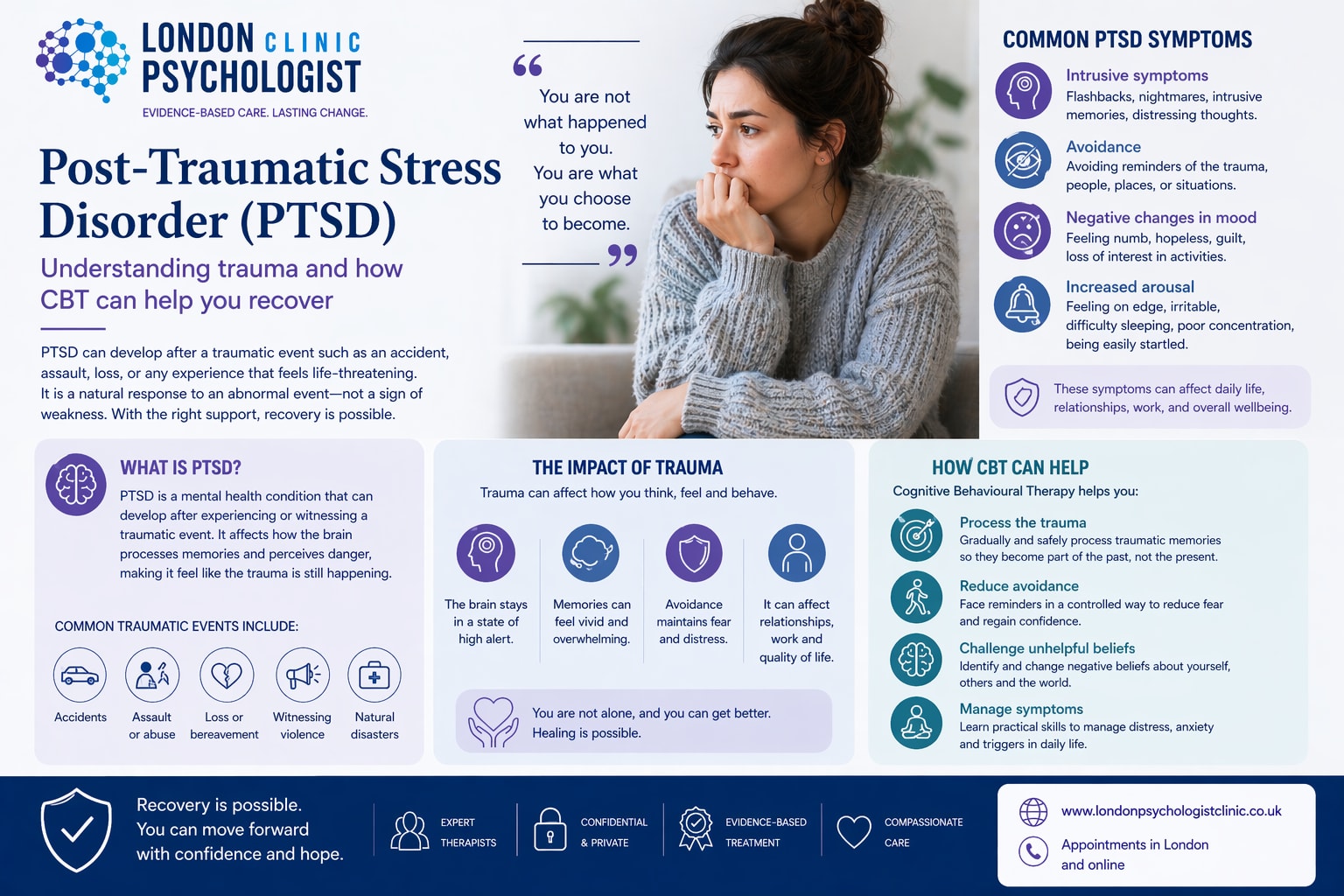
According to the DSM-5, PTSD is characterised by a cluster of symptoms that persist for more than a month following trauma. These include intrusive memories or flashbacks, avoidance of reminders of the trauma, negative changes in mood and thinking, and increased arousal such as hypervigilance or irritability. These symptoms are not a sign of weakness—they are the mind and body’s attempt to process and protect against perceived danger.
One of the defining features of PTSD is the sense that the trauma is still happening. Individuals may experience vivid memories, nightmares, or emotional reactions that feel immediate and overwhelming. Situations, sounds, or even thoughts can act as triggers, bringing back the memory with intensity. As a result, many people begin to avoid anything that reminds them of the trauma, which can gradually limit their daily life.
PTSD exists within a broader spectrum of trauma-related disorders, but what distinguishes it is the way the brain processes and stores traumatic memories. Rather than being integrated as a past event, the memory remains “unprocessed,” leading to repeated re-experiencing. At the same time, the brain’s threat system becomes highly sensitive, constantly scanning for danger—even in safe environments.
The causes of PTSD are linked to both the nature of the traumatic event and individual vulnerability. Factors such as the severity of the trauma, lack of support, previous life experiences, and individual coping styles all play a role. Neurobiological research shows changes in areas of the brain involved in memory and threat detection, such as the amygdala and hippocampus, which help explain why the symptoms can feel so intense and persistent.
A common question is whether PTSD can be cured. The encouraging answer is that PTSD is highly treatable, and many individuals make a full recovery with the right support. Treatment focuses on helping the brain process the traumatic memory, reduce avoidance, and restore a sense of safety and control.
Cognitive Behavioural Therapy (CBT), particularly trauma-focused CBT, is one of the most effective treatments for PTSD. CBT helps individuals understand how trauma has affected their thinking, emotions, and behaviours, and provides practical strategies to support recovery.
A key component of CBT for PTSD is trauma processing, which involves gradually revisiting the memory in a safe and structured way. This helps the brain reprocess the event so that it is experienced as something in the past, rather than something that is still happening. While this can feel challenging initially, it is a crucial step in reducing the intensity of symptoms.
CBT also addresses avoidance behaviours, which, while understandable, maintain the disorder by preventing processing of the trauma. Gradual exposure to reminders of the trauma helps individuals regain confidence and reduce fear over time.
Another important aspect is working with trauma-related beliefs. Individuals with PTSD may develop beliefs such as “I’m not safe,” “It was my fault,” or “The world is dangerous.” CBT helps to examine and restructure these beliefs, leading to a more balanced and realistic perspective.
In addition, CBT teaches grounding techniques and strategies to manage distress, helping individuals cope with triggers and emotional responses in the present moment.
The effectiveness of CBT for PTSD is well supported by research, with many individuals experiencing significant reductions in symptoms and improvements in quality of life. Importantly, therapy not only reduces distress but also helps individuals regain a sense of control, safety, and connection.
PTSD can feel isolating, particularly when others may not fully understand the impact of trauma. Many individuals feel stuck between wanting to move on and feeling unable to do so. However, recovery is possible. With the right support, the past does not have to define the future.
At The London Psychologist Clinic, we provide specialist, evidence-based treatment for trauma and PTSD, tailored to each individual. Our aim is to help you process what has happened, regain a sense of safety, and move forward with confidence and resilience.