


The Psychology Behind “Moments of Madness”
posted 29th May 2026
Click image to enlarge
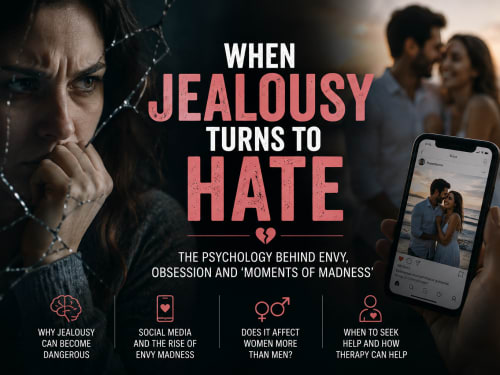
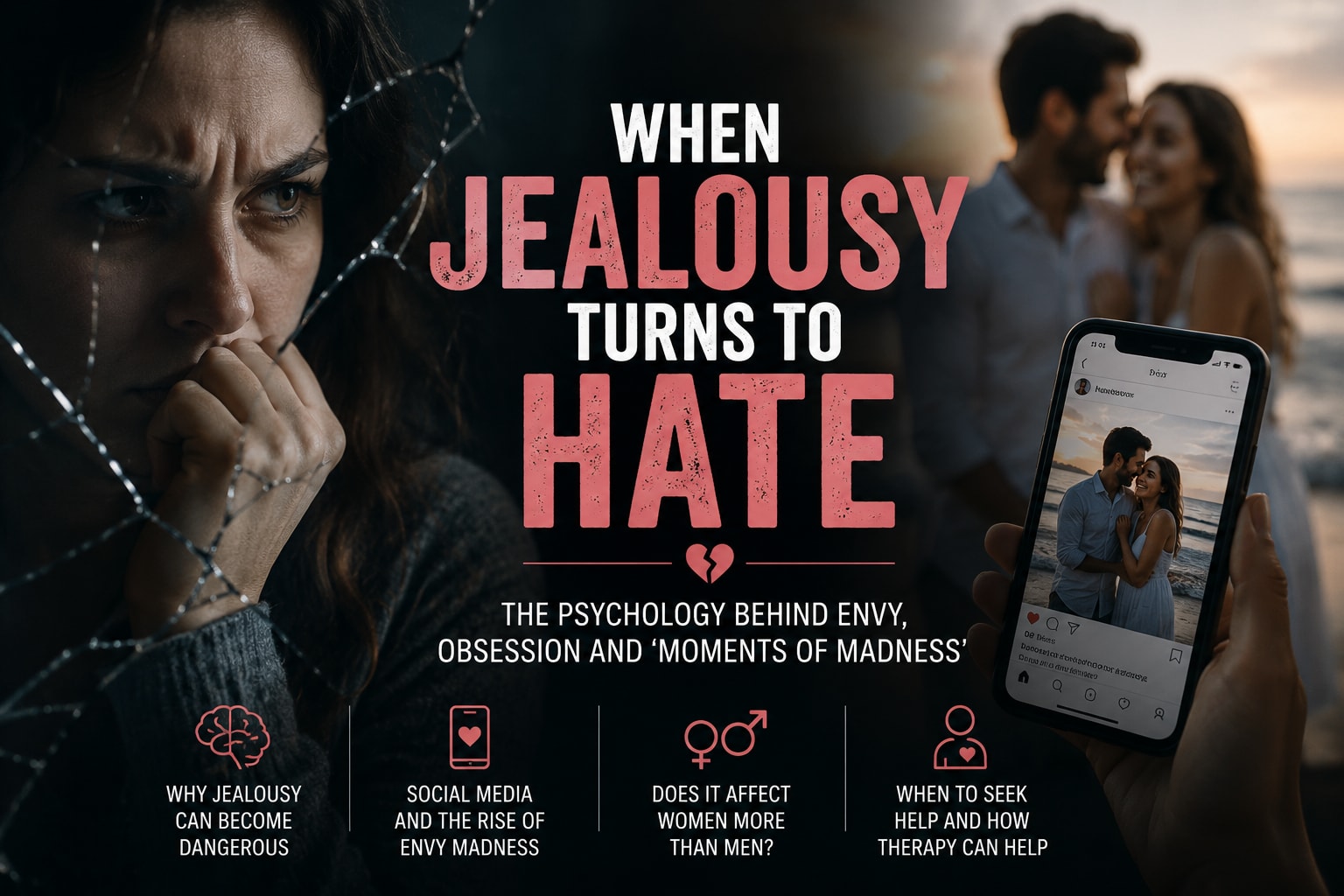
When Jealousy Turns to Hate: The Dangerous Psychology of Envy, Obsession and 'Moments of Madness'
Most people have experienced jealousy at some point in their lives. It may emerge after a relationship breakdown, when a former partner appears to move on quickly, or when someone else achieves something we desperately wanted for ourselves. In moderation, jealousy is a normal human emotion. It reflects our fears, insecurities and desire for connection. However, when jealousy becomes obsessive, it can evolve into something far more destructive. Left unchecked, it can distort thinking, fuel resentment and, in rare cases, contribute to behaviour that people themselves later struggle to understand.
Psychologists have long recognised that some of the most shocking acts of violence are not always committed by hardened criminals but by ordinary individuals overwhelmed by powerful emotions. Whilst these cases remain extremely rare, they provide a fascinating insight into how envy, rejection and obsession can gradually transform into hatred.
When Emotional Pain Becomes Dangerous
One of the most striking criminal cases linked to jealousy involved Candice "Candi" Montgomery, whose murder remained unsolved for almost twenty years. Advances in forensic science eventually allowed investigators to identify the killer through DNA recovered from a bite mark. Whilst every criminal case is unique, many involve similar psychological themes: rejection, resentment, humiliation and an inability to let go of perceived injustices.
What often surprises people is that these individuals are not always motivated by greed or a desire for material gain. Instead, they become consumed by emotional pain. They replay events repeatedly in their minds, obsess over perceived betrayals and gradually begin to view another person as the source of all their suffering. The emotional brain takes over, while rational thinking becomes increasingly impaired.
Most people who experience heartbreak eventually heal. However, a small minority become trapped in a cycle of rumination that can last months or even years. They repeatedly ask themselves why they were rejected, why someone else was chosen and why life seems so unfair. Over time, sadness can become anger and anger can become bitterness.
The Difference Between Jealousy and Envy
Although people often use the terms interchangeably, jealousy and envy are not quite the same thing. Jealousy is usually rooted in the fear of losing something important, such as a relationship or social status. Envy, by contrast, involves wanting something that somebody else possesses.
Envy can be particularly toxic because it keeps our attention focused entirely on another person's life. Rather than concentrating on our own goals, relationships and wellbeing, we become preoccupied with what someone else has achieved. The more we compare ourselves, the worse we feel. Ironically, the object of our envy often has little relevance to our actual happiness.
Psychologists frequently encounter individuals who become emotionally distressed over situations that are based largely on assumptions. They imagine that another person's life is perfect, that their relationship is flawless or that their success has brought complete fulfilment. In reality, they are comparing their private struggles to somebody else's carefully curated public image.
Is Social Media Creating an Epidemic of Comparison?
If pathological jealousy has become more common in recent years, social media may be partly responsible. Never before have people had such unrestricted access to the lives of former partners, friends, colleagues and even complete strangers.
A relationship ends, yet the person remains visible. Their holidays appear in your feed. Their new partner appears in photographs. Their achievements are publicly celebrated. For someone struggling emotionally, this can become a form of psychological self-torture.
Social media encourages what psychologists call upward social comparison. We compare ourselves to people who appear more successful, more attractive, happier or more accomplished than we are. The problem is that these comparisons are often based on incomplete information. People share their highlights rather than their hardships. They post celebrations rather than insecurities. They present the edited version of their lives rather than reality.
This can create what some commentators have informally described as "envy madness" — a state in which constant comparison fuels obsessive thinking, resentment and emotional distress. Whilst not a clinical diagnosis, it captures a genuine psychological phenomenon that therapists are increasingly encountering in practice.
Does Jealousy Affect Women More Than Men?
The answer is not straightforward. Research suggests that men and women experience jealousy differently rather than one gender experiencing it more frequently.
Women often report greater distress around relationship-based comparisons, social exclusion and appearance-related concerns. This may partly reflect cultural pressures that place significant emphasis on attractiveness, social relationships and interpersonal success. Men, on the other hand, are statistically more likely to express jealousy through confrontation, possessiveness or attempts to regain control.
However, the underlying emotional process is remarkably similar. Both men and women can become trapped in cycles of rumination, comparison and resentment. Both can experience overwhelming feelings of rejection. Both can find themselves obsessing over what another person appears to have gained at their expense.
The important point is that pathological jealousy is not a male problem or a female problem. It is a human problem.
Why the Object of Your Envy Is Rarely Worth It
One of the most interesting observations psychologists make is that people often suffer enormously because of assumptions they have made about another person's life. The ex-partner who appears blissfully happy may be deeply unhappy behind closed doors. The colleague who received the promotion may be under enormous stress. The influencer with the perfect photographs may struggle with anxiety, loneliness or low self-esteem.
Human beings are remarkably poor at assessing the reality of other people's lives. We fill gaps in our knowledge with fantasy, and those fantasies are usually far more positive than reality.
This is why envy can be so destructive. It encourages us to compare ourselves with a version of another person's life that does not actually exist.
When Should You Seek Professional Help?
Jealousy becomes problematic when it starts to dominate your thoughts and affect your quality of life. If you find yourself repeatedly checking an ex-partner's social media accounts, obsessing about a rival, struggling to sleep because of intrusive thoughts or feeling consumed by anger and resentment, it may be time to seek support.
Many people assume that therapy is only necessary when emotions become overwhelming. In reality, the earlier someone seeks help, the easier it often is to break unhealthy patterns of thinking. Therapy can help individuals understand the roots of their jealousy, strengthen self-esteem, process rejection more effectively and develop healthier coping strategies.
Most importantly, it helps people redirect their attention away from what they cannot control and back towards building a fulfilling life of their own.
A Final Thought
Most people who become trapped in cycles of jealousy are not really suffering because of what another person has. They are suffering because they have begun to believe that somebody else's happiness somehow diminishes their own worth.
It doesn't.
Someone else's success does not make you a failure. Someone else's relationship does not determine your future. Someone else's happiness does not reduce your ability to find happiness yourself.
The healthiest response to envy is not revenge, obsession or endless comparison. It is recognising that your energy is too valuable to spend living inside somebody else's story.
Real peace begins when you stop watching their life and start investing in your own.