


The Loneliness Epidemic
posted 10th April 2026
Click image to enlarge
The Loneliness Epidemic: Why More People Feel Disconnected Than Ever
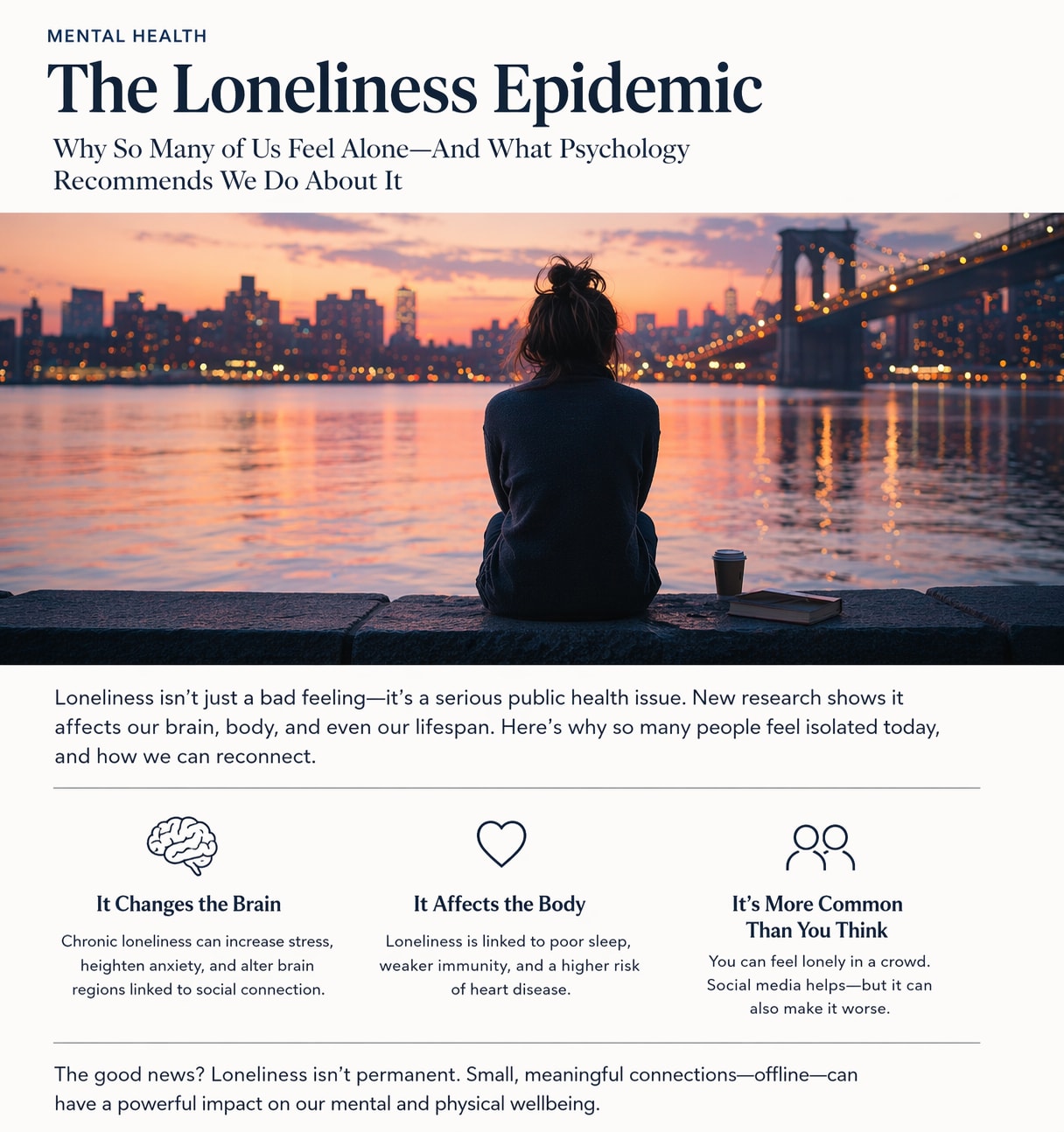
Despite living in a world that is more connected than at any point in history, many individuals are experiencing a profound and persistent sense of loneliness. Messages, social media, and constant digital communication create the illusion of connection, yet for many, this does not translate into meaningful relationships or emotional fulfilment. Increasingly, people report feeling isolated—not because they are physically alone, but because they feel psychologically unseen.
Loneliness is not simply about the absence of people; it is about the absence of meaningful connection. From a psychological perspective, it reflects a gap between the relationships we have and the relationships we need. This distinction is important. Someone can have an active social life and still feel deeply lonely, while another person with fewer social interactions may feel content and connected.
Research has highlighted the scale of this issue. Studies suggest that chronic loneliness is associated with increased risks of depression, anxiety, and even physical health conditions such as cardiovascular disease. Some findings have compared the health impact of prolonged loneliness to smoking or obesity, underlining its significance as a public health concern. Neurobiologically, loneliness activates similar brain regions associated with physical pain, which helps explain why it can feel so distressing.
One of the key drivers of modern loneliness is the quality of interaction. Digital communication often prioritises speed and convenience over depth. Conversations become shorter, more fragmented, and less emotionally rich. While social media allows us to maintain a broad network of contacts, it can reduce opportunities for genuine vulnerability—the foundation of meaningful connection. As a result, individuals may feel known at a surface level but not truly understood.
There is also a growing tendency toward emotional self-sufficiency. Many people feel pressure to appear independent, resilient, and “fine,” even when they are struggling. This can lead to a reluctance to share difficulties or seek support, reinforcing a sense of isolation. Over time, this pattern can become self-perpetuating: the less we open up, the less connected we feel, and the harder it becomes to reconnect.
Modern life has also reduced many of the natural structures that historically facilitated connection. Flexible working, remote environments, and transient lifestyles mean that people are less likely to form stable, long-term communities. While these changes offer freedom and opportunity, they can also limit consistent, meaningful social contact.
Importantly, loneliness is not a personal failure. It is a psychological experience shaped by both individual and environmental factors. Understanding this helps to reduce the stigma often associated with it. Many individuals assume that feeling lonely reflects something about their personality or social ability, when in reality it often reflects broader changes in how we live and relate to one another.
From a clinical perspective, addressing loneliness involves more than simply increasing social contact. It often requires a shift in how individuals engage in relationships. This may include developing greater emotional openness, challenging beliefs about vulnerability, and creating opportunities for deeper, more meaningful interaction. Psychological support can play a key role in this process, particularly for individuals who feel stuck in patterns of disconnection.
A balanced perspective is essential. Not all solitude is negative—time alone can be restorative and valuable. The issue arises when solitude becomes chronic isolation, or when individuals feel disconnected even in the presence of others.
Ultimately, the loneliness epidemic highlights a fundamental psychological need: the need to feel seen, understood, and valued. In a world that prioritises speed and productivity, this need can easily be overlooked. However, it remains central to emotional wellbeing.
With the right support and awareness, it is possible to move from isolation toward connection—not by increasing the number of interactions, but by improving their depth and authenticity.