


The Challenges of Xmas
posted 1st December 2025
Why the Festive Season Brings Both Happiness and Distress
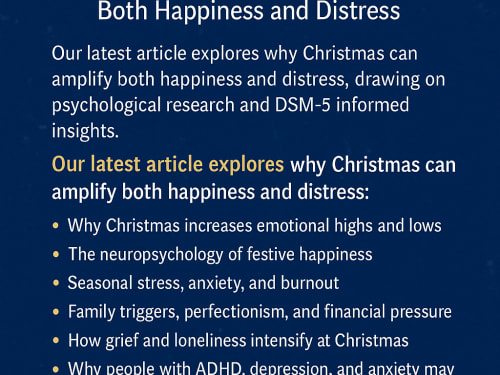
Christmas is widely portrayed as a season of joy, closeness, and celebration, yet psychologically it is one of the most complex periods of the year. While many people experience genuine happiness during the festive season, just as many encounter emotional strain, anxiety, or sadness. At The London Psychologist Clinic, we consistently observe that Christmas amplifies both wellbeing and distress—bringing latent emotions, expectations, and unresolved dynamics to the surface.
Part of the happiness associated with Christmas is neurobiological. Social rituals such as shared meals, exchanging gifts, and gathering with loved ones activate oxytocin pathways in the brain, enhancing feelings of connection and emotional warmth. The anticipation of the holiday period also stimulates dopaminergic reward systems, increasing motivation and positive mood. Many individuals additionally experience a comforting sense of nostalgia around Christmas, where familiar traditions and symbolic rituals evoke memories of security, belonging, and meaning. Psychologically, this combination of connection, reward, and reminiscence can create a powerful uplift in wellbeing.
However, the same season simultaneously presents several psychological risks, and distress often arises for understandable reasons. Christmas is heavily associated with social expectations—of harmony, generosity, celebration, and togetherness. These expectations frequently trigger perfectionism, self-criticism, or feelings of inadequacy when reality does not match idealised images. Financial strain is another significant factor. For individuals already prone to worry or tension, the additional pressures of gift-buying, hosting, and travel can heighten symptoms that overlap with DSM-5–described anxiety patterns, such as restlessness, difficulty concentrating, or irritability.
Family gatherings can additionally reactivate longstanding relational dynamics. Many people return to environments where old roles, unresolved conflicts, or subtle patterns of criticism re-emerge. For individuals with histories of emotional neglect, attachment wounds, or earlier trauma, Christmas can intensify emotional reactivity in ways that feel disproportionate yet are deeply rooted. Conversely, for those who are isolated or estranged from family, Christmas can highlight absence, loneliness, or perceived social comparison, sometimes echoing experiences associated with depressive symptom clusters in the DSM-5, such as reduced interest in activities, changes in sleep, or persistent low mood.
Grief is another significant factor. The festive season often brings with it a heightened awareness of those who are no longer present. “Anniversary reactions”—where emotional pain resurfaces around meaningful dates—are common and entirely understandable. Combined with disrupted routines, increased social demands, overstimulation, and reduced daylight, many individuals report feeling depleted or overwhelmed. These effects are particularly pronounced for those with ADHD, autism, or sensory sensitivities, where changes in routine and environmental overload can lead to heightened emotional dysregulation.
It is important to clarify that Christmas itself does not cause psychiatric disorders, nor should normal seasonal difficulties be pathologised. However, the period can intensify symptoms in individuals who already meet, or partially meet, DSM-5 criteria for conditions such as depression, anxiety disorders, ADHD, or substance-related difficulties. For example, reduced energy, diminished interest in activities, or changes in sleep and appetite may become more noticeable during December, particularly as daylight decreases and routines shift. Similarly, the UK’s strong alcohol-centric festive culture can create heightened vulnerability for those with pre-existing difficulties regulating substance use.
Supporting psychological wellbeing during Christmas requires a combination of realistic expectations, protective boundaries, and intentional self-care. Replacing idealised notions of a “perfect Christmas” with more flexible expectations can immediately reduce cognitive load and emotional activation. Maintaining basic routines—sleep, nutrition, movement—helps stabilise mood and energy. Establishing psychological boundaries, such as limiting time with difficult relatives or scaling back overwhelming commitments, is not avoidance but pragmatic emotional protection. Financial planning, meaningful but simple rituals, and seeking connection in whatever form is available can all contribute to a more grounded and manageable experience.
For individuals who find Christmas consistently challenging, therapeutic support can be especially helpful. Working with a psychologist provides space to understand emotional triggers, process grief, navigate family dynamics, and develop strategies that promote balance rather than burnout. A personalised psychological plan can make the difference between merely coping with the festive season and genuinely moving through it with clarity, resilience, and self-compassion.
Christmas is, ultimately, an emotional amplifier. It can bring warmth, meaning, and connection—but it can also bring pressure, sadness, and unresolved pain. Recognising the psychological complexity of the season allows us to approach it with greater awareness and kindness toward ourselves and others. If December is a time of heightened emotional difficulty for you or someone you know, The London Psychologist Clinic is here to support your wellbeing throughout the festive period and beyond.