


The Alcohol Elephant
posted 9th April 2026
The Alcohol Elephant in the Room: Why We Don’t See It — and Why It Matters
For many people, alcohol does not present itself as a problem. It is woven into daily routines, social lives, and coping strategies—often subtly, often acceptably. A glass of wine to unwind. Drinks after a long week. Something to “take the edge off.”
Because of this normalisation, one of the most psychologically significant aspects of alcohol use is not always the drinking itself—but the denial surrounding its impact.
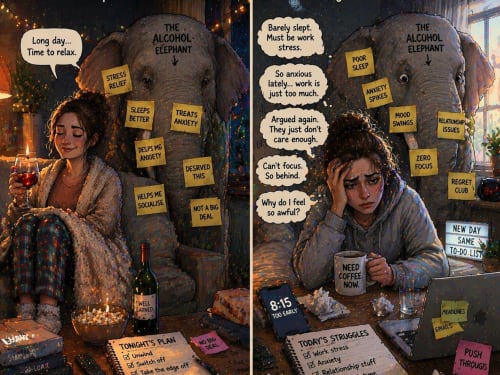
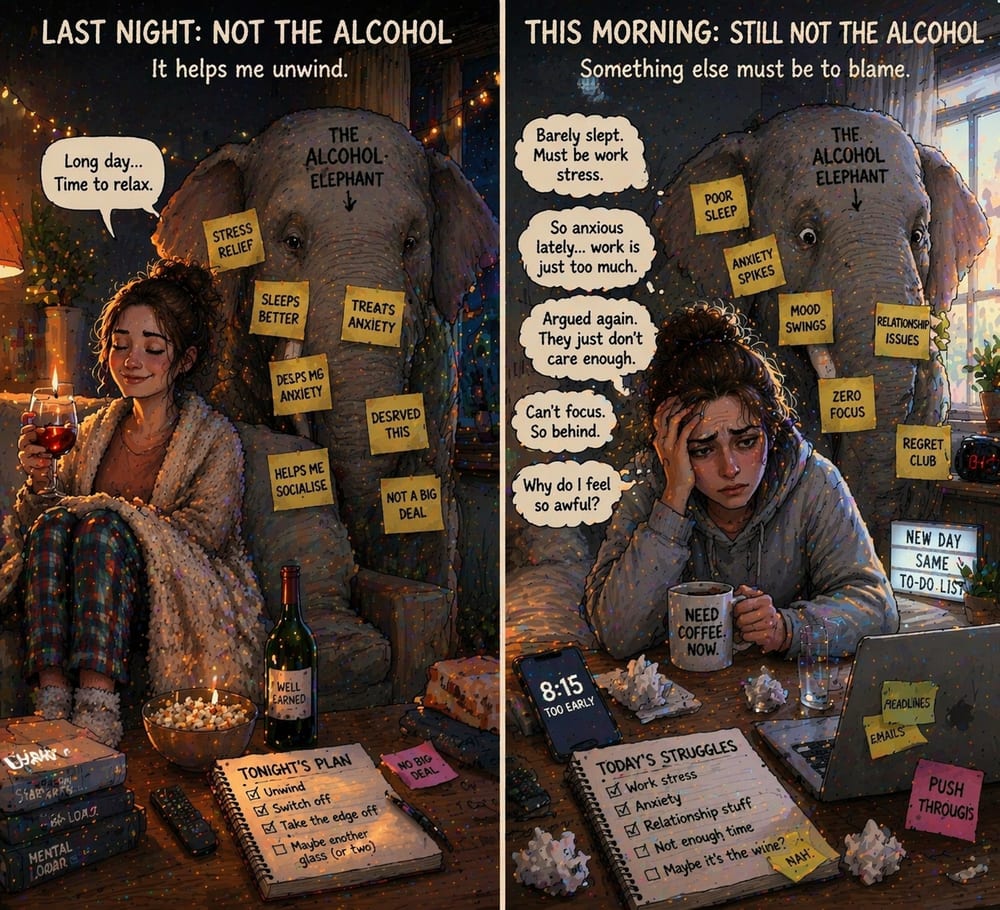
This is what can be described as the “alcohol elephant in the room”: a visible influence on mood, sleep, anxiety, and decision-making that is consistently explained away by other factors.
Why Alcohol Is Rarely Identified as the Problem
From a psychological perspective, denial is not simply avoidance—it is often a protective mechanism.
Alcohol frequently serves a function:
- Reducing stress
- Numbing difficult emotions
- Creating temporary relief or reward
When something serves a perceived purpose, the brain is less motivated to question it. Instead, it looks for alternative explanations for distress.
Research supports this. Surveys suggest that while a large proportion of adults drink regularly, only a minority perceive their drinking as problematic, even when it exceeds recommended guidelines. In the UK, for example, NHS data indicates that a significant percentage of adults drink at levels that increase health risk, yet most do not seek support or identify concern.
This creates a cognitive blind spot. the very thing contributing to distress is also the thing being used to cope with it.
The Psychology of “Blaming Everything Else”
Clinically, this often presents in familiar ways:
- “I’m anxious because of work.”
- “I didn’t sleep because I’ve got too much on my mind.”
- “We argued because they don’t listen.”
- “I feel low because I’m burnt out.”
While each of these may be partly true, alcohol can be quietly amplifying all of them.
This pattern is reinforced by several cognitive processes:
1. Cognitive Dissonance
When behaviour (drinking) conflicts with self-image (“I’m in control”), the mind reduces discomfort by minimising the impact of alcohol rather than questioning the behaviour.
2. Attribution Bias
We tend to attribute negative outcomes to external factors (stress, other people, workload) rather than internal contributors like alcohol use.
3. Short-Term Relief vs Long-Term Cost
Alcohol provides immediate relief, which reinforces its use. However, its negative effects—on mood, sleep, and cognition—emerge later, making the connection less obvious.
The Real Psychological Impact of the “Alcohol Elephant”
Alcohol rarely causes problems in isolation. Instead, it amplifies existing vulnerabilities.
Anxiety
Alcohol initially reduces anxiety through its sedative effects, but as it leaves the system, it leads to rebound anxiety. Studies show increased activity in stress systems following alcohol use, contributing to what many describe as “hangxiety.”
Mood
While alcohol increases dopamine in the short term, repeated use disrupts the brain’s reward system. Over time, this is associated with lower baseline mood and increased risk of depression.
Sleep
Alcohol may help with falling asleep, but it significantly disrupts sleep quality, particularly REM sleep. Poor sleep is strongly linked to emotional dysregulation, irritability, and reduced resilience to stress.
Cognitive Function
Even moderate alcohol use can impair attention, memory, and decision-making—effects that may persist beyond the period of intoxication.
Relationships
Alcohol reduces inhibition and increases emotional reactivity, which can contribute to conflict. Importantly, individuals often attribute these conflicts to relationship issues alone, rather than considering the role of alcohol.
The Subtle Escalation: When It Becomes the Default
One of the reasons the alcohol elephant remains unnoticed is that change tends to be gradual.
What begins as occasional drinking can become:
- A nightly habit
- A primary coping mechanism
- A default response to stress or discomfort
Research indicates that habitual drinking is strongly linked to environmental and emotional cues, rather than conscious decision-making. This means individuals may continue patterns of use without actively reflecting on them.
A Balanced Perspective: Not All Drinking Is Problematic
It is important to take a clinically balanced view. Not all alcohol use leads to significant psychological harm, and occasional drinking may not have lasting effects for many individuals.
However, the key issue is awareness.
The question is not simply:
“How much am I drinking?”
But:
“What role is alcohol playing in my life?”
“What might it be affecting that I’m attributing to something else?”
What Changes When You Notice the Elephant
From a psychological standpoint, awareness is often the turning point.
When individuals begin to recognise the role alcohol plays in:
Anxiety
Sleep
Mood
Relationships
They often report:
- Improved emotional stability
- Better quality sleep
- Reduced baseline anxiety
- Greater clarity in decision-making
This does not necessarily require complete abstinence for everyone. For some, it involves reducing frequency or changing patterns. For others, it may involve a more significant shift.
The “alcohol elephant” is powerful not because it is hidden—but because it is explained away.
It sits alongside stress, anxiety, and life’s pressures, quietly influencing them, while rarely being acknowledged as part of the picture.
Recognising it is not about blame. It is about clarity.
Because once you see the elephant, you are no longer trying to solve problems without all the information. And that is where meaningful, lasting change begins.