


Suicide: The impact

posted 25th February 2026
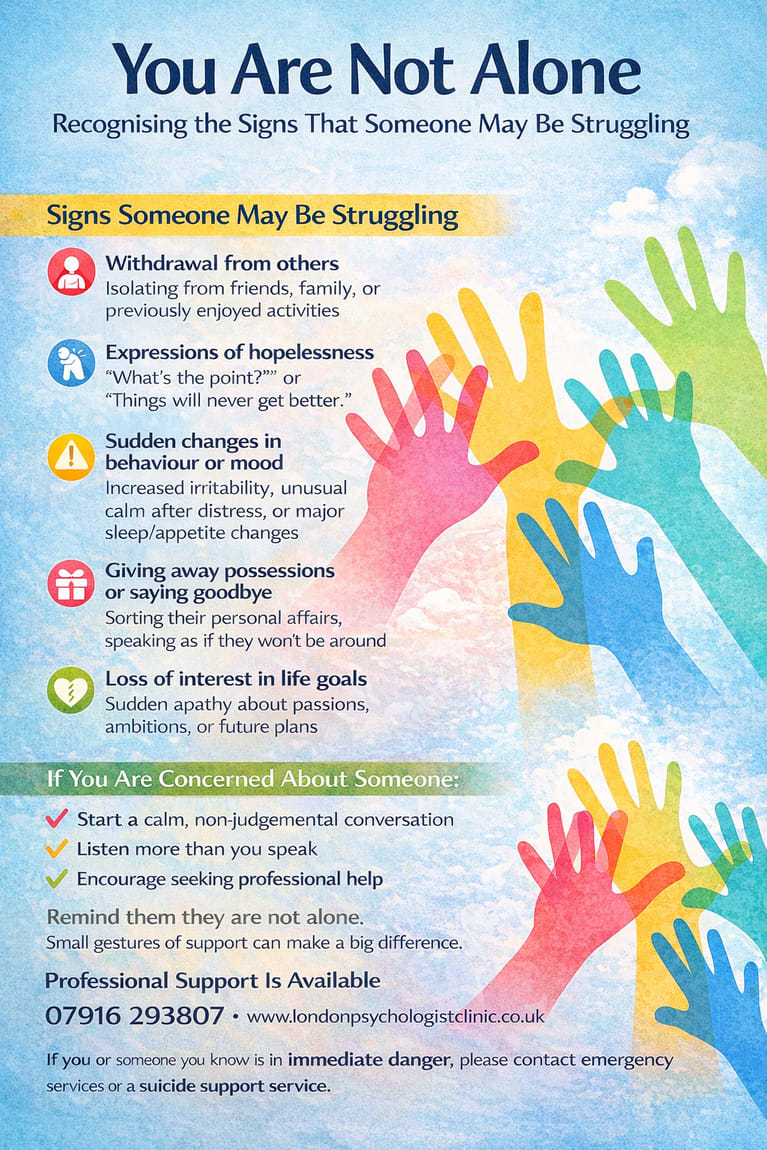
Suicide: Understanding Its Impact on Families and How to Respond
Suicide is one of the most painful and destabilising events a family can experience. It does not simply end a life; it alters the psychological landscape of everyone connected to that person. The aftermath is rarely linear. Shock, guilt, anger, confusion, shame, relief, love and resentment can coexist in ways that feel deeply unsettling. Many families describe the experience as a rupture in reality — a before and after that never quite joins back together.
For those left behind, grief is often complicated by unanswered questions. People replay conversations, scan memories for missed signs, and carry a heavy sense of responsibility. Parents may ask themselves what they failed to see. Partners may question whether they were enough. Siblings may struggle with survivor’s guilt. Children can internalise distorted meanings, believing in some way that they caused the death. Without support, these narratives can harden into long-term psychological wounds.
It is also important, though uncomfortable, to acknowledge that suicide can carry complex interpersonal meanings. While most suicidal behaviour emerges from overwhelming psychological pain and a belief that there is no other escape, it can at times include elements of communication or aggression. For some individuals, particularly those experiencing intense shame, humiliation, abandonment or rage, suicide can function as a final message: an expression of despair that may also carry anger. Recognising this does not imply blame, nor does it diminish the suffering involved. It simply reflects the psychological reality that human actions — especially extreme ones — are rarely one-dimensional. Families often feel anger toward the person who died, and that anger can sit alongside profound love. Both are valid.
When we turn to prevention, the signs are often subtle rather than dramatic. People rarely announce their intentions clearly. Instead, there may be gradual withdrawal, loss of interest in previously valued activities, changes in sleep or appetite, increased use of alcohol or substances, or expressions of feeling like a burden. Some speak in ways that hint at hopelessness or entrapment. Others appear suddenly calm after a period of visible distress, which can sometimes indicate a private decision has been made. Giving away meaningful possessions or researching methods online are more overt warning signs and should always be taken seriously.
In teenagers, suicidal distress often presents differently from adults. Irritability may replace sadness. Academic performance may decline. Social withdrawal from peers, heightened sensitivity to humiliation, experiences of bullying — particularly online — or sudden shifts in friendship groups can signal underlying vulnerability. Adolescence is a developmental period characterised by heightened emotional intensity and a still-maturing capacity for impulse control. Social comparison, identity struggles, academic pressure and exposure to suicide-related content online can amplify risk. Importantly, asking a young person directly about suicidal thoughts does not increase the likelihood that they will act on them. Evidence consistently shows that open, calm questioning reduces isolation and increases safety.
If you are concerned about someone, clarity and presence are more protective than perfection. The first task is not to provide solutions but to reduce aloneness. Speaking directly about suicide communicates that the subject is not taboo and that their inner world can be tolerated.
1. Ask clearly and calmly whether they are thinking about harming themselves or ending their life.
2. If risk feels immediate, remain with them and do not leave them alone.
3. Remove access to anything that could be used to harm themselves where possible.
4. Seek urgent medical help if necessary by calling emergency services or going to Accident & Emergency.
5. Arrange a prompt appointment with their GP or a mental health professional for formal assessment.
6. Collaboratively develop a safety plan that identifies triggers, coping strategies and emergency contacts.
7. Continue checking in regularly; sustained follow-up reduces risk more than one intense conversation.
In the UK, if someone is in immediate danger, call 999 or attend the nearest A&E department. For urgent emotional support, Samaritans are available 24 hours a day on 116 123. The NHS urgent mental health helpline can be reached by calling 111 and selecting the mental health option. Shout offers text-based crisis support by texting 85258. For young people under 35, Papyrus HOPELINE247 is available on 0800 068 4141 or by text on 07860 039 967. Childline provides confidential support for those under 19 on 0800 1111, and YoungMinds operates a crisis text service by texting YM to 85258.
Once immediate safety is addressed, ongoing therapeutic support is often essential. Evidence-based interventions such as Cognitive Behavioural Therapy for suicidal thinking, Dialectical Behaviour Therapy for emotional dysregulation, family therapy in adolescent cases, and psychiatric review where appropriate can significantly reduce recurrence. For families bereaved by suicide, specialist bereavement counselling can help prevent complicated grief and address trauma responses.
Equally important is understanding what not to do. Minimising the person’s pain by comparing it to others’ suffering can increase shame. Offering simplistic reassurances may unintentionally invalidate their experience. Making promises to keep suicidal thoughts secret isolates them further. Reacting with visible panic or anger can cause the individual to withdraw. And assuming that one improved day means the crisis has passed can be dangerously misleading. Suicidal crises often fluctuate.
If you are the person struggling, it is important to know that suicidal thoughts usually signal an unbearable state, not a genuine desire for death itself. Many people who survive suicide attempts later describe feeling relieved that they did. Thoughts can be intense and persuasive, but they are not permanent truths. The first step does not need to be dramatic. It can be as simple as telling one person, “I am not okay.” It can be sitting in a waiting room. It can be making a phone call and saying nothing for a few seconds before words come.
Suicide is rarely about a lack of love. It is most often about a collapse of hope combined with psychological pain that feels inescapable. Families cannot control every outcome. But early recognition, direct conversation and sustained support can interrupt isolation. Presence — steady, calm and persistent — is one of the most powerful protective factors we have.
Here are the key free, confidential UK helpline numbers and services you or a loved one can contact right now if someone is suicidal, in crisis, or you’re worried about them:
📞 Immediate Crisis Support
Emergency services: 999 — If someone’s life is at imminent risk.
NHS urgent mental health support: 111, then select the mental health option — available 24/7 for anyone in the UK who needs urgent advice or assessment.
📞 24/7 Helplines for Anyone Struggling
Samaritans — 116 123 (free to call from UK mobiles/landlines, 24/7) — emotional support for people in distress or suicidal crisis.
Shout — Text “SHOUT” to 85258 — free, confidential 24/7 text support for anyone in crisis, including suicidal thoughts.
📞 Support for Young People & Families
Papyrus HOPELINE247 — 0800 068 4141 or Text “SHOUT” to 85258 for young people (under 35) struggling with suicidal thoughts, or anyone concerned about a young person.
Childline — 0800 1111 — free counselling (phone & online) for under-19s.
📞 Specialist and Additional Support
Suicide Prevention UK — 0800 587 0800 — support whether you need help for yourself, for someone else, or are bereaved by suicide.
CALM (Campaign Against Living Miserably) — free support for men and anyone struggling (phone/web chat available; see their site for details).
🧠 Who Each Service Is For
Anyone in immediate danger: 999 or go to A&E.
Anyone struggling emotionally / suicidal feelings: Samaritans (116 123), Shout (text), Papyrus HOPELINE247 (young people).
Parents, carers, family members worried about someone else: Papyrus HOPELINE247 and Suicide Prevention UK.