


Rejection Sensitivity and Emotional Reactivity
posted 17th April 2026
Click image to enlarge
Rejection Sensitivity and Emotional Reactivity in the Digital Age
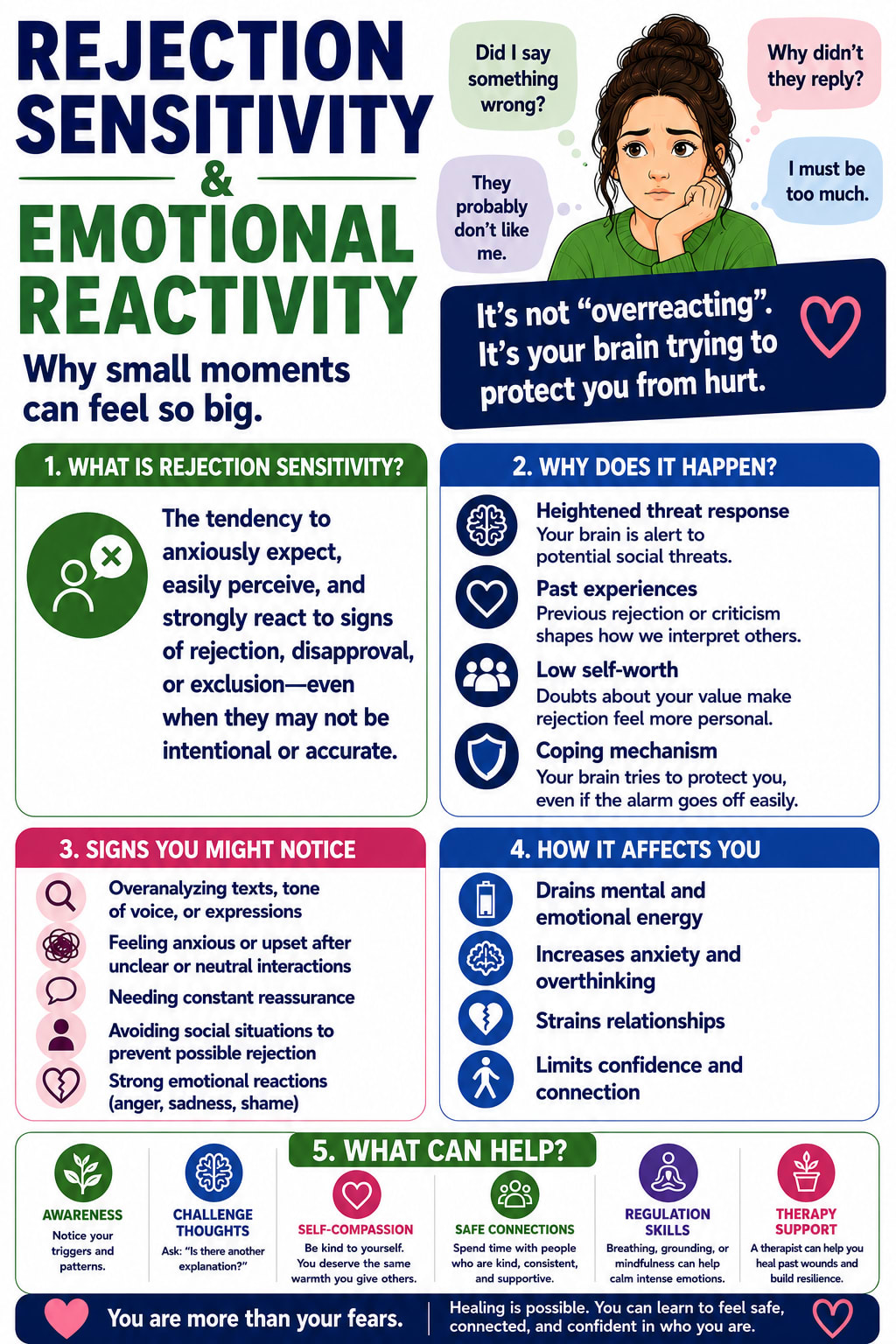
Rejection sensitivity has become an increasingly discussed psychological concept, particularly in the context of modern communication and social media. While sensitivity to social feedback is a normal human experience, some individuals exhibit an intense emotional response to perceived rejection, criticism, or exclusion. This can lead to heightened anxiety, rumination, and interpersonal difficulties, even in situations where rejection is ambiguous or unintended.
In today’s digital landscape, communication is often brief, delayed, or lacking in nuance—such as unread messages, short replies, or social media interactions. These conditions can amplify uncertainty and increase the likelihood of misinterpreting social cues. For individuals with high rejection sensitivity, this environment can act as a trigger, reinforcing patterns of overthinking and negative self-evaluation. What may appear to others as a minor interaction can be experienced as deeply personal and distressing.
From a psychological perspective, rejection sensitivity is closely linked to underlying cognitive and emotional processes. Individuals may hold core beliefs related to unworthiness, abandonment, or fear of disapproval, which shape how they interpret social situations. These beliefs are often maintained through cognitive biases, such as mind-reading or catastrophising, and behavioural responses such as reassurance seeking or withdrawal. Over time, this can create a self-perpetuating cycle, where fear of rejection leads to behaviours that inadvertently impact relationships.
Rejection sensitivity is also associated with emotional dysregulation, making it more difficult to tolerate and process distressing emotions. This can result in rapid shifts in mood, heightened reactivity, and difficulty returning to baseline after perceived social threats. It is particularly relevant in individuals with anxiety disorders, depression, and traits associated with ADHD or borderline personality patterns, although it can occur across a wide range of presentations.
Evidence-based treatment focuses on helping individuals develop greater awareness of their cognitive and emotional responses. Cognitive Behavioural Therapy (CBT) can be effective in identifying and challenging unhelpful thought patterns, while also addressing behavioural responses that maintain the cycle. Increasingly, therapeutic approaches also incorporate elements of emotion regulation training, mindfulness, and interpersonal work to build resilience and flexibility in social situations.
A key therapeutic goal is helping individuals differentiate between perceived and actual rejection, and to respond in a more balanced and measured way. This involves developing tolerance for uncertainty, reducing reliance on external validation, and strengthening a more stable sense of self-worth. Over time, individuals can learn to engage in relationships with greater confidence and less fear-driven reactivity.
In conclusion, rejection sensitivity represents a nuanced and increasingly relevant psychological issue in a digitally connected world. As communication becomes more fragmented and ambiguous, the potential for misinterpretation and emotional distress increases. With appropriate, evidence-based support, individuals can develop healthier patterns of thinking and relating, improving both their emotional wellbeing and the quality of their interpersonal relationships.