


People-Pleasing and Emotional Burnout
posted 26th May 2026
Click to enlarge
People-Pleasing and Emotional Burnout: Why Constantly Putting Others First Can Affect Mental Health
Many people are taught from an early age to be helpful, accommodating, kind, and considerate of others. While empathy and compassion are important qualities, constantly prioritising other people’s needs above your own can sometimes come at a significant emotional cost.
Psychologists are increasingly recognising the link between *people-pleasing behaviours* and anxiety, stress, burnout, low self-esteem, and emotional exhaustion.
Many individuals who struggle with people-pleasing appear highly caring and dependable on the outside while privately feeling overwhelmed, anxious, resentful, or emotionally depleted.
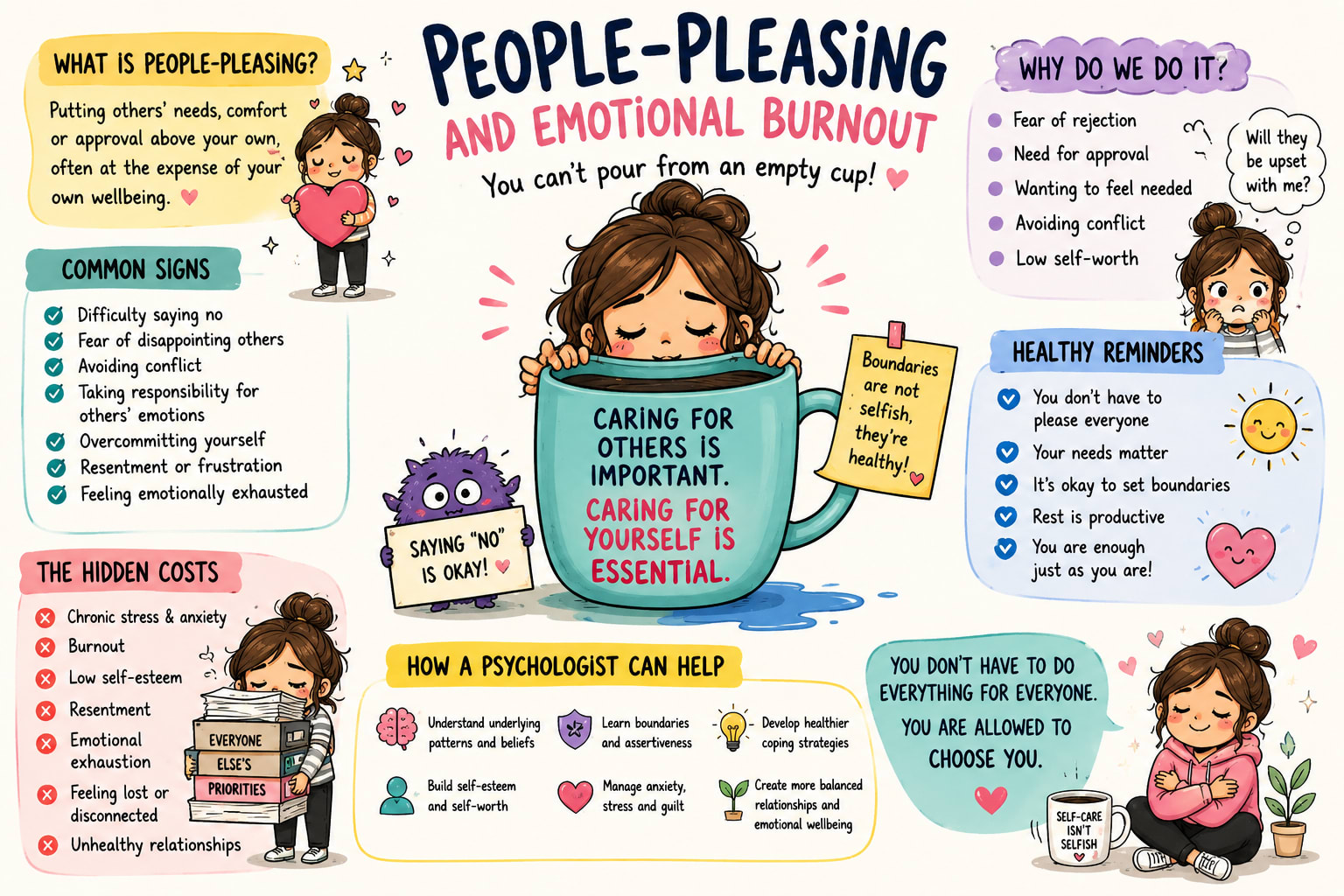
What Is People-Pleasing?
People-pleasing refers to patterns of behaviour where individuals consistently prioritise the needs, emotions, approval, or comfort of others over their own wellbeing.
This may involve:
- Difficulty saying no
- Fear of disappointing others
- Avoiding conflict at all costs
- Taking responsibility for other people’s emotions
- Constantly seeking approval or reassurance
- Ignoring personal needs or boundaries
While occasional compromise is healthy in relationships, chronic people-pleasing can lead to emotional imbalance and psychological strain.
Why Do People Become People-Pleasers?
People-pleasing behaviours often develop gradually over time.
Some individuals may have learned that being helpful, agreeable, or emotionally accommodating helped them feel:
- Safe
- Accepted
- Loved
- Valued
- Less likely to experience rejection or conflict
In some cases, people-pleasing may be linked to childhood experiences, family dynamics, attachment patterns, or environments where emotional needs were not consistently met.
For others, perfectionism, anxiety, or fear of criticism may also reinforce these patterns.
Signs People-Pleasing May Be Affecting Mental Health
Many people do not initially recognise how emotionally draining chronic people-pleasing can become.
Common signs may include:
- Feeling emotionally exhausted
- Difficulty expressing your own needs
- Anxiety about disappointing others
- Feeling guilty when setting boundaries
- Overcommitting yourself
- Resentment building internally
- Burnout and chronic stress
- Feeling responsible for everyone else’s wellbeing
Over time, constantly prioritising others while neglecting your own emotional needs can affect self-esteem, confidence, relationships, and overall mental health.
Case Study: Feeling Responsible for Everyone Else
Emily, a 29-year-old healthcare professional, was known by friends and colleagues as supportive, caring, and reliable.
However, privately she struggled with:
- Chronic stress and overwhelm
- Difficulty saying no
- Guilt when prioritising herself
- Emotional exhaustion
- Anxiety about disappointing others
Emily often agreed to extra responsibilities even when she felt overwhelmed because she feared letting people down.
Over time, she began experiencing burnout, resentment, and increasing anxiety.
Eventually, she sought support from a psychologist.
Through therapy, Emily began recognising how deeply fear of rejection and self-worth patterns influenced her people-pleasing behaviours.
How Can a Psychologist Help?
A psychologist can help individuals better understand the emotional patterns and beliefs that may contribute to chronic people-pleasing.
Therapy provides a supportive and non-judgemental space to explore:
- Boundaries and assertiveness
- Anxiety and self-esteem
- Fear of rejection or conflict
- Relationship dynamics
- Emotional regulation
- Perfectionism and self-criticism
- Burnout and chronic stress
Treatment approaches may include:
- Cognitive Behavioural Therapy (CBT)
- Compassion-Focused Therapy (CFT)
- Psychodynamic therapy
- Assertiveness training
- Mindfulness-based approaches
- Emotional regulation strategies
Therapy can help individuals develop healthier boundaries, improve self-worth, reduce guilt, and create more balanced relationships.
Why Healthy Boundaries Matter
Psychological wellbeing depends not only on caring for others, but also on recognising and respecting your own emotional needs.
Healthy boundaries are not selfish — they are an important part of emotional wellbeing and sustainable relationships.
Healthy boundaries may involve:
- Saying no without excessive guilt
- Recognising your emotional limits
- Prioritising rest and self-care
- Communicating needs more openly
- Accepting that you cannot please everyone
Learning to set boundaries can feel uncomfortable initially, particularly for individuals who have spent years prioritising others first.
However, over time, healthier boundaries often lead to:
- Reduced stress and burnout
- Improved emotional balance
- Stronger self-esteem
- More authentic relationships
- Greater emotional resilience
You Do Not Have to Earn Your Worth Through Constant Self-Sacrifice
Many people who struggle with people-pleasing tie their self-worth to being needed, helpful, or constantly available for others.
But emotional wellbeing does not require sacrificing your own needs in order to deserve acceptance or love.
Therapy can help individuals build healthier self-worth, improve emotional balance, and develop more compassionate and sustainable ways of relating to both themselves and others.