


Pathological Jealousy and Relationship Insecurity
posted 5th March 2026
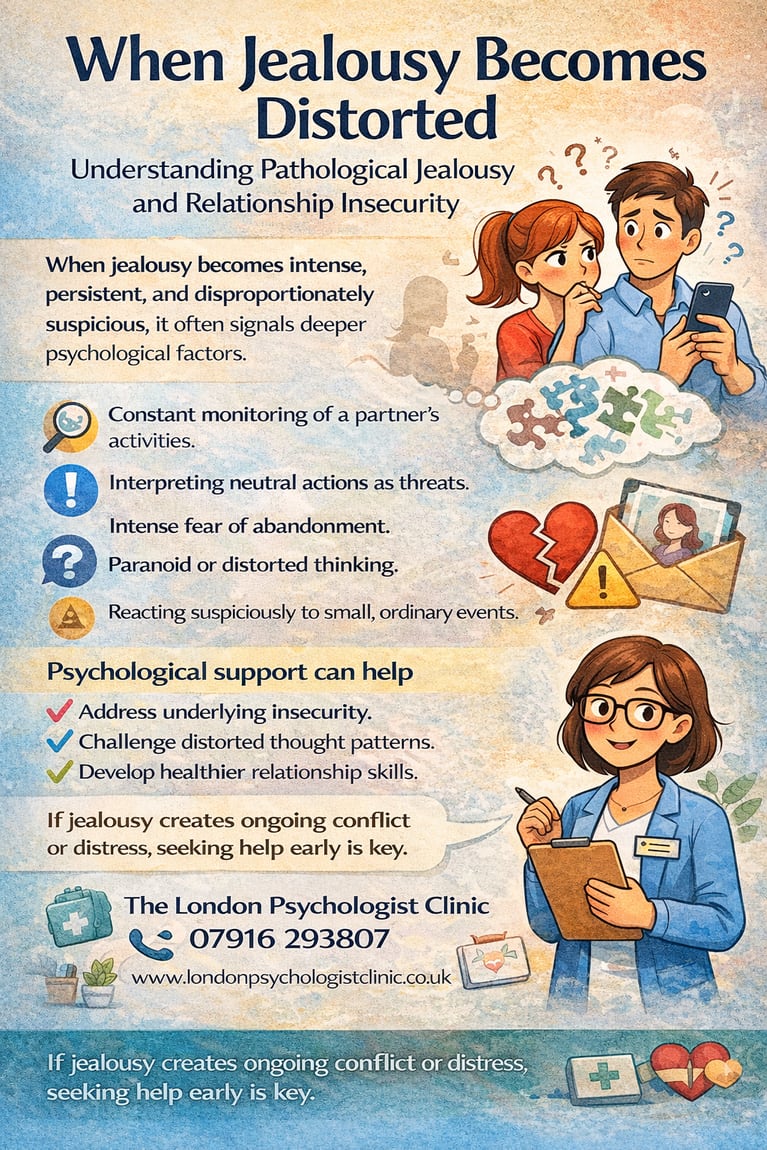
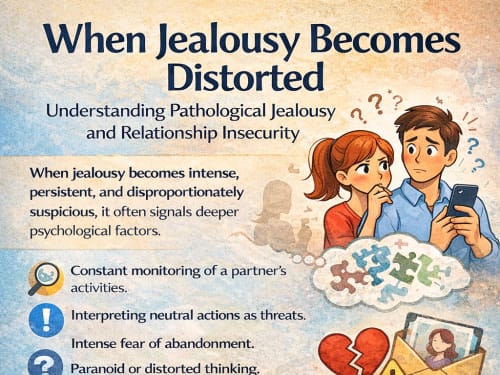
When Jealousy Becomes Distorted
Jealousy is a normal human emotion. Most people experience it at times when they feel their relationship, identity, or sense of security may be threatened. In healthy relationships, these feelings are usually temporary and tend to resolve when reassurance or evidence shows that no real threat exists.
However, there are situations where jealousy becomes disproportionate, persistent, and begins to distort how a person interprets ordinary events. When this happens, psychologists begin to consider whether the emotion is no longer a normal response, but instead reflects deeper psychological processes influencing how the individual perceives reality.
When Ordinary Behaviour Becomes Interpreted as Threatening
One of the clearest signs that jealousy has moved beyond normal emotional territory is when neutral or harmless actions begin to be interpreted as threatening.
For example, a person may start to believe that their partner going to the gym, using a running machine, joining a social club, or engaging in normal daily activities is somehow directed against them or represents a hidden threat to the relationship. These interpretations often arise not from the behaviour itself, but from underlying feelings of insecurity, fear of loss, or mistrust.
When the mind repeatedly interprets benign situations as evidence of danger or betrayal, the issue is no longer simply jealousy—it becomes a problem of distorted perception.
Pathological Jealousy and Morbid Suspicion
One psychological pattern associated with this behaviour is pathological jealousy, sometimes referred to as morbid jealousy or Othello syndrome. In these cases, the individual becomes intensely preoccupied with perceived threats to their relationship or status.
People experiencing pathological jealousy may frequently monitor a partner’s activities, question their behaviour, or interpret routine actions as suspicious. Even small changes in routine—such as a different schedule or a new hobby—can trigger strong feelings of doubt or emotional distress. The suspicion is often not based on clear evidence, but on a persistent sense that something must be wrong.
This type of jealousy can be emotionally exhausting for both individuals in the relationship because the person experiencing it may feel constant anxiety, while the partner may feel scrutinised, mistrusted, or unfairly blamed.
Paranoid Thinking Patterns
In some cases, the underlying issue may involve paranoid patterns of thinking. This does not necessarily mean that a person is experiencing psychosis. Rather, it reflects a heightened tendency to assume that other people’s actions are intentionally directed against them.
Individuals with this pattern may become hypersensitive to perceived slights or threats, interpreting neutral situations as hostile, competitive, or undermining. In milder forms this may present as chronic mistrust or suspicion. In more pronounced cases, these patterns can overlap with personality traits associated with Paranoid Personality Disorder.
The Role of Insecurity and Fragile Self-Esteem
For many people, however, the core issue is neither paranoia nor delusion but deep insecurity and unstable self-esteem.
When someone’s sense of self-worth is fragile, ordinary actions by others—such as improving fitness, socialising, or pursuing new interests—can trigger powerful feelings of comparison or fear of abandonment. Rather than confronting these uncomfortable emotions directly, the mind may attempt to protect itself by reframing the situation as a threat.
In other words, it may feel psychologically easier to believe that someone else is doing something wrong than to acknowledge one’s own fear of being inadequate or replaced.
Attachment Anxiety and Fear of Abandonment
Another factor that can contribute to intense jealousy is attachment insecurity. People with anxious attachment styles often carry a strong fear of being rejected, replaced, or left behind in relationships.
When this fear becomes heightened, even normal independence from a partner—such as spending time with friends, pursuing hobbies, or developing personal goals—can be interpreted as rejection. The emotional reaction is therefore less about the specific behaviour and more about the deeper fear of losing the relationship.
Warning Signs That Jealousy Has Become Problematic
From a behavioural perspective, there are several signs that jealousy may be moving beyond typical emotional reactions.
A person may frequently accuse others of hidden motives, question routine activities, or react strongly to minor changes in behaviour. They may become distressed about situations that most people would consider neutral or harmless. Over time this pattern can create tension within relationships because the other person begins to feel constantly monitored or criticised.
The key issue is not the presence of jealousy itself, but how rigidly the beliefs surrounding it are held. When someone becomes convinced that benign actions are threatening and finds it difficult to reconsider that interpretation, the pattern can begin to interfere with relationships and daily functioning.
Why Reassurance Often Does Not Work
People experiencing intense jealousy often seek reassurance from their partner or loved ones. While reassurance may temporarily reduce anxiety, it rarely resolves the underlying issue.
In some cases, repeated reassurance can even reinforce the cycle because the root causes—such as insecurity, attachment anxiety, or distorted thinking patterns—remain unaddressed.
For this reason, persistent jealousy often requires deeper psychological understanding rather than repeated reassurance.
The Role of Psychological Support
When jealousy and suspicion become persistent or begin to damage relationships, psychological support can be extremely helpful.
A psychologist can help explore the underlying factors driving the emotion—whether they involve insecurity, attachment patterns, cognitive distortions, or paranoid thinking styles. Therapy often focuses on helping individuals develop more balanced interpretations of events and learn healthier ways to manage anxiety and relational fears.
Cognitive behavioural approaches can be particularly effective in addressing the misinterpretation of social cues and perceived threats, while other therapeutic methods may focus on strengthening self-esteem, emotional regulation, and trust within relationships.
Understanding the Emotional Reality Behind Jealousy
It is important to recognise that people experiencing this kind of jealousy are often not intentionally controlling or manipulative. In many cases they are dealing with genuine anxiety about losing something that feels deeply important to them.
The behaviour that emerges—monitoring, questioning, or interpreting ordinary events as threatening—is usually an attempt to manage that anxiety, even if it ultimately creates further problems in the relationship.
When to Seek Help
If jealousy and suspicion are repeatedly triggered by small or ordinary events, and particularly if they begin to cause ongoing conflict or distress within relationships, seeking professional support can be beneficial.
Addressing these patterns early is often much easier than attempting to change them once they have become deeply entrenched.
In simple terms, the distinction is this: normal jealousy tends to respond to reassurance and evidence, while problematic jealousy often persists despite reassurance and continues to reinterpret ordinary behaviour as threatening.
When that happens, it is usually a sign that the emotion is being driven by deeper psychological processes that deserve understanding and support rather than dismissal.
When Jealousy Becomes Distorted
Jealousy is a normal human emotion. Most people experience it at times when they feel their relationship, identity, or sense of security may be threatened. In healthy relationships, these feelings are usually temporary and tend to resolve when reassurance or evidence shows that no real threat exists.
However, there are situations where jealousy becomes disproportionate, persistent, and begins to distort how a person interprets ordinary events. When this happens, psychologists begin to consider whether the emotion is no longer a normal response, but instead reflects deeper psychological processes influencing how the individual perceives reality.
When Ordinary Behaviour Becomes Interpreted as Threatening
One of the clearest signs that jealousy has moved beyond normal emotional territory is when neutral or harmless actions begin to be interpreted as threatening.
For example, a person may start to believe that their partner going to the gym, using a running machine, joining a social club, or engaging in normal daily activities is somehow directed against them or represents a hidden threat to the relationship. These interpretations often arise not from the behaviour itself, but from underlying feelings of insecurity, fear of loss, or mistrust.
When the mind repeatedly interprets benign situations as evidence of danger or betrayal, the issue is no longer simply jealousy—it becomes a problem of distorted perception.
Pathological Jealousy and Morbid Suspicion
One psychological pattern associated with this behaviour is pathological jealousy, sometimes referred to as morbid jealousy or Othello syndrome. In these cases, the individual becomes intensely preoccupied with perceived threats to their relationship or status.
People experiencing pathological jealousy may frequently monitor a partner’s activities, question their behaviour, or interpret routine actions as suspicious. Even small changes in routine—such as a different schedule or a new hobby—can trigger strong feelings of doubt or emotional distress. The suspicion is often not based on clear evidence, but on a persistent sense that something must be wrong.
This type of jealousy can be emotionally exhausting for both individuals in the relationship because the person experiencing it may feel constant anxiety, while the partner may feel scrutinised, mistrusted, or unfairly blamed.
Paranoid Thinking Patterns
In some cases, the underlying issue may involve paranoid patterns of thinking. This does not necessarily mean that a person is experiencing psychosis. Rather, it reflects a heightened tendency to assume that other people’s actions are intentionally directed against them.
Individuals with this pattern may become hypersensitive to perceived slights or threats, interpreting neutral situations as hostile, competitive, or undermining. In milder forms this may present as chronic mistrust or suspicion. In more pronounced cases, these patterns can overlap with personality traits associated with Paranoid Personality Disorder.
The Role of Insecurity and Fragile Self-Esteem
For many people, however, the core issue is neither paranoia nor delusion but deep insecurity and unstable self-esteem.
When someone’s sense of self-worth is fragile, ordinary actions by others—such as improving fitness, socialising, or pursuing new interests—can trigger powerful feelings of comparison or fear of abandonment. Rather than confronting these uncomfortable emotions directly, the mind may attempt to protect itself by reframing the situation as a threat.
In other words, it may feel psychologically easier to believe that someone else is doing something wrong than to acknowledge one’s own fear of being inadequate or replaced.
Attachment Anxiety and Fear of Abandonment
Another factor that can contribute to intense jealousy is attachment insecurity. People with anxious attachment styles often carry a strong fear of being rejected, replaced, or left behind in relationships.
When this fear becomes heightened, even normal independence from a partner—such as spending time with friends, pursuing hobbies, or developing personal goals—can be interpreted as rejection. The emotional reaction is therefore less about the specific behaviour and more about the deeper fear of losing the relationship.
Warning Signs That Jealousy Has Become Problematic
From a behavioural perspective, there are several signs that jealousy may be moving beyond typical emotional reactions.
A person may frequently accuse others of hidden motives, question routine activities, or react strongly to minor changes in behaviour. They may become distressed about situations that most people would consider neutral or harmless. Over time this pattern can create tension within relationships because the other person begins to feel constantly monitored or criticised.
The key issue is not the presence of jealousy itself, but how rigidly the beliefs surrounding it are held. When someone becomes convinced that benign actions are threatening and finds it difficult to reconsider that interpretation, the pattern can begin to interfere with relationships and daily functioning.
Why Reassurance Often Does Not Work
People experiencing intense jealousy often seek reassurance from their partner or loved ones. While reassurance may temporarily reduce anxiety, it rarely resolves the underlying issue.
In some cases, repeated reassurance can even reinforce the cycle because the root causes—such as insecurity, attachment anxiety, or distorted thinking patterns—remain unaddressed.
For this reason, persistent jealousy often requires deeper psychological understanding rather than repeated reassurance.
The Role of Psychological Support
When jealousy and suspicion become persistent or begin to damage relationships, psychological support can be extremely helpful.
A psychologist can help explore the underlying factors driving the emotion—whether they involve insecurity, attachment patterns, cognitive distortions, or paranoid thinking styles. Therapy often focuses on helping individuals develop more balanced interpretations of events and learn healthier ways to manage anxiety and relational fears.
Cognitive behavioural approaches can be particularly effective in addressing the misinterpretation of social cues and perceived threats, while other therapeutic methods may focus on strengthening self-esteem, emotional regulation, and trust within relationships.
Understanding the Emotional Reality Behind Jealousy
It is important to recognise that people experiencing this kind of jealousy are often not intentionally controlling or manipulative. In many cases they are dealing with genuine anxiety about losing something that feels deeply important to them.
The behaviour that emerges—monitoring, questioning, or interpreting ordinary events as threatening—is usually an attempt to manage that anxiety, even if it ultimately creates further problems in the relationship.
When to Seek Help
If jealousy and suspicion are repeatedly triggered by small or ordinary events, and particularly if they begin to cause ongoing conflict or distress within relationships, seeking professional support can be beneficial.
Addressing these patterns early is often much easier than attempting to change them once they have become deeply entrenched.
In simple terms, the distinction is this: normal jealousy tends to respond to reassurance and evidence, while problematic jealousy often persists despite reassurance and continues to reinterpret ordinary behaviour as threatening.
When that happens, it is usually a sign that the emotion is being driven by deeper psychological processes that deserve understanding and support rather than dismissal.