


Panic Disorder Explained
posted 24th April 2026
Panic Disorder: Understanding Sudden Anxiety and How CBT Can Help You Regain Control
Panic Disorder is one of the most distressing forms of anxiety, often emerging suddenly and without warning. Many individuals describe their first panic attack as a moment they genuinely believed something catastrophic was happening—such as a heart attack or loss of control. At The London Psychologist Clinic, we frequently work with clients who feel trapped not only by the panic attacks themselves, but by the ongoing fear of when the next one might occur. This fear can gradually restrict daily life, leading to avoidance of situations, places, or activities once taken for granted.
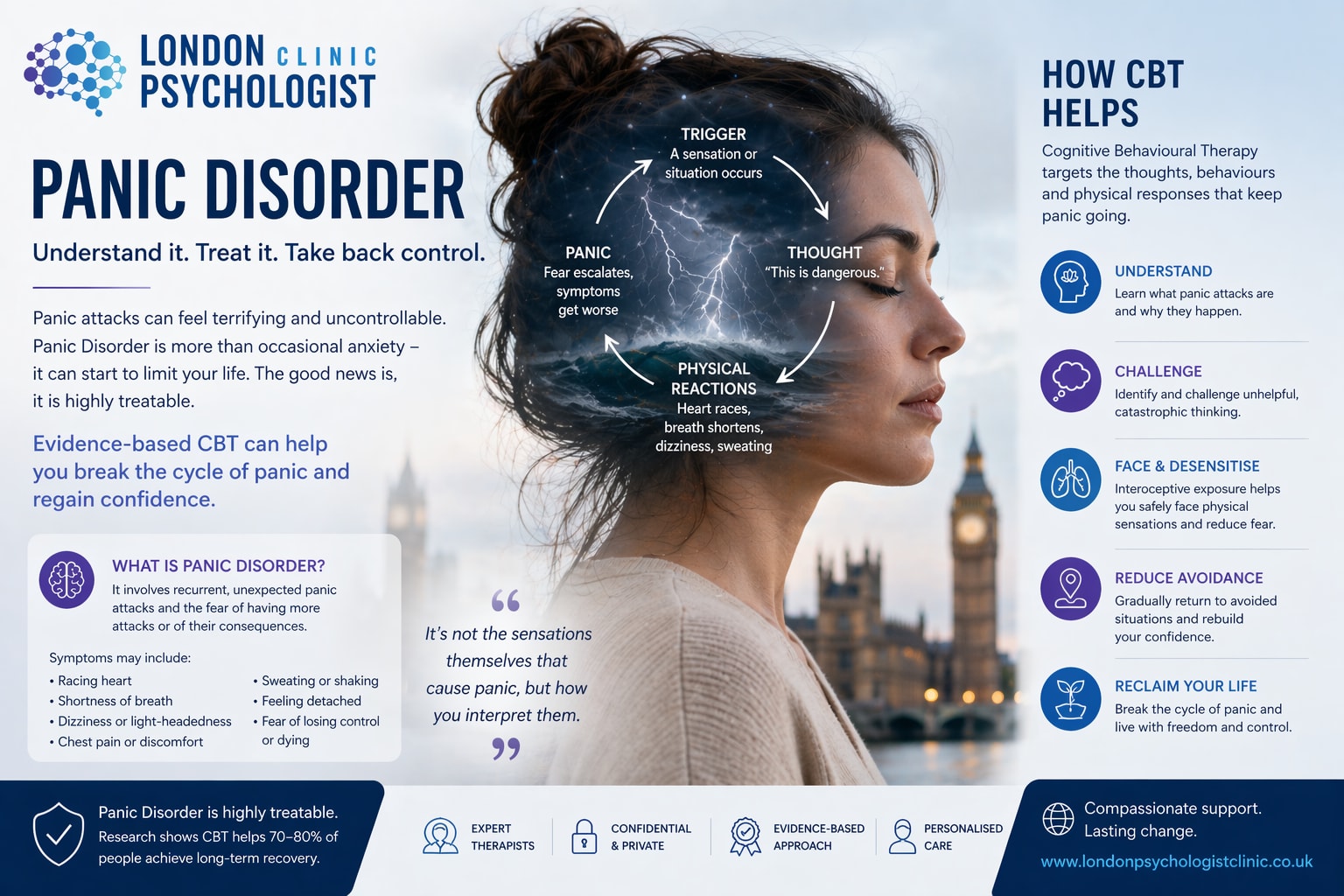
According to the DSM-5, Panic Disorder is defined by recurrent, unexpected panic attacks, alongside persistent concern about having further attacks or changing behaviour to avoid them. A panic attack is a sudden surge of intense fear that peaks within minutes and is accompanied by powerful physical sensations. These may include a racing heart, shortness of breath, dizziness, chest pain, shaking, or a sense of unreality. What makes panic disorder particularly challenging is not just the intensity of these symptoms, but how they are interpreted. Many individuals understandably assume these sensations signal something dangerous, which in turn amplifies the panic response.
Panic Disorder sits within the broader spectrum of anxiety disorders, but it differs from conditions such as Generalised Anxiety Disorder in its episodic nature. Rather than ongoing worry, panic disorder is characterised by acute bursts of fear. However, both share underlying mechanisms, including heightened sensitivity to threat and a tendency to overestimate danger. In panic disorder, the “threat” is often internal—bodily sensations that are misinterpreted as harmful. This creates a powerful feedback loop where fear increases physical symptoms, and those symptoms increase fear.
The causes of Panic Disorder are best understood through a combination of biological, psychological, and learned factors. Some individuals have a more sensitive nervous system, meaning their body reacts more strongly to stress. This heightened reactivity can make normal physical sensations feel more intense. Psychologically, the key process is the misinterpretation of these sensations. For example, a slight increase in heart rate may be interpreted as a sign of imminent danger. Over time, the brain begins to associate these sensations—or the contexts in which they occur—with threat, leading to conditioned fear responses. This is why panic can begin to feel unpredictable and uncontrollable.
A common question is whether Panic Disorder can be cured. The evidence is very encouraging. Panic Disorder is considered highly treatable, and many individuals achieve full recovery with the right intervention. Rather than eliminating anxiety entirely, treatment focuses on changing how individuals respond to and interpret their internal experiences. Once the fear of panic itself is reduced, the cycle begins to break, and symptoms often diminish significantly or disappear altogether.
Cognitive Behavioural Therapy (CBT) is the gold-standard treatment for Panic Disorder and is widely supported by clinical research. CBT is based on the understanding that it is not the physical sensations themselves that cause panic, but the meaning we attach to them. In therapy, individuals learn to identify and challenge catastrophic thoughts, replacing them with more accurate and balanced interpretations. This process helps to reduce the intensity of the fear response over time.
A particularly effective component of CBT for panic is something called interoceptive exposure. This involves deliberately bringing on physical sensations—such as increased heart rate or dizziness—in a controlled and safe environment. While this may sound counterintuitive, it is a powerful way of demonstrating that these sensations are not dangerous. Through repeated exposure, the brain learns that there is no real threat, and the fear response weakens.
CBT also addresses avoidance behaviours, which are a major factor in maintaining panic disorder. Avoidance may initially feel protective, but it reinforces the belief that certain situations are unsafe. Gradually reintroducing these situations helps individuals rebuild confidence and regain independence. Over time, clients move from fearing panic to understanding it, and ultimately to no longer being controlled by it.
The effectiveness of CBT for Panic Disorder is well established. Research consistently shows that the majority of individuals experience significant improvement, with many achieving long-term recovery. What makes CBT particularly powerful is that it targets the underlying mechanisms of panic, rather than simply managing symptoms. This leads to more durable and meaningful change.
Panic Disorder can feel overwhelming, particularly when it begins to limit daily life. However, it is important to recognise that the experience—while intense—is not dangerous. It is a misfiring of the body’s natural alarm system. With the right understanding and evidence-based treatment, it is entirely possible to regain control and return to a full and unrestricted life.
At The London Psychologist Clinic, we specialise in helping individuals overcome panic and anxiety using tailored, evidence-based approaches grounded in CBT. With the right support, what once felt uncontrollable can become manageable—and ultimately, something that no longer defines your life.
Click image to enlarge