


Misophonia and Sound Sensitivity
posted 7th April 2026
Click to enlarge
Misophonia and Sound Sensitivity: Understanding the Psychology Behind Chewing Sounds
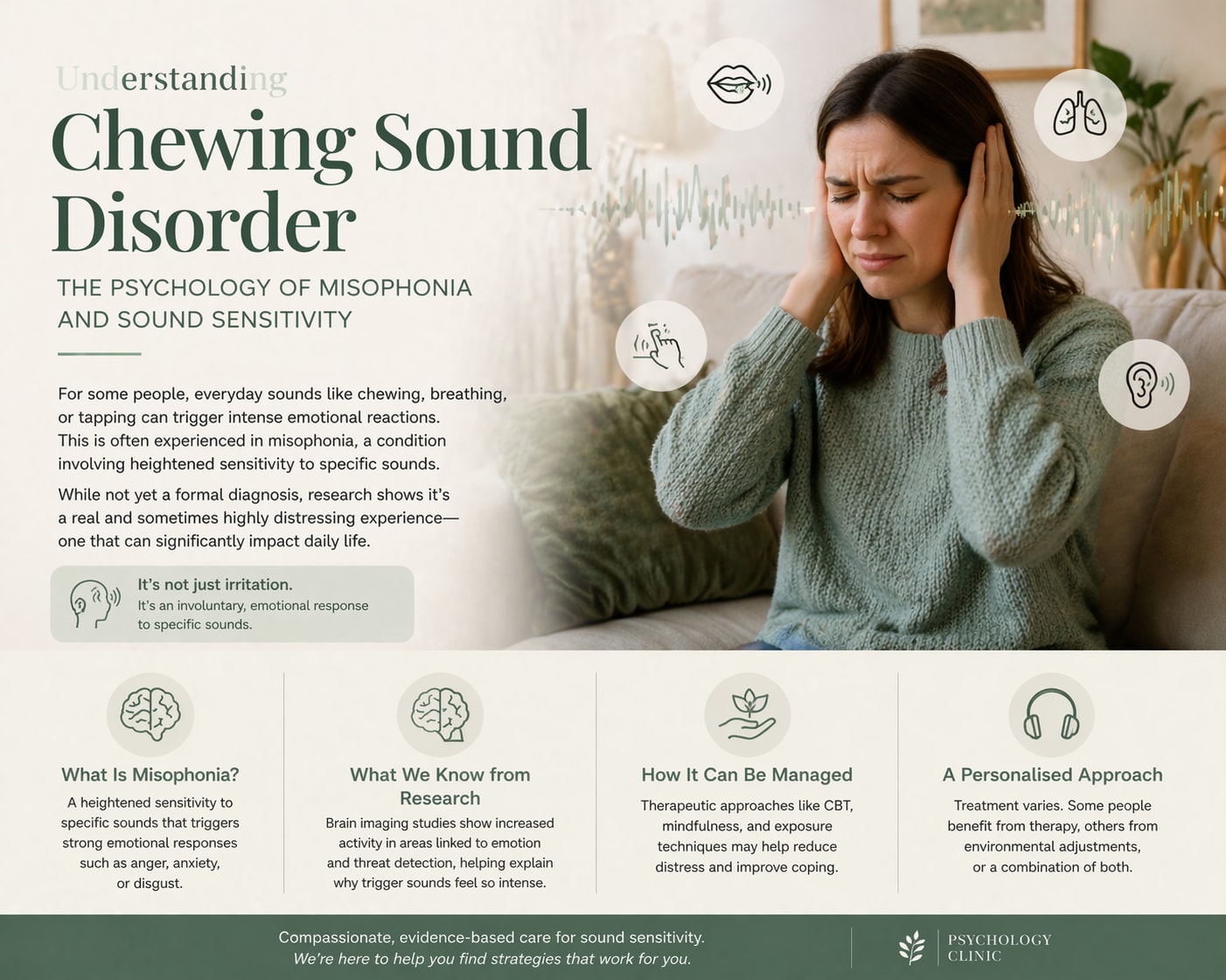
For some individuals, everyday sounds such as chewing, breathing, or tapping can trigger intense emotional reactions. What might seem like a minor irritation to others can provoke feelings of anger, anxiety, or even panic. This experience is commonly referred to as misophonia, a condition characterised by a heightened sensitivity to specific sounds, often referred to as “trigger sounds.”
Although awareness of misophonia has grown in recent years, it remains a relatively under-researched and often misunderstood condition. Many individuals who experience it report feeling isolated or frustrated, particularly when their reactions are dismissed as exaggerated or irrational. In clinical settings, however, these responses are increasingly recognised as genuine and, in some cases, significantly impairing.
Research into misophonia is still developing, but early findings suggest that it involves atypical emotional and neurological responses to certain auditory stimuli. Studies using neuroimaging have found increased activation in brain regions associated with emotional processing and salience detection, particularly the anterior insular cortex. This may help explain why trigger sounds are experienced not simply as unpleasant, but as intensely intrusive and difficult to ignore.
From a psychological perspective, misophonia appears to involve a strong conditioned response. Over time, specific sounds—such as chewing—become associated with discomfort or distress, leading to an automatic emotional reaction when they are heard. This response can be immediate and disproportionate, often accompanied by physical symptoms such as increased heart rate or muscle tension. For some individuals, the anticipation of hearing these sounds can itself generate anxiety, reinforcing a cycle of hypervigilance and avoidance.
There is also evidence to suggest overlap between misophonia and other conditions, including anxiety disorders, obsessive-compulsive traits, and sensory processing sensitivities. However, misophonia is not currently classified as a formal psychiatric diagnosis in major diagnostic manuals, which contributes to ongoing debate about how best to conceptualise and treat it.
Intervention approaches are varied and still evolving. Cognitive behavioural strategies may help individuals reframe their responses to trigger sounds and reduce associated distress. Elements of mindfulness and attentional training can support individuals in disengaging from the immediate emotional reaction, while exposure-based approaches may, in some cases, reduce sensitivity over time. However, the evidence base for these interventions remains limited, and outcomes can vary significantly between individuals.
It is also important to acknowledge that not all individuals respond to treatment in the same way. Some may find that attempts to tolerate or reframe trigger sounds initially increase distress, particularly when emotional reactions are strong or longstanding. Additionally, environmental adaptations—such as using noise-cancelling headphones or modifying surroundings—may be necessary as part of a broader management strategy, rather than relying solely on psychological techniques.
A balanced clinical perspective is therefore essential. Misophonia is a real and often distressing experience, but it does not yet have a single, well-established treatment pathway. For some individuals, psychological intervention can significantly improve coping and reduce the intensity of reactions. For others, a combination of strategies—including behavioural, environmental, and therapeutic approaches—may be more effective.
Ultimately, the role of a psychologist is to understand the individual’s experience in depth and develop a tailored approach that reflects both current evidence and personal context. With appropriate support, it is possible to reduce the impact of misophonia and improve day-to-day functioning, even if sensitivity to certain sounds does not disappear entirely.