


Menopause Linked to Structural Brain Changes
posted 26th May 2026
Menopause Linked to Structural Brain Changes: New Research Reveals Impact on Mental Health and Cognitive Function
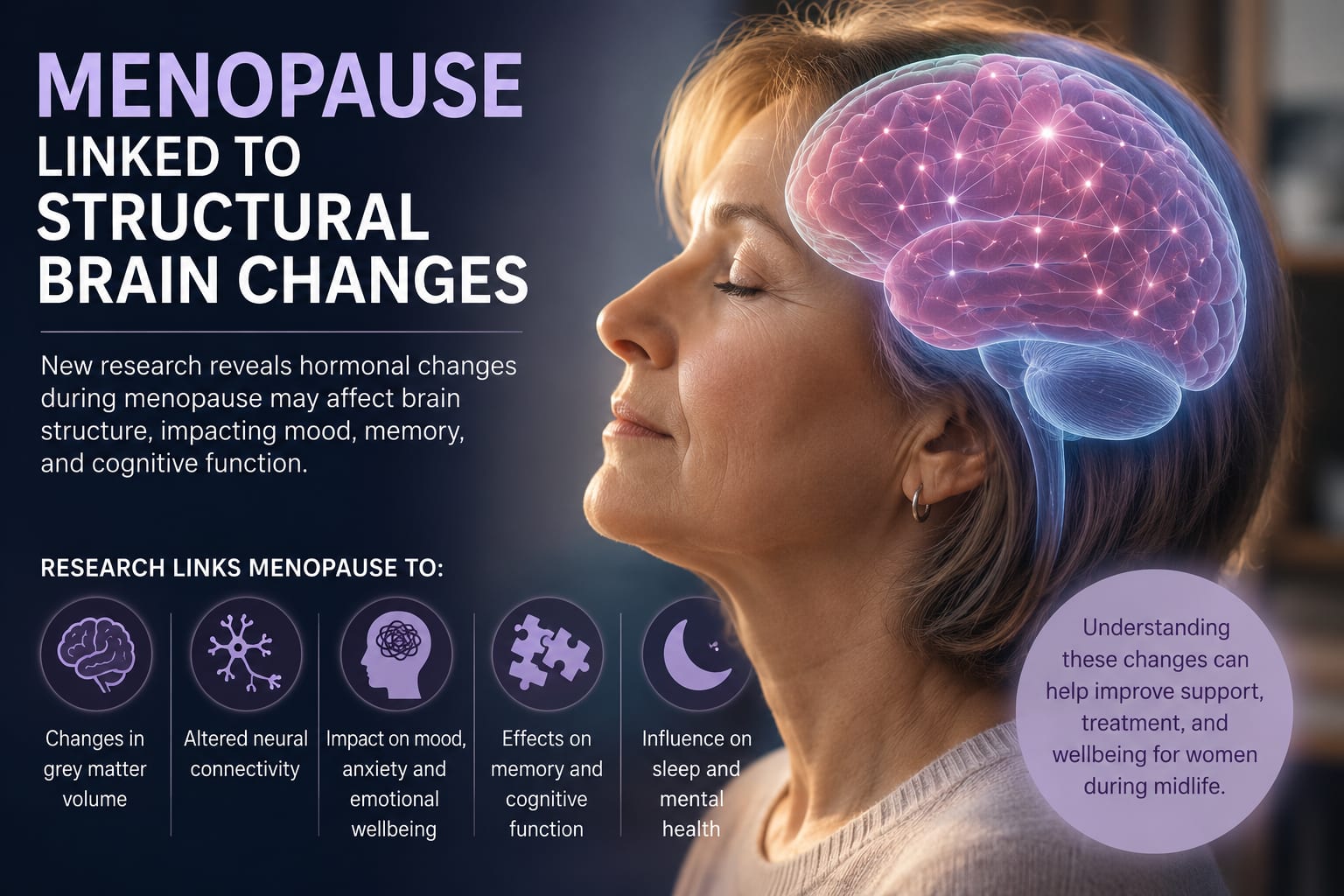
Groundbreaking new research has revealed that menopause may be associated with significant structural changes in the brain, potentially affecting mood, memory, sleep, and emotional wellbeing. Scientists are now exploring how hormonal shifts during menopause influence brain function and mental health, opening up important new conversations about women’s psychological wellbeing during midlife.
Researchers have found evidence that menopause may be linked to changes in grey matter volume, neural connectivity, and cognitive processing — findings that could reshape how clinicians understand menopause and mental health.
What Happens During Menopause?
Menopause marks the end of a woman’s reproductive years and typically occurs between the ages of 45 and 55. It is driven by a decline in hormones such as oestrogen and progesterone.
While menopause is often associated with physical symptoms, researchers are increasingly recognising its psychological and neurological effects.
Common symptoms may include:
- Mood swings
- Anxiety
- Low mood or depression
- Brain fog
- Memory difficulties
- Sleep disturbances
- Irritability
- Fatigue
For many women, these symptoms can significantly affect quality of life, relationships, work performance, and emotional wellbeing.
The Brain and Menopause
For years, menopause research focused primarily on reproductive and physical health. However, neuroscientists are now discovering that hormonal changes during menopause may also directly affect brain structure and functioning.
Recent studies have found links between menopause and:
- Reductions in grey matter volume
- Changes in neural connectivity
- Increased inflammation markers
- Altered emotional processing
- Sleep-related brain changes
Researchers believe declining oestrogen levels may play a major role in these neurological shifts.
Oestrogen is not only involved in reproduction — it also influences memory, emotional regulation, attention, and cognitive functioning throughout the brain.
Grey Matter Changes and Cognitive Function
One of the most significant findings involves changes in *grey matter*, the part of the brain heavily involved in processing information, emotions, decision-making, and memory.
Scientists observed structural changes in brain regions associated with:
- Emotional regulation
- Learning and memory
- Attention and concentration
- Executive functioning
These findings may help explain why many women report experiencing “brain fog” or cognitive slowing during menopause.
Importantly, researchers emphasise that these changes do not necessarily indicate permanent damage. In some studies, the brain appeared to adapt over time through compensatory mechanisms and neuroplasticity.
The Link Between Menopause and Mental Health
The research also highlights the strong relationship between menopause and psychological wellbeing.
Hormonal fluctuations may contribute to increased vulnerability to:
- Anxiety disorders
- Depression
- Stress sensitivity
- Sleep disruption
- Emotional dysregulation
Sleep disturbances in particular may worsen mental health symptoms and cognitive difficulties, creating a cycle of fatigue, low mood, and reduced concentration.
Researchers are increasingly calling for greater awareness of menopause-related mental health difficulties within healthcare systems and workplaces.
Why This Research Matters
Historically, menopause has often been under-recognised within mental health research and clinical psychology.
Many women experiencing emotional or cognitive symptoms during menopause may feel misunderstood, dismissed, or unsupported.
This new research helps validate the neurological and psychological reality of menopausal symptoms and challenges outdated assumptions that symptoms are “just hormonal” or purely emotional.
The findings may also encourage more personalised approaches to treatment and support.
Could This Change Treatment Approaches?
Potentially, yes.
Researchers are now exploring how menopause-related brain changes may respond to interventions such as:
- Hormone replacement therapy (HRT)
- Psychological therapy
- Sleep interventions
- Exercise and lifestyle changes
- Cognitive training approaches
- Stress reduction techniques
Some studies suggest HRT may help protect certain aspects of cognitive functioning and emotional wellbeing, although research remains ongoing.
Psychological support may also play an important role in helping women manage anxiety, mood changes, identity shifts, and stress during this life stage.
A Growing Area of Women’s Mental Health Research
The findings represent part of a broader movement toward understanding women’s mental health through a more neurobiological and lifespan-based perspective.
Researchers increasingly argue that menopause should be recognised not only as a reproductive transition, but also as a major neurological and psychological transition.
For psychologists, psychiatrists, and healthcare professionals, the implications are significant:
- Menopause may directly affect brain structure and function
- Hormonal changes may influence emotional wellbeing and cognition
- Mental health support during menopause may need greater attention
- More personalised and integrated care approaches may improve outcomes
As research continues, scientists hope these discoveries will reduce stigma, improve awareness, and help women receive more informed and compassionate support throughout menopause.
Click to enlarge