


Insomnia: How CBT Can Help You Rest Again
posted 24th April 2026
Click to enlarge
Insomnia: Understanding Sleep Difficulties and How CBT Can Help You Rest Again
Sleep is fundamental to both mental and physical health, yet for many people it becomes a source of frustration, anxiety, and exhaustion. Insomnia is more than the occasional restless night—it is a persistent difficulty with falling asleep, staying asleep, or waking too early, despite having the opportunity to sleep. At The London Psychologist Clinic, we often work with individuals who feel trapped in a cycle of poor sleep, fatigue, and worry about not sleeping, which in turn makes the problem worse.
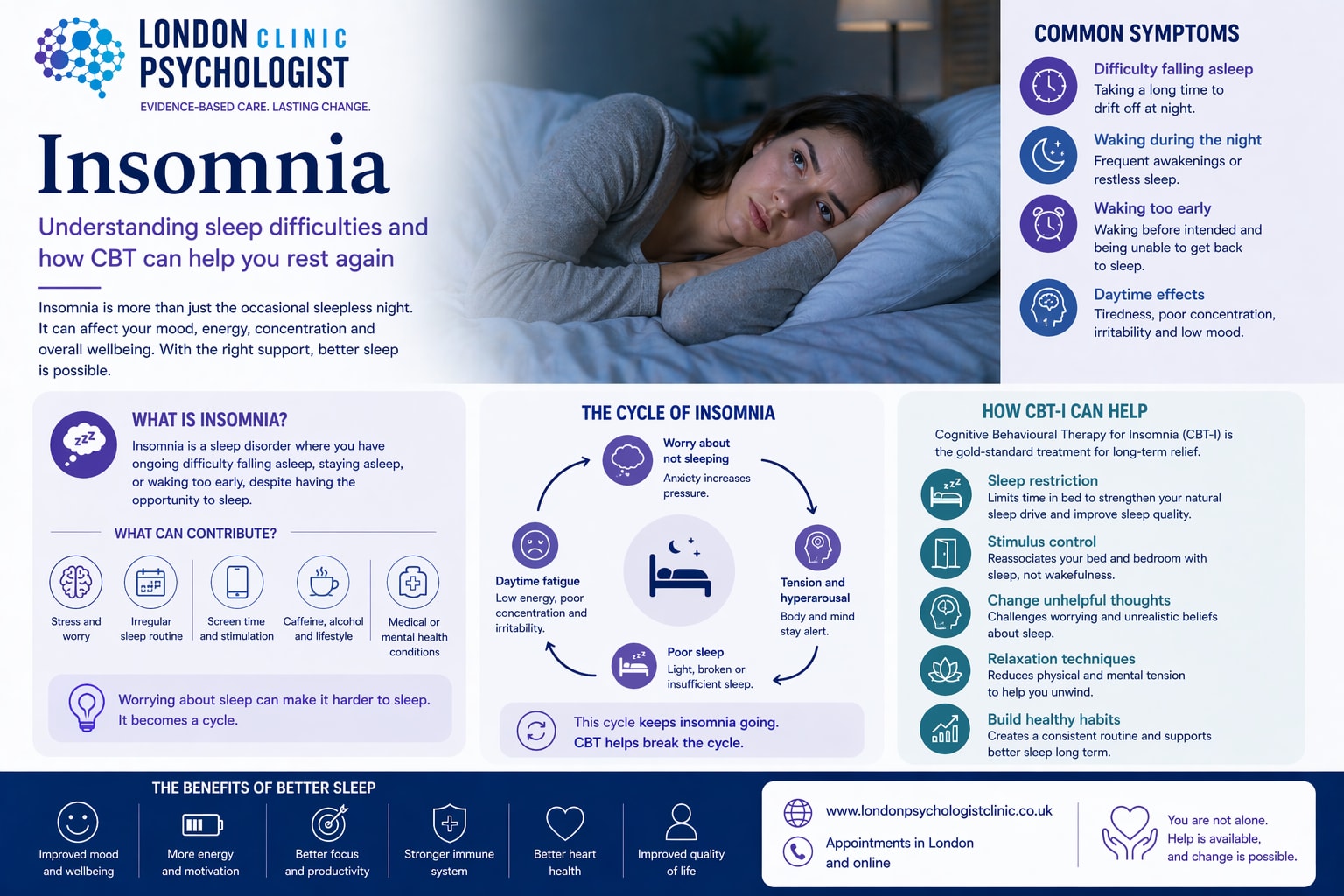
According to the DSM-5, Insomnia Disorder is characterised by ongoing sleep disturbance that causes significant distress or impairment in daily functioning. This may include difficulty falling asleep, frequent awakenings during the night, or waking earlier than intended and being unable to return to sleep. Over time, poor sleep can affect concentration, mood, energy levels, and overall quality of life.
Insomnia often develops gradually. It may begin with a period of stress, illness, or life change that disrupts sleep temporarily. However, what maintains insomnia is not always the original cause, but the patterns that develop in response to it. Many individuals begin to worry about sleep, monitor it closely, or try harder to force sleep to happen. Ironically, this increased effort and anxiety can make sleep more difficult, creating a self-perpetuating cycle.
A key feature of insomnia is hyperarousal—both physical and mental. The body remains in a state of alertness when it should be winding down. This might involve a racing mind, heightened awareness of the environment, or physical tension. Thoughts such as “I need to sleep now or tomorrow will be a disaster” can increase pressure and anxiety, making it even harder to relax.
The causes of insomnia are multifactorial. Biological factors such as sensitivity to stress, psychological factors such as worry and rumination, and behavioural factors such as irregular sleep routines all play a role. Modern lifestyles—particularly exposure to screens, irregular schedules, and high levels of stress—can also contribute significantly.
A common question is whether insomnia can be cured. The answer is that insomnia is highly treatable, and many individuals experience lasting improvement with the right approach. Importantly, treatment focuses on addressing the processes that maintain poor sleep, rather than simply trying to “force” sleep itself.
Cognitive Behavioural Therapy for Insomnia (CBT-I) is the gold-standard treatment and is widely recommended in clinical guidelines. CBT-I is a structured, evidence-based approach that targets the thoughts and behaviours that interfere with sleep.
One of the core components of CBT-I is sleep restriction therapy, which involves carefully regulating time in bed to strengthen the body’s natural sleep drive. While this may initially feel counterintuitive, it is highly effective in consolidating sleep and improving sleep efficiency over time.
Another key element is stimulus control, which helps re-associate the bed with sleep rather than wakefulness. This may involve guidelines such as only going to bed when sleepy, getting out of bed if unable to sleep, and maintaining a consistent wake-up time.
CBT-I also addresses unhelpful beliefs about sleep. Many individuals with insomnia develop rigid or catastrophic thinking, such as “If I don’t get eight hours, I won’t function.” Therapy helps to challenge and reframe these beliefs, reducing pressure and anxiety around sleep.
Relaxation techniques and strategies to manage worry are also incorporated, helping to reduce the mental and physical arousal that interferes with sleep. Over time, individuals learn to approach sleep in a more flexible and less pressured way.
The effectiveness of CBT-I is strongly supported by research, with many individuals experiencing significant improvements in sleep quality, duration, and daytime functioning. Importantly, these improvements are often maintained long-term, making CBT-I one of the most effective treatments available.
Insomnia can feel incredibly frustrating, particularly when it begins to affect mood, work, and overall wellbeing. Many individuals feel they have “tried everything” without success. However, with the right evidence-based approach, meaningful and lasting change is possible.
At The London Psychologist Clinic, we provide tailored CBT-I interventions designed to help you restore healthy sleep patterns and regain a sense of control. With the right support, restful sleep can become natural again—allowing you to feel more energised, focused, and resilient in daily life.