

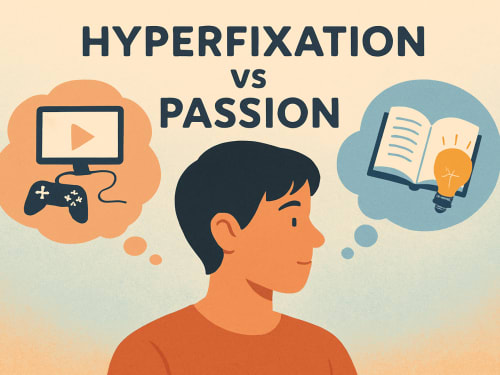
Hyperfixation vs Passion: Is It Really ADHD or Just Interest?
posted 11th December 2025

Hyperfixation vs Passion: Is It Really ADHD or Just Interest?
We’ve all had that one thing we can’t stop thinking about, a new hobby, a TV show, a game, a niche subject we suddenly know way too much about. But at what point does a strong interest become hyperfixation? And does it automatically mean ADHD? (Spoiler: no.)
So what is passion?
Passion refers to something you genuinely enjoy learning about or doing. It’s exciting, motivating, and feels good, but you can choose when to engage with it. You can put it down when life gets busy and pick it up again later.
What Is Hyperfixation?
Hyperfixation is more intense. It’s when your brain latches onto something and won’t let go, often for hours or days at a time.
People describe it as being totally absorbed to the point where:
- You forget to eat or drink
- You lose track of time
- You struggle to switch tasks
- You feel pulled back to it even when you want to stop
Hyperfixation is commonly talked about in ADHD circles, but it also shows up during burnout, anxiety, autism, or even when you’re simply overwhelmed.
The Key Difference
- Passion feels chosen. Hyperfixation feels consuming.
- Passion fits into your life; hyperfixation takes over it.
Does Hyperfixation Mean You Have ADHD?
Not necessarily. While many people with ADHD experience hyperfixation, having one doesn’t automatically mean you do. Sometimes it’s just your brain coping, avoiding stress, or diving deep into something you enjoy.
So… Which One Do You Have?
A quick rule of thumb:
- It’s fun but flexible → Passion
- If it's intense, time-melting, and hard to stop → Hyperfixation
- If it’s interfering with sleep, work, or relationships → Maybe worth exploring further
🔧 What to Do When You Feel Yourself Hyperfixating
Hyperfixation can feel like you’ve been sucked into a brain-vacuum where only ONE thing matters. It’s great when you're being productive… less great when you haven’t eaten, moved, or replied to that text from three days ago. Here are some quick, low-effort ways to break the spell:
✨ 1. Set a “micro-timer.”
Not a big scary hour-long timer, try 2 or 5 minutes. When it goes off, check in with yourself. No pressure to stop, just pause.
🥤 2. Pair it with a body break
Tell yourself: “I’ll keep doing this…but first I drink water/stretch / go to the loo.”
Once your body moves, your brain often follows.
🧠 3. Switch the task, not the focus
If you can’t stop thinking about the topic, channel it into something less consuming: write a quick brainstorm, summarise it to a friend, or switch from doing to planning.
🔕 4. Remove one sensory hook
Turn off the music, change location, or dim the screen. Hyperfixation loves perfect vibes; mess with the vibes.
👤 5. Use an “accountability ping.”
Message someone: “Hey, I’m stuck in a hyperfixation loop, ask me in 10 mins if I’ve taken a break.”
The brain suddenly remembers you're a human.
💛 6. Give yourself permission to enjoy it
Sometimes hyperfixation is just enthusiasm in a shiny coat if it’s not harming you, hydrated, fed, rested, lean in for a bit, no guilt required.
You’re allowed to get obsessed with things without pathologising it. Humans love getting excited; it’s part of what makes us creative and curious. The goal isn’t to judge your interests, but to understand how (and why) your brain dives into them.