


High-Functioning Anxiety
posted 7th April 2026
Click to enlarge
Why High-Functioning Anxiety Is Increasing — and Why It Often Goes Unnoticed
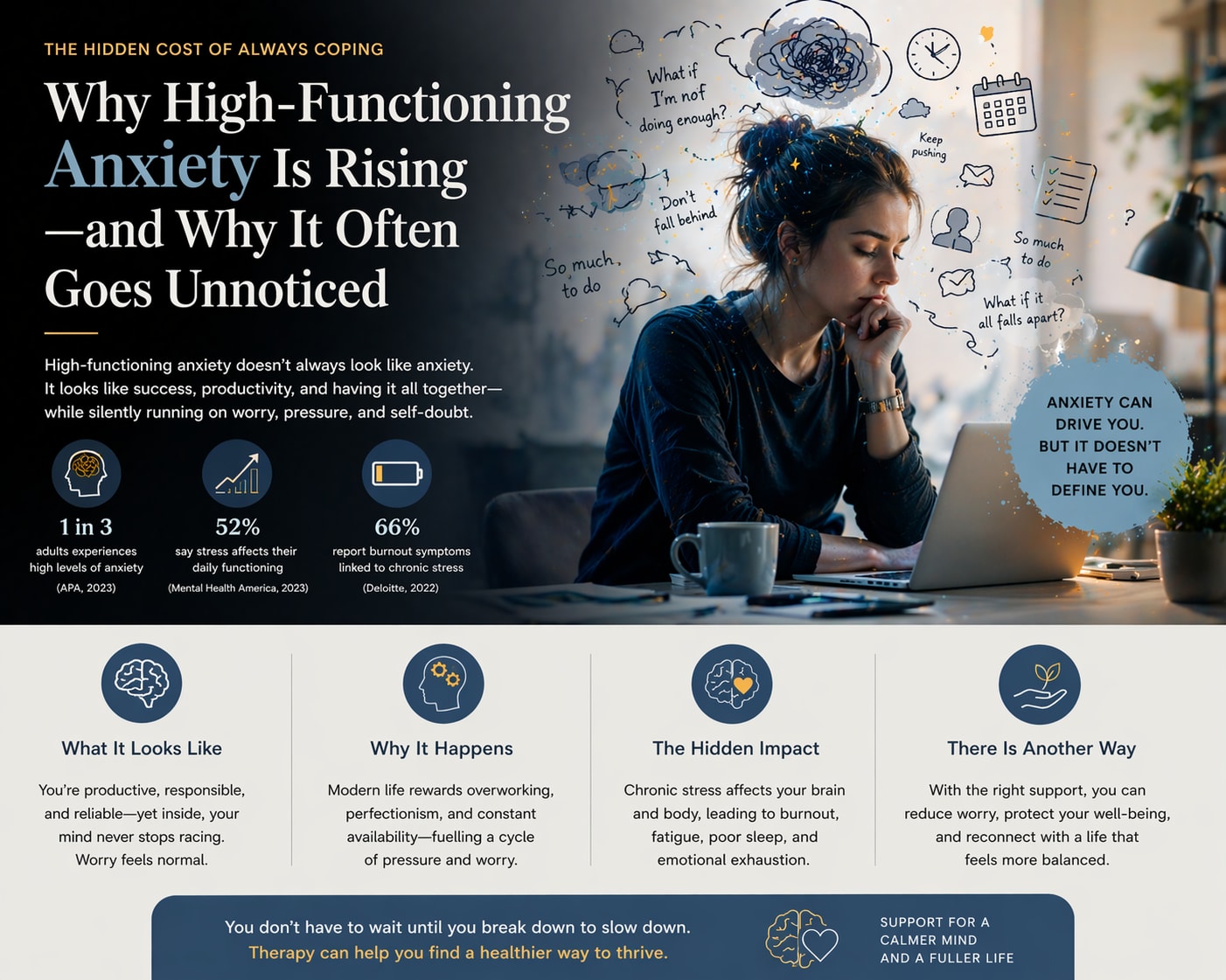
In recent years, there has been growing recognition of a form of anxiety that is often hidden in plain sight: high-functioning anxiety. Unlike more overt presentations of anxiety, individuals experiencing this pattern may appear successful, organised, and in control. They meet deadlines, perform well professionally, and are often described as driven or conscientious. Yet internally, they may experience persistent worry, self-doubt, and an inability to switch off.
Although high-functioning anxiety is not a formal clinical diagnosis, it reflects a pattern increasingly observed in psychological practice. It raises an important question: why is this form of anxiety becoming more common, and why does it so often go unrecognised?
One contributing factor lies in the changing demands of modern life. Contemporary environments—particularly in professional and academic contexts—tend to reward productivity, responsiveness, and constant availability. Traits associated with anxiety, such as hypervigilance, perfectionism, and a heightened sense of responsibility, can be inadvertently reinforced. Individuals who worry excessively about outcomes may, in the short term, perform well. This creates a feedback loop in which anxiety is not only maintained but subtly validated.
From a cognitive perspective, high-functioning anxiety is often underpinned by beliefs such as “If I stop worrying, something will go wrong” or “My anxiety is what keeps me performing well.” These beliefs can make individuals reluctant to seek help, as anxiety becomes intertwined with identity and perceived success. Over time, however, the cost of this pattern can become more apparent, including chronic stress, burnout, sleep disturbance, and reduced overall wellbeing.
Neurobiologically, chronic anxiety is associated with sustained activation of the body’s stress response systems. Prolonged engagement of the hypothalamic-pituitary-adrenal (HPA) axis can lead to increased cortisol levels, which, over time, are linked to fatigue, irritability, and difficulties with concentration and emotional regulation. While individuals with high-functioning anxiety may continue to perform outwardly, this internal strain often accumulates.
Another reason this form of anxiety goes unnoticed is that it does not always fit common stereotypes of distress. Many individuals do not present as overwhelmed or visibly anxious. Instead, they may appear composed and capable, masking their internal experience. In clinical settings, it is not uncommon for individuals to seek support only after a significant tipping point, such as burnout, panic symptoms, or a decline in functioning.
There is also a cultural dimension to consider. In many contexts, busyness is equated with value, and rest can be perceived as unproductive. This can make it difficult for individuals to recognise when their coping strategies are no longer sustainable. The line between dedication and overdrive becomes blurred, particularly when external validation reinforces continued effort.
Despite these challenges, high-functioning anxiety is both understandable and treatable. Psychological interventions often focus on helping individuals disentangle anxiety from performance, challenging underlying beliefs about worry, and developing more sustainable ways of relating to work and achievement. Approaches such as cognitive behavioural therapy and acceptance-based models can support individuals in reducing excessive worry while maintaining effectiveness and engagement.
Importantly, treatment does not aim to remove motivation or ambition. Rather, it seeks to create a shift from anxiety-driven performance to values-driven action. This allows individuals to function effectively without the constant presence of internal pressure.
A balanced perspective is essential. Some level of concern or anticipation is a normal and adaptive part of human functioning. However, when anxiety becomes chronic, self-critical, and difficult to regulate, it can begin to erode rather than support performance and wellbeing.
High-functioning anxiety highlights a broader psychological truth: distress is not always visible. The absence of outward dysfunction does not equate to the presence of wellbeing. Recognising this distinction is often the first step toward meaningful change.
With appropriate psychological support, individuals can maintain their strengths—such as organisation, drive, and responsibility—while reducing the internal cost of anxiety. In doing so, it becomes possible not only to function well, but to feel well.