


Executive Loneliness
posted 16th July 2026
Click image to enlarge
Executive Loneliness: The Hidden Psychological Cost of Leadership
Leadership is often associated with influence, achievement and professional success. From the outside, senior executives, business owners and organisational leaders can appear confident, decisive and highly connected. Yet behind many successful careers lies an experience that is rarely discussed—loneliness.
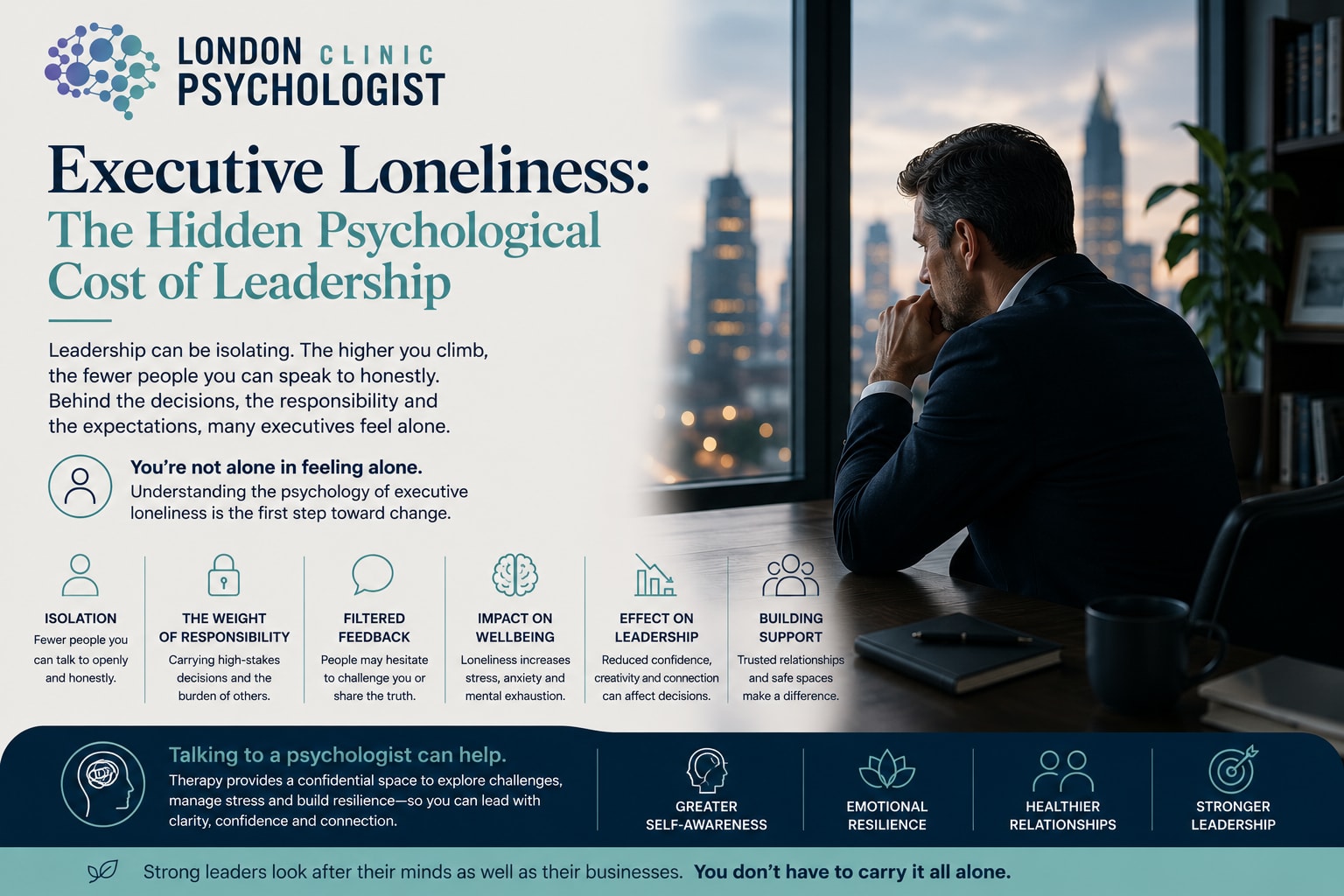
Executive loneliness is not simply about being physically alone. It is a psychological experience that develops when individuals feel unable to share their thoughts, concerns or vulnerabilities with those around them. The higher people progress within an organisation, the fewer individuals they often feel able to speak to openly. Decisions become more sensitive, responsibilities become greater and the pressure to appear calm and confident can leave many leaders feeling emotionally isolated.
Unlike ordinary loneliness, executive loneliness often exists despite being surrounded by colleagues, employees and clients. It is entirely possible to spend every day in meetings while feeling that there is no one with whom you can genuinely share the weight of leadership.
Why Leadership Can Feel Isolating
As careers progress, professional relationships inevitably change. Colleagues who were once peers may become direct reports, making open conversations more complicated. Difficult decisions regarding performance, restructuring or finances often need to remain confidential, preventing leaders from discussing the issues that occupy much of their thinking.
At the same time, many executives become increasingly aware that employees may hesitate to challenge them or offer completely honest feedback. Over time, conversations can become filtered, with people telling leaders what they think they want to hear rather than what they genuinely need to know.
This gradual reduction in authentic communication can leave leaders feeling psychologically distant from the people around them, even when relationships appear positive on the surface.
The Psychological Weight of Responsibility
Leadership involves carrying responsibility that is often invisible to others. Senior professionals may be responsible for the livelihoods of hundreds of employees, significant financial decisions, organisational strategy and the wellbeing of entire teams.
While these responsibilities can be rewarding, they also create a continuous psychological burden. Many leaders become accustomed to carrying uncertainty privately, believing they must always project confidence regardless of how they feel internally.
Psychologists sometimes refer to this as emotional labour—the ongoing effort required to regulate emotions in order to meet the expectations of a professional role. Although emotional regulation is an important leadership skill, constantly suppressing stress, anxiety or uncertainty without appropriate support can become psychologically exhausting.
Why Successful People Often Struggle to Ask for Help
Many high-performing professionals have developed beliefs that have contributed to their success throughout their careers.
They may believe they should always have the answers.
They should remain composed under pressure.
They should never burden others with their own concerns.
While these beliefs may initially strengthen professional performance, they can also discourage individuals from seeking support when they need it most. Asking for help may begin to feel incompatible with their identity as a capable and resilient leader.
Over time, this self-reliance can become a source of isolation rather than strength.
The Neuroscience of Social Connection
Humans are fundamentally social beings. Research consistently demonstrates that meaningful social connection plays an important role in emotional regulation, resilience and overall psychological wellbeing.
Supportive relationships help regulate the body's stress response by reducing physiological arousal and increasing feelings of psychological safety. In contrast, prolonged social isolation has been associated with increased levels of stress hormones, poorer sleep, reduced concentration and greater vulnerability to anxiety and depression.
For executives experiencing loneliness, the issue is often not the number of people they interact with but the quality and authenticity of those relationships.
How Executive Loneliness Affects Leadership
The psychological effects of loneliness extend beyond personal wellbeing. They can also influence leadership performance.
Leaders experiencing prolonged isolation may begin to second-guess decisions, become increasingly cautious or rely more heavily on their own judgement without seeking alternative perspectives. Creativity can decline, confidence may fluctuate and emotional resilience often becomes more difficult to maintain.
Some executives become reluctant to delegate because they feel they must carry responsibility alone. Others withdraw emotionally from colleagues, unintentionally creating greater distance within their organisations.
Ironically, the more isolated leaders become, the more difficult it can be to build the open and psychologically safe cultures they wish to create.
Building Genuine Psychological Support
Addressing executive loneliness does not simply involve increasing social activity or attending networking events. What matters most is developing relationships where honesty, trust and authenticity are possible.
Many leaders benefit from building a small network of trusted individuals with whom they can discuss challenges openly. This may include mentors, peer groups, coaches or psychologists who understand the unique psychological demands of leadership.
Having even one confidential relationship where difficult decisions and emotional pressures can be explored honestly often provides significant psychological relief.
How Working With a Psychologist Can Help
For many executives, therapy provides something that is difficult to find elsewhere—a confidential environment free from organisational politics, performance expectations or professional judgement.
Rather than giving business advice, psychologists help leaders understand the emotional and cognitive processes influencing their decisions, relationships and wellbeing. Therapy can explore perfectionism, responsibility, self-doubt, stress, emotional regulation and the psychological impact of carrying sustained leadership pressure.
Psychological therapy also helps executives develop healthier ways of managing uncertainty, strengthening resilience and maintaining emotional wellbeing without sacrificing ambition or professional success.
Leadership Doesn't Have to Be Lonely
One of the greatest misconceptions about leadership is that feeling isolated is simply part of the job. While responsibility may increase with seniority, emotional isolation does not have to.
The strongest leaders are not those who carry every burden alone. They are those who recognise the importance of self-awareness, meaningful connection and psychological wellbeing alongside professional achievement.
Investing in psychological health is not only beneficial for the individual leader; it strengthens decision-making, improves relationships and creates healthier organisations. Leadership may involve difficult decisions, but it should never require facing those challenges entirely alone.