


Emotional Weight Women Carry
posted 26th May 2026
Click to enlarge
Why More Women Are Turning to Psychology Support: Understanding the Emotional Weight Women Carry
Women today are balancing more emotional, psychological, and social pressure than ever before. From careers and relationships to motherhood, caregiving, identity changes, and hormonal transitions, many women find themselves silently carrying overwhelming levels of stress, anxiety, and emotional exhaustion.
While outwardly appearing capable and successful, many women struggle internally with perfectionism, burnout, people-pleasing, low self-worth, chronic stress, or unresolved emotional trauma.
Psychological therapy is increasingly becoming a space where women can pause, reflect, heal, and better understand themselves without judgement.
The Hidden Emotional Pressure Many Women Experience
Modern life often places enormous expectations on women to be emotionally available, resilient, successful, caring, productive, and constantly “holding everything together.”
Over time, this emotional pressure can begin to affect mental wellbeing in significant ways.
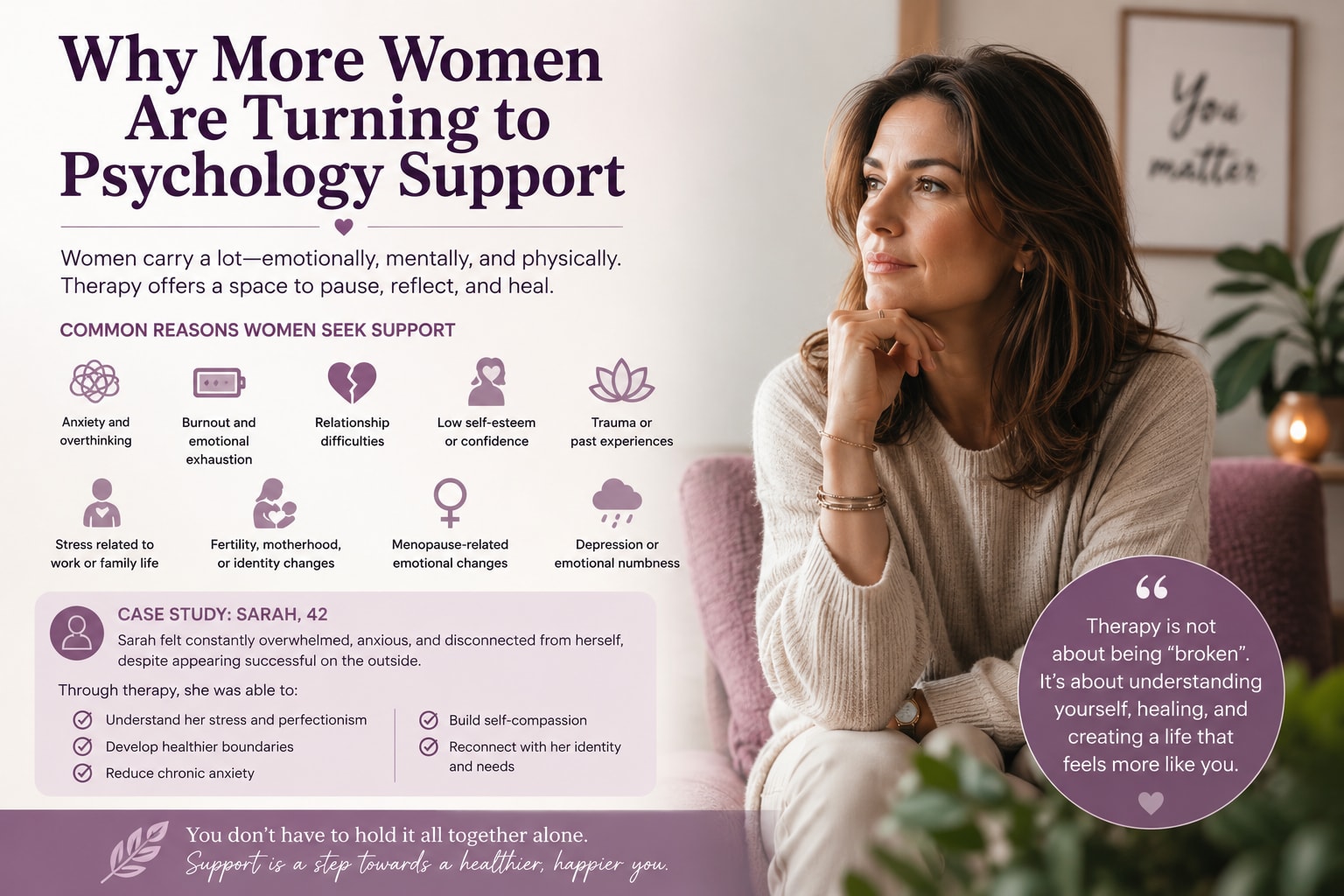
Women commonly seek psychological support for:
- Anxiety and overthinking
- Burnout and emotional exhaustion
- Relationship difficulties
- Low self-esteem or confidence
- Trauma or childhood experiences
- Stress related to work or family life
- Fertility, motherhood, or identity changes
- Menopause-related emotional difficulties
- Depression or emotional numbness
Many women spend years prioritising others while neglecting their own emotional needs.
Why Women Often Delay Seeking Help
Despite struggling emotionally, many women delay reaching out for psychological support.
Some may feel:
- Guilty for needing help
- Worried about appearing “weak”
- Responsible for everyone else’s wellbeing
- Unsure whether their struggles are “serious enough”
- Accustomed to coping alone
In reality, therapy is not only for crisis situations. Many women seek therapy because they want to understand themselves more deeply, improve relationships, develop healthier boundaries, or simply feel emotionally lighter.
Case Study: Why Someone Might Choose to See a Psychologist
Sarah, a 42-year-old marketing executive and mother of two, had always been seen as highly capable and dependable. Friends described her as calm, organised, and successful.
But privately, Sarah felt constantly overwhelmed.
She struggled with:
- Persistent anxiety and racing thoughts
- Difficulty sleeping
- Emotional exhaustion
- Feeling disconnected from herself
- Irritability and guilt
- Constant pressure to “keep everything together”
Although nothing appeared “wrong” externally, Sarah felt emotionally depleted and increasingly unhappy.
After months of struggling silently, she decided to see a psychologist.
Through therapy, Sarah began exploring deeper patterns underlying her anxiety and perfectionism. She realised she had spent much of her life prioritising achievement and other people’s needs while ignoring her own emotional wellbeing.
Therapy helped her:
- Develop healthier boundaries
- Understand her stress responses
- Improve self-compassion
- Reduce chronic anxiety
- Reconnect with her own identity and needs
Over time, Sarah reported feeling calmer, more emotionally balanced, and more present in both her work and personal life.
Psychological Therapy Is Not About “Being Broken”
One of the biggest misconceptions about therapy is that people only seek help when something is severely wrong.
In reality, therapy can provide support during periods of:
- Stress and overwhelm
- Life transitions
- Relationship difficulties
- Emotional burnout
- Personal growth and self-discovery
For many women, therapy becomes a space where they can finally stop performing, coping, and holding everything together — and instead begin understanding what they genuinely need emotionally.
The Importance of Emotional Wellbeing for Women
Research increasingly shows that chronic stress, emotional suppression, and burnout can significantly affect both mental and physical health.
Women experiencing long-term emotional strain may notice:
- Increased anxiety or panic symptoms
- Sleep disruption
- Difficulty concentrating
- Emotional reactivity
- Fatigue and low motivation
- Physical stress symptoms
Seeking psychological support early can help prevent emotional difficulties from becoming more severe over time.
A More Compassionate Approach to Mental Health
Psychology is increasingly moving toward a more compassionate, holistic understanding of women’s mental health.
Rather than asking “What is wrong with you?”, many psychologists instead explore:
- What pressures are you carrying?
- What experiences shaped these patterns?
- What emotional needs have been neglected?
- How can you create a healthier relationship with yourself?
For many women, therapy is not simply about reducing symptoms — it is about creating a healthier, more authentic, and emotionally sustainable way of living.
As awareness around women’s mental health continues to grow, more women are recognising that seeking support is not weakness — it is an investment in emotional wellbeing, resilience, and long-term psychological health.