


Emotional Masking
posted 26th May 2026
Click to enlarge
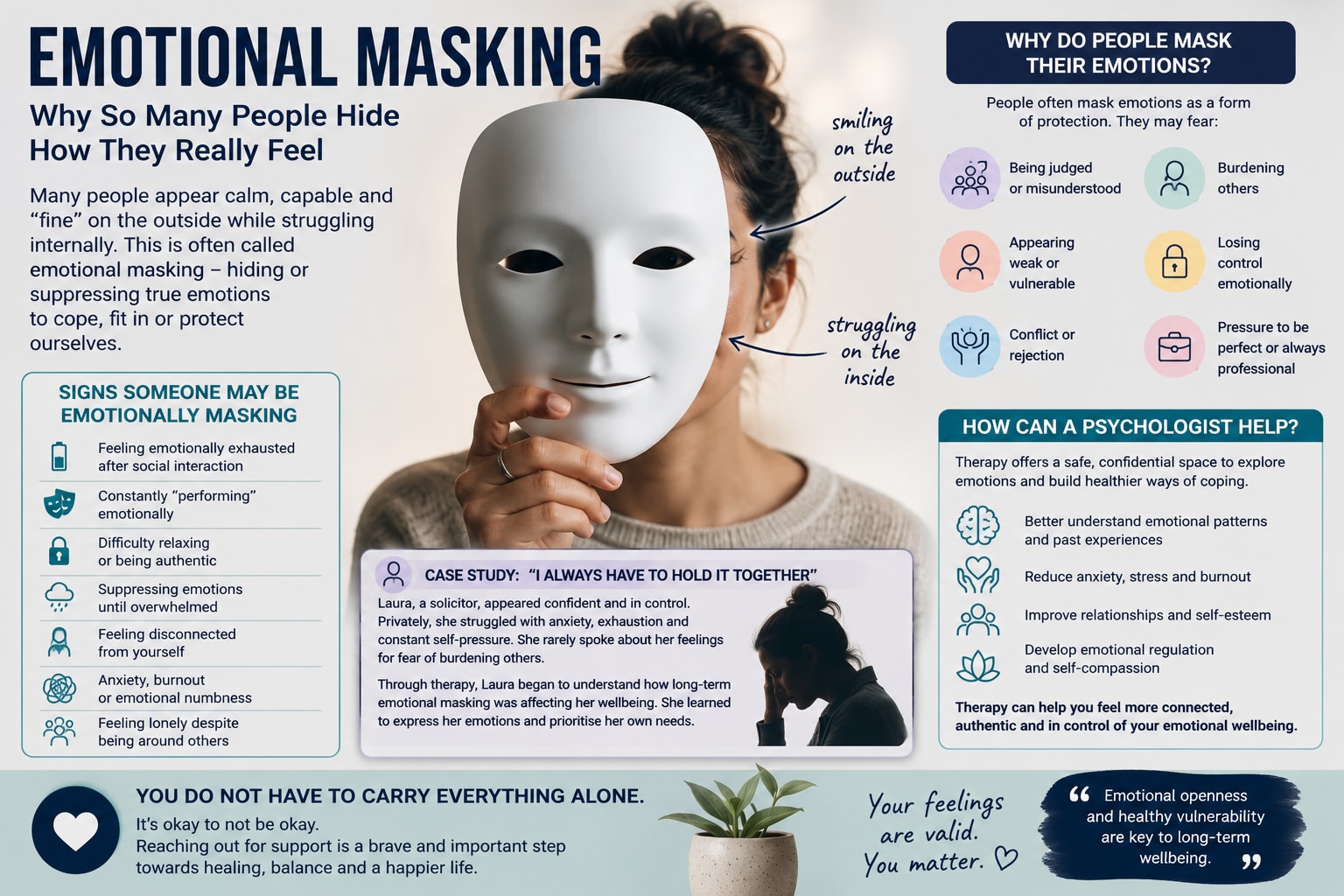
Emotional Masking: Why So Many People Hide How They Really Feel
Many people appear calm, capable, successful, and emotionally “fine” on the outside while privately struggling with anxiety, sadness, overwhelm, loneliness, or emotional exhaustion.
This is often known as *emotional masking* — the process of hiding or suppressing genuine emotions in order to cope socially, professionally, or emotionally.
While emotional masking can sometimes help people function in difficult situations, long-term masking may contribute to stress, burnout, anxiety, emotional disconnection, and mental health difficulties.
Increasingly, psychologists are recognising how common emotional masking has become in modern life.
What Is Emotional Masking?
Emotional masking occurs when individuals consciously or unconsciously hide their true emotional experiences from others.
This may involve:
- Pretending to feel “fine” when struggling internally
- Smiling despite feeling anxious or low
- Suppressing emotional reactions
- Avoiding vulnerability
- Hiding stress or overwhelm from others
- Acting confident while feeling insecure
Many people learn emotional masking from a young age due to social expectations, family dynamics, workplace pressure, or fear of judgement.
Why Do People Mask Their Emotions?
People often mask emotions as a form of protection.
Some individuals may fear:
- Being judged or misunderstood
- Appearing weak or vulnerable
- Burdening others
- Conflict or rejection
- Losing control emotionally
Others may have grown up in environments where emotional expression felt unsafe or discouraged.
In high-pressure environments, emotional masking may also become linked to achievement, professionalism, or perfectionism.
Signs Someone May Be Emotionally Masking
Emotional masking is not always obvious.
Many individuals who mask emotions continue functioning highly in work, relationships, and daily life while privately struggling internally.
Common signs may include:
- Feeling emotionally exhausted after social interaction
- Constantly “performing” emotionally
- Difficulty relaxing or being authentic
- Suppressing emotions until overwhelmed
- Feeling disconnected from yourself
- Anxiety, burnout, or emotional numbness
- Feeling lonely despite being around others
Over time, emotional masking can create a growing disconnect between how someone appears externally and how they genuinely feel internally.
Case Study: Feeling Like You Always Have to “Hold It Together”
Laura, a 34-year-old solicitor, was known by colleagues and friends as calm, confident, and highly capable.
Privately, however, she experienced:
- Chronic anxiety
- Emotional exhaustion
- Difficulty sleeping
- Constant self-pressure
- Feelings of loneliness and overwhelm
Laura rarely spoke openly about her emotions because she worried about appearing weak or burdening others.
Over time, she found herself increasingly emotionally disconnected and burnt out.
Eventually, she decided to seek support from a psychologist.
Through therapy, Laura began recognising how long she had spent suppressing her emotions and prioritising other people’s expectations over her own emotional wellbeing.
How Can a Psychologist Help?
A psychologist can help individuals better understand the emotional patterns, experiences, and beliefs that may contribute to emotional masking.
Therapy provides a safe, confidential space where individuals can begin expressing emotions more openly without fear of judgement.
Psychological therapy may help with:
- Anxiety and chronic stress
- Burnout and emotional exhaustion
- Low self-esteem and perfectionism
- Emotional regulation difficulties
- Relationship and attachment issues
- Trauma and past emotional experiences
- Identity and self-worth difficulties
Treatment approaches may include:
- Cognitive Behavioural Therapy (CBT)
- Psychodynamic therapy
- Compassion-Focused Therapy (CFT)
- Mindfulness-based approaches
- Trauma-informed therapy
- Emotional regulation strategies
Therapy can help individuals feel more emotionally connected, authentic, self-aware, and psychologically balanced.
The Emotional Cost of “Always Being Fine”
Many people become so accustomed to masking emotions that they no longer recognise how emotionally overwhelmed they truly feel.
Over time, emotional suppression may contribute to:
- Increased anxiety and stress
- Burnout
- Emotional numbness
- Relationship difficulties
- Sleep problems
- Feelings of isolation
Research increasingly shows that emotional openness, healthy vulnerability, and supportive relationships play an important role in long-term psychological wellbeing.
You Do Not Have to Carry Everything Alone
Seeking psychological support does not mean someone is failing to cope.
In reality, therapy can provide an opportunity to better understand yourself, process emotions safely, reduce emotional pressure, and develop healthier ways of coping.
Many individuals who begin therapy describe feeling relief simply from no longer having to constantly “hold everything together.”
Learning to acknowledge emotions rather than suppress them can be an important step toward greater emotional wellbeing, resilience, and psychological health.