


Emotional Dysregulation and “High Functioning” Anxiety

posted 17th April 2026
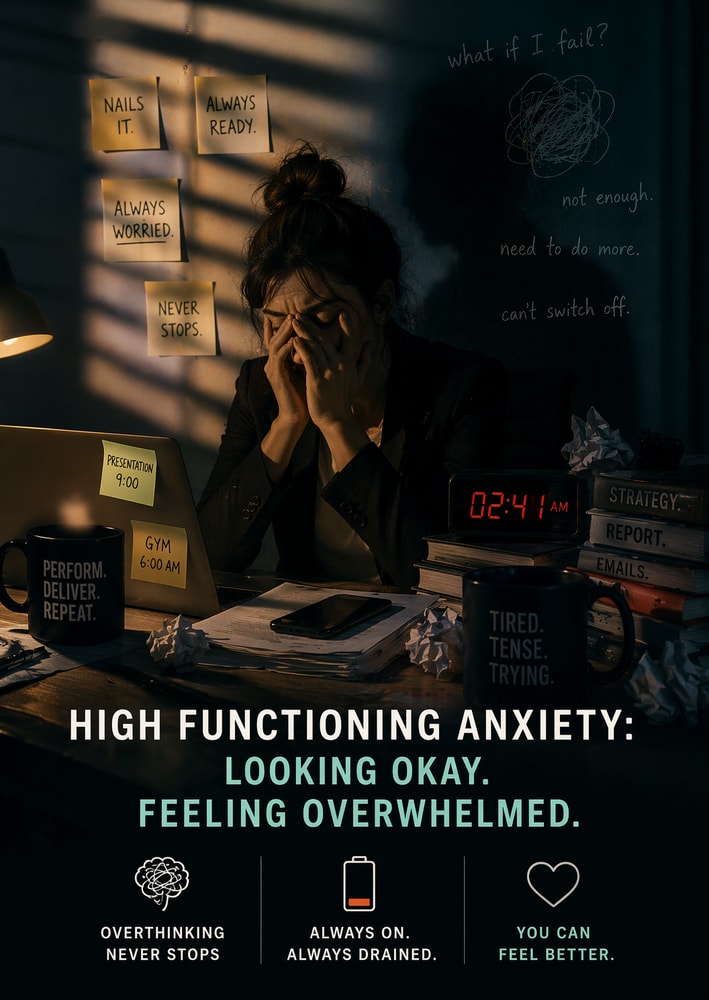
Emotional Dysregulation and “High Functioning” Anxiety
In recent years, there has been growing public interest in what is often referred to as “high functioning” anxiety—a presentation in which individuals appear outwardly successful and composed, yet experience significant internal distress. Although not a formal diagnostic category, this pattern reflects clinically recognised features of anxiety disorders combined with emotional dysregulation. Increasingly discussed across social media and professional discourse, it highlights a more nuanced understanding of how anxiety can present in individuals who continue to meet high personal and professional demands.
At its core, high functioning anxiety involves a persistent state of internal tension, worry, and overactivation, often masked by achievement, productivity, and competence. Individuals may be highly organised, driven, and reliable, yet internally experience chronic self-doubt, fear of failure, and difficulty disengaging from work or responsibilities. This mismatch between external functioning and internal experience can delay recognition of the problem, both by the individual and by others, allowing symptoms to become more entrenched over time.
From a psychological perspective, this presentation is often maintained by maladaptive cognitive patterns, including perfectionism, intolerance of uncertainty, and a strong need for control. These beliefs drive behaviours such as over-preparation, excessive reassurance seeking, and difficulty setting boundaries. While these strategies may initially enhance performance, they reinforce anxiety in the long term by preventing individuals from learning that they can cope without constant vigilance or over-effort.
Emotional dysregulation plays a central role in this process. Individuals may struggle to identify, tolerate, and process their emotional experiences, leading to suppression or avoidance. Over time, this can result in heightened physiological arousal, irritability, sleep disturbance, and eventual burnout. The cumulative impact often extends beyond anxiety, increasing vulnerability to depression and chronic stress-related conditions.
Evidence-based treatment focuses on both cognitive and emotional processes. Cognitive Behavioural Therapy (CBT) is effective in addressing unhelpful thinking patterns and reducing safety behaviours that maintain anxiety. Increasingly, interventions also incorporate elements of emotion-focused and mindfulness-based approaches, supporting individuals in developing greater emotional awareness and tolerance. A key therapeutic goal is helping individuals shift from performance-driven coping to more flexible, sustainable patterns of functioning.
In conclusion, high functioning anxiety represents a subtle but significant mental health concern, particularly in high-achieving populations. Its outward invisibility can make it difficult to identify, yet the internal impact can be profound. With appropriate psychological intervention, individuals can learn to regulate anxiety more effectively, reduce reliance on maladaptive coping strategies, and develop a healthier, more balanced relationship with achievement and self-worth.