


Eating Disorders: Clinical Understanding
posted 17th April 2026
Click to enlarge
Eating Disorders: Clinical Understanding and Evidence-Based Treatment Approaches
Eating disorders are complex psychiatric conditions characterised by persistent disturbances in eating behaviour and an overvaluation of body weight and shape. The most commonly recognised diagnoses—anorexia nervosa, bulimia nervosa, and binge eating disorder—are associated with significant psychological distress, impaired functioning, and elevated medical risk. Contemporary diagnostic frameworks, such as the DSM-5, conceptualise these disorders as multifactorial conditions involving biological vulnerability, cognitive distortions, emotional dysregulation, and sociocultural influences . For psychology clinics, effective treatment requires an integrative, evidence-based approach that addresses both the psychological and physiological components of the disorder.
From a clinical perspective, eating disorders are maintained by maladaptive cognitive schemas—particularly the overvaluation of weight and shape—which drive restrictive eating, bingeing, or compensatory behaviours. Cognitive models suggest that these disorders persist through reinforcing cycles: dietary restriction increases psychological and physiological vulnerability to binge eating, while purging or restriction temporarily reduces distress, thereby maintaining the behaviour. This cognitive-behavioural framework has strongly influenced modern treatment approaches and underpins much of the empirical literature in this field.
Current clinical guidelines, including those produced by the National Institute for Health and Care Excellence, emphasise early intervention, comprehensive assessment, and a stepped-care model of treatment. These guidelines synthesise a robust evidence base and recommend psychological therapies as the first-line intervention across most eating disorder presentations . Importantly, treatment should be tailored to the individual, considering factors such as diagnosis, severity, comorbidity, age, and motivation for change.
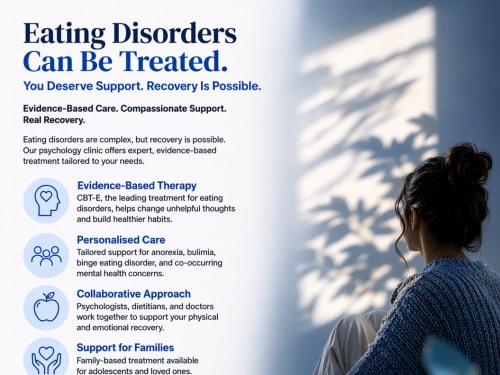
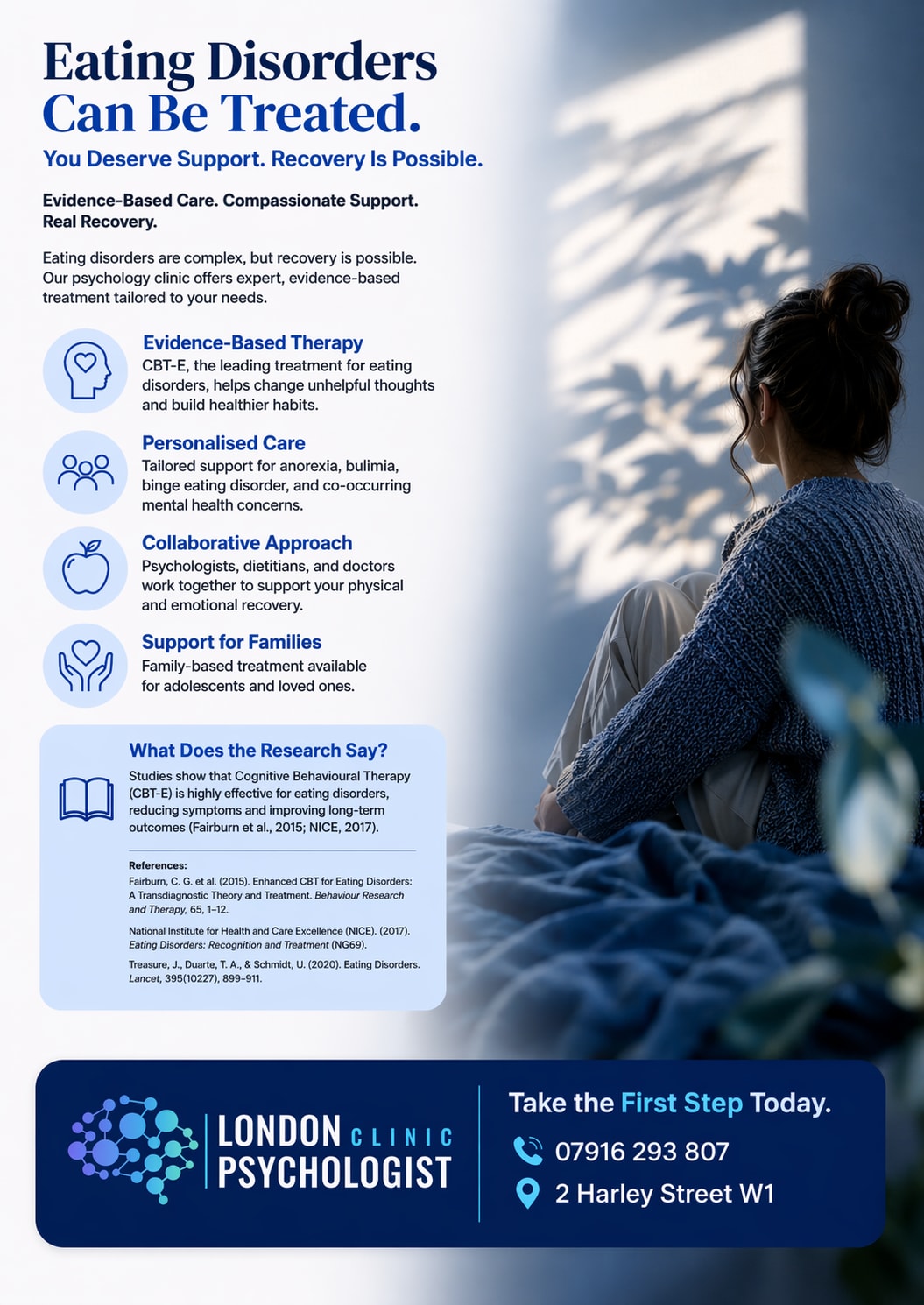
Cognitive Behavioural Therapy for Eating Disorders (CBT-ED), particularly its enhanced form (CBT-E), is widely regarded as the leading evidence-based treatment for adults. CBT-E adopts a transdiagnostic approach, targeting the core psychopathology common across eating disorders rather than focusing on diagnostic categories alone. A substantial body of research supports its efficacy, with systematic reviews indicating that CBT is the treatment of choice for bulimia nervosa and effective across a range of eating disorder presentations . Emerging evidence also suggests that CBT-E may produce improved outcomes compared to earlier CBT models, particularly when delivered with fidelity to treatment protocols . Clinically, CBT-ED focuses on normalising eating patterns, challenging dysfunctional beliefs, and reducing behaviours such as restriction, bingeing, and purging.
For individuals with binge eating disorder, guided self-help CBT is recommended as a first-line intervention within a stepped-care framework. This approach has been shown to reduce binge frequency and improve long-term psychological outcomes, particularly when supported by brief professional guidance . Where self-help is insufficient, more intensive CBT-ED interventions are indicated.
In contrast, the treatment of anorexia nervosa often requires a more complex and multidisciplinary approach. Psychological therapies such as CBT-ED, Maudsley Anorexia Nervosa Treatment for Adults (MANTRA), and Specialist Supportive Clinical Management (SSCM) are recommended for adults, while family-based therapy (FBT) is considered the first-line treatment for adolescents. FBT involves empowering caregivers to take an active role in restoring the individual’s weight and normalising eating behaviours. Evidence suggests that involving the family system can significantly improve outcomes in younger populations, particularly when the disorder is of shorter duration.
Medical and nutritional management are also critical components of treatment. Due to the significant physical risks associated with eating disorders—including cardiovascular complications, electrolyte imbalance, and endocrine disruption—ongoing medical monitoring is essential. Nutritional rehabilitation, often led by specialist dietitians, aims to restore physical health while supporting psychological recovery. In severe cases, inpatient or day-patient treatment may be required to stabilise medical risk and provide structured therapeutic support.
Pharmacological interventions play a more limited, adjunctive role. Selective serotonin reuptake inhibitors (SSRIs), such as fluoxetine, have demonstrated efficacy in reducing binge-purge behaviours in bulimia nervosa, while medications for anorexia nervosa show more limited direct impact on core symptoms. As such, medication is typically used to address comorbid conditions such as depression or anxiety rather than as a standalone treatment.
Despite advances in treatment, recovery from eating disorders remains variable. Research indicates that while a significant proportion of individuals respond to evidence-based interventions, relapse rates remain notable, and long-term recovery often requires sustained psychological support. This underscores the importance of relapse prevention strategies, therapeutic alliance, and ongoing monitoring within clinical practice.
In conclusion, eating disorders represent a significant clinical challenge requiring a nuanced, evidence-based approach. The strongest empirical support exists for cognitive behavioural therapies, particularly CBT-E, alongside family-based interventions for younger populations. Effective treatment necessitates a multidisciplinary framework that integrates psychological therapy, medical care, and nutritional rehabilitation. For psychology clinics, maintaining fidelity to evidence-based protocols while delivering individualised, compassionate care is central to improving outcomes for this vulnerable population.