


Arrested Emotional Development
posted 27th May 2026
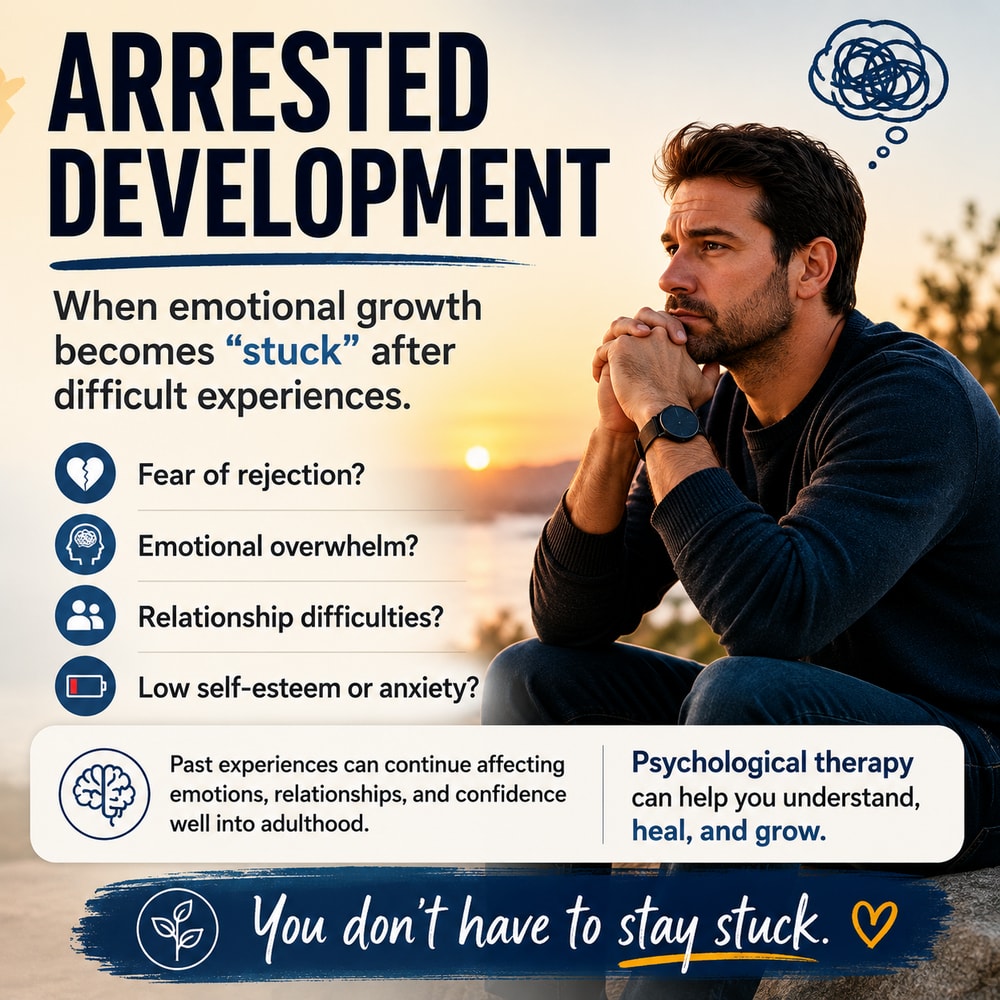
Arrested Development: When Emotional Growth Becomes “Stuck” After Difficult Experiences
Many adults appear independent, successful, and emotionally capable on the outside while privately struggling with insecurity, emotional reactivity, fear of rejection, or difficulties in relationships. Increasingly, psychologists are recognising how unresolved emotional experiences from earlier life can continue affecting emotional wellbeing well into adulthood.
This is sometimes referred to as *arrested emotional development* — a psychological concept describing emotional growth that may become disrupted or “stuck” following trauma, emotional neglect, chronic stress, or difficult childhood experiences.
Although not a formal mental health diagnosis, the concept has become increasingly discussed in psychology because many adults begin noticing emotional patterns that feel difficult to control or understand.
What Is Arrested Emotional Development?
Arrested emotional development can occur when a person experiences overwhelming emotional stress during important developmental stages. In these situations, the brain and nervous system may develop coping strategies focused on emotional survival rather than healthy emotional growth.
As a result, some individuals continue reacting emotionally in adulthood using coping mechanisms originally developed during childhood or adolescence.
This may lead to patterns such as:
- Fear of abandonment or rejection
- Emotional shutdown during conflict
- Difficulty trusting others
- Strong emotional reactions to criticism
- Low self-esteem or insecurity
- People-pleasing behaviours
- Emotional avoidance or detachment
- Difficulties with emotional regulation
Many people are unaware that these emotional responses may have deeper psychological roots connected to earlier life experiences.
How Childhood Experiences Shape Emotional Development
Early relationships and environments play a major role in shaping emotional wellbeing, attachment, and self-worth.
Children learn emotional regulation, safety, trust, and resilience largely through interactions with caregivers and significant relationships.
When childhood environments are emotionally unpredictable, highly critical, neglectful, emotionally unavailable, or traumatic, emotional development may become disrupted.
Some children learn to emotionally suppress themselves in order to feel safe or accepted. Others may become hypervigilant, emotionally reactive, or fearful of rejection.
While these coping strategies may once have helped emotionally protect the individual, they can later create difficulties in adult relationships, self-esteem, and emotional wellbeing.
Case Study: “I Don’t Understand Why I React Like This”
Michael, a 41-year-old business owner, described himself as successful professionally but emotionally overwhelmed in personal relationships.
Although he appeared confident externally, he privately struggled with:
- Fear of rejection
- Difficulty trusting others
- Emotional withdrawal during conflict
- Anxiety about abandonment
- Difficulty expressing vulnerability
Michael often felt confused by the intensity of his emotional reactions and struggled to understand why certain situations affected him so deeply.
Through therapy, he began recognising how growing up in a highly critical and emotionally inconsistent environment had shaped many of his coping patterns and emotional responses.
He realised that many behaviours that once helped him emotionally survive during childhood were now affecting his adult relationships and emotional wellbeing.
How Can a Psychologist Help?
A psychologist can help individuals better understand the emotional patterns, attachment styles, and coping strategies that may have developed earlier in life.
Therapy provides a safe, supportive, and confidential space to explore how past experiences may still be influencing emotions, relationships, self-esteem, and behaviour in the present.
Psychological therapy may help individuals:
- Understand emotional triggers and reactions
- Improve emotional regulation
- Build healthier self-esteem and self-worth
- Develop more secure relationship patterns
- Reduce anxiety and emotional overwhelm
- Process unresolved emotional experiences
- Improve boundaries and communication
Depending on individual needs, treatment approaches may include:
- Psychodynamic therapy
- Attachment-focused therapy
- Trauma-informed therapy
- Cognitive Behavioural Therapy (CBT)
- Compassion-Focused Therapy (CFT)
- Mindfulness and emotional regulation approaches
Therapy is not about blaming the past or assigning fault. Instead, it focuses on helping individuals better understand themselves, recognise emotional patterns, and develop healthier and more balanced ways of coping and relating.
Why Awareness Is Important
Many adults spend years criticising themselves for emotional struggles without understanding where these patterns may come from.
Developing insight into arrested emotional development can help individuals understand:
- Why certain emotional triggers feel overwhelming
- Why relationships may feel difficult or unstable
- Why anxiety or insecurity may persist
- Why emotional reactions sometimes feel difficult to control
For many people, this understanding can feel validating and emotionally relieving.
Emotional Growth Can Continue Throughout Adulthood
One of the most important findings in modern psychology and neuroscience is that emotional growth and healing can continue throughout life.
The brain remains capable of change, adaptation, and emotional development well into adulthood.
With the right support, self-awareness, and therapeutic work, individuals can develop healthier emotional patterns, stronger relationships, greater emotional resilience, and improved psychological wellbeing.
No matter how long emotional difficulties have existed, meaningful emotional growth and healing remain possible.