


Alcohol and the Mind
posted 9th April 2026
Alcohol and the Mind: Real-Time Effects and Long-Term Psychological Impact
Do you find yourself unwinding with a drink at the end of the day? You are not alone. Alcohol is one of the most widely used substances globally, often associated with relaxation, socialising, and stress relief. While occasional drinking may feel harmless, alcohol has immediate and cumulative effects on the brain that are often underestimated.
Understanding both the real-time psychological effects and the long-term impact of alcohol is essential—not only for physical health, but for emotional wellbeing, cognitive functioning, and mental health.
Alcohol in Your Body and Brain
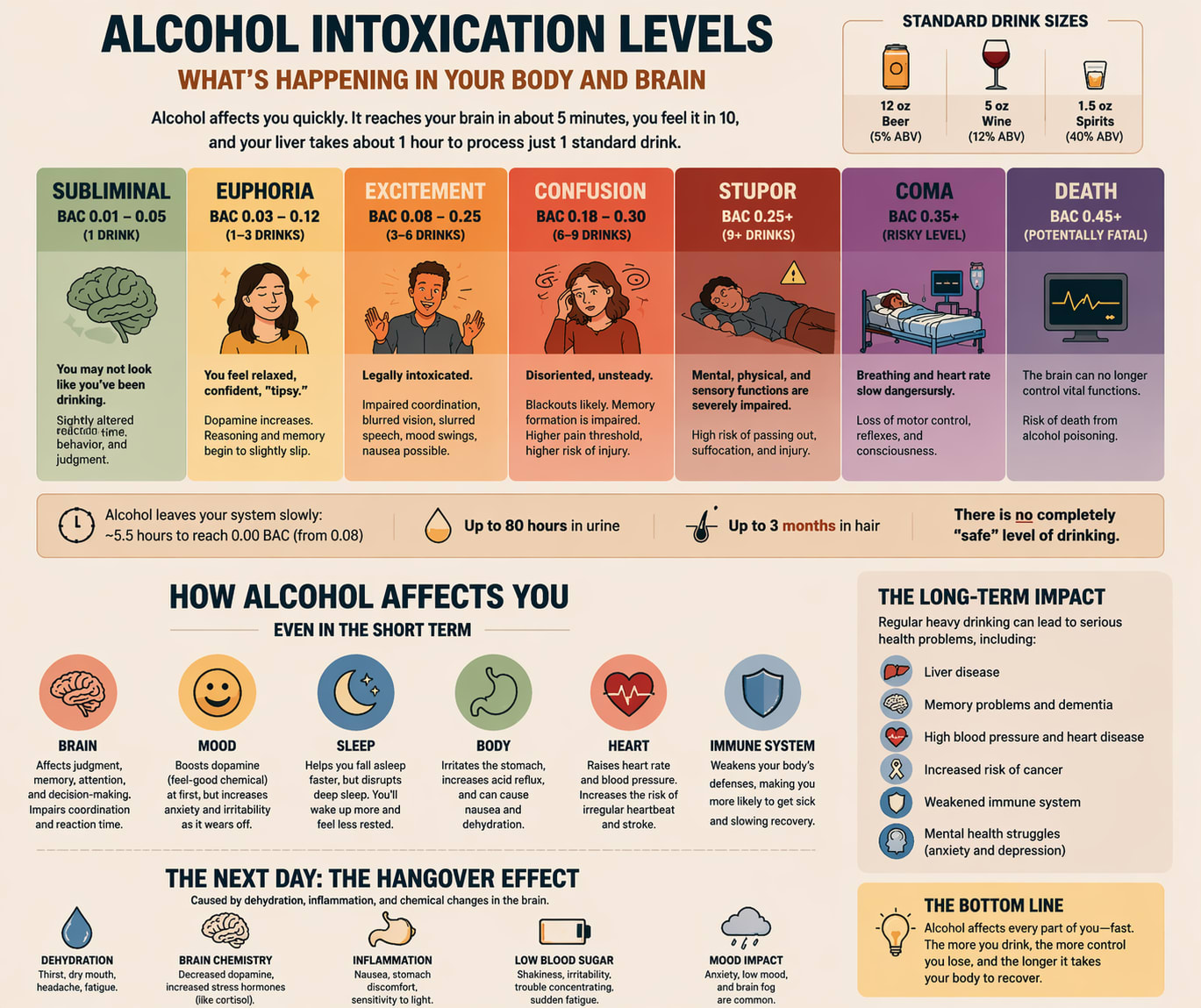
Alcohol is rapidly absorbed into the bloodstream through the stomach and small intestine. Within minutes, it reaches the brain, where it begins to alter communication between neurons.
Unlike many substances, alcohol is a central nervous system depressant, meaning it slows down brain activity. Initially, this may feel like relaxation—but neurologically, it reflects reduced inhibition and altered processing.
Within approximately 20 minutes, the liver begins metabolising alcohol. However, it can only process a limited amount per hour. When consumption exceeds this rate, alcohol accumulates in the bloodstream, intensifying its psychological and behavioural effects.
Real-Time Psychological Effects of Alcohol
Early Effects: Reduced Inhibition and Increased Confidence
In the early stages of drinking, alcohol increases dopamine activity—the brain’s reward chemical. This can create feelings of pleasure, relaxation, and confidence. Social anxiety may temporarily decrease, and individuals often feel more talkative or at ease.
However, even at low levels, alcohol begins to impair judgement, attention, and decision-making. This is why individuals may feel “fine” while already experiencing subtle cognitive changes.
Moderate Intoxication: Impaired Thinking and Emotional Instability
As alcohol levels rise, its effects on the brain become more pronounced. The frontal lobes—responsible for reasoning, impulse control, and judgement—are particularly affected.
Psychologically, this may present as:
- Poor decision-making
- Increased impulsivity
- Heightened emotional reactivity
- Reduced ability to assess risk
Mood can become less stable, with some individuals experiencing increased irritability, sadness, or aggression. Alcohol does not create emotions—it amplifies and disinhibits them.
Higher Intoxication: Cognitive Disruption and Memory Impairment
At higher levels, alcohol begins to disrupt the hippocampus, a brain region critical for memory formation. This can lead to blackouts, where events are not encoded into memory despite the individual remaining conscious.
Coordination, perception, and reaction time are also significantly impaired. Individuals may feel detached, confused, or disoriented. Importantly, awareness of impairment is often reduced at this stage, increasing the likelihood of risky behaviour.
Severe Intoxication: Loss of Consciousness and Risk
At very high levels, alcohol suppresses vital brain functions, including those controlling breathing and consciousness. Psychological functioning is severely compromised, and the risk of harm increases significantly.
Alcohol and Decision-Making in the Moment
One of the most clinically relevant effects of alcohol is its impact on judgement. Even moderate drinking reduces the brain’s ability to evaluate consequences.
This can lead to:
- Risk-taking behaviours
- Impulsive decisions
- Reduced awareness of danger
- Overestimation of ability (e.g. driving)
Research consistently shows that individuals under the influence are significantly more likely to engage in behaviours they would avoid when sober, often with lasting consequences.
The Psychological After-Effects of Drinking
While the immediate effects of alcohol are well known, the after-effects are often less understood.
Short-Term After-Effects (Next Day)
Following alcohol use, individuals may experience:
- Increased anxiety (“hangxiety”)
- Low mood
- Irritability
- Poor concentration
- Sleep disruption
Alcohol interferes with sleep architecture, particularly REM sleep, leading to reduced emotional regulation the following day. This can create a rebound effect, where anxiety and stress feel more intense.
Long-Term Psychological Effects
Over time, repeated alcohol use can have more enduring psychological consequences.
Research indicates that regular or heavy drinking is associated with:
- Increased risk of depression and anxiety disorders
- Reduced cognitive functioning (memory, attention, processing speed)
- Emotional dysregulation
- Greater stress sensitivity
Chronic alcohol use also alters brain chemistry, particularly in systems related to reward and stress. This can lead to a cycle in which individuals drink to manage distress, while alcohol itself contributes to worsening mood and anxiety.
Alcohol and Emotional Avoidance
Psychologically, alcohol is often used as a coping strategy—to reduce stress, numb emotions, or avoid difficult thoughts.
While this may provide temporary relief, it can reinforce emotional avoidance, preventing individuals from developing more adaptive coping mechanisms. Over time, this can increase psychological vulnerability rather than reduce it.
A Balanced Perspective: Is There a “Safe” Level?
The impact of alcohol varies depending on factors such as body composition, frequency of use, mental health history, and overall lifestyle.
For some individuals, occasional drinking may not lead to significant long-term effects. However, research increasingly suggests that even moderate drinking can influence mental health, particularly when used regularly as a coping mechanism.
From a psychological perspective, the key question is not only how much someone drinks, but why they drink.
When to Seek Support
It may be helpful to seek professional support if you notice:
- Increasing reliance on alcohol to relax or cope
- Worsening anxiety or low mood after drinking
- Difficulty reducing or controlling intake
- Impacts on sleep, relationships, or functioning
Evidence-based psychological approaches can help individuals develop healthier coping strategies, improve emotional regulation, and reduce reliance on alcohol.
Alcohol is often viewed as a simple way to relax—but its effects on the brain are complex. While it may temporarily reduce tension, it can also impair thinking, amplify emotions, and contribute to longer-term psychological difficulties.
Understanding both the immediate and lasting effects allows for more informed choices. With the right support, individuals can develop more sustainable ways of managing stress, improving wellbeing without the hidden costs.
Click to enlarge